
China Top Candy Cane Candy Manufacturer and Supplier

China has become an important sourcing base for confectionery, including Candy Cane Candy for seasonal campaigns, retail shelves, and promotional gift boxes. A capable manufacturer combines traditional candy-making skills with controlled production, careful ingredient selection, and dependable delivery planning. The familiar red-and-white spiral should look bright, feel smooth, and break with a clean, pleasant texture. Small details matter.

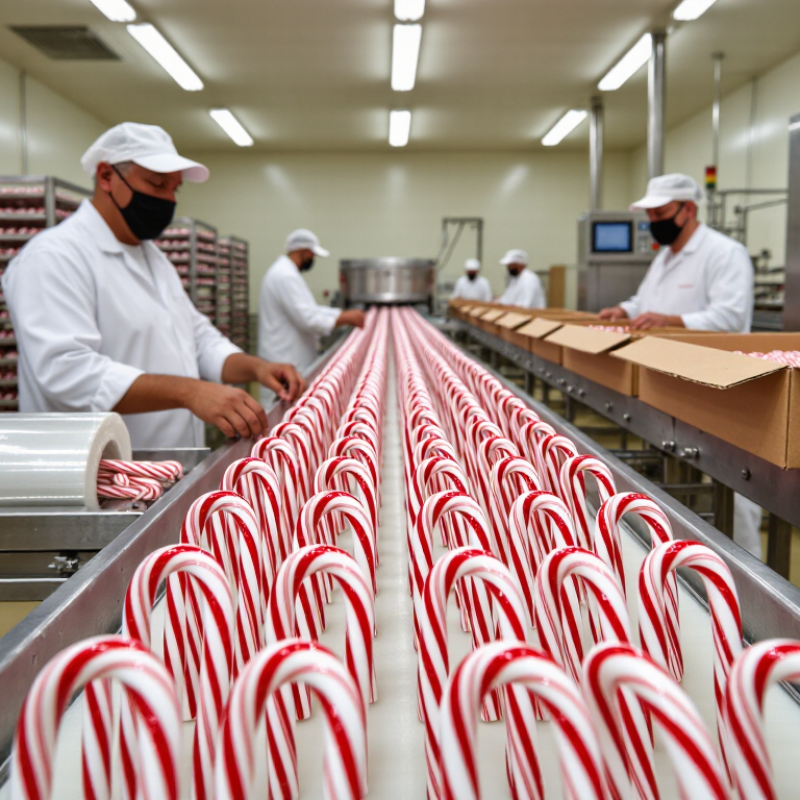
Experienced suppliers usually manage the process from syrup cooking and flavor blending to shaping, cooling, wrapping, and carton packing. Temperature control helps protect the candy’s structure, while sealed packaging reduces exposure to moisture during storage and transport. Buyers should also review ingredient specifications, allergen information, production records, sample quality, and applicable food-safety documentation before placing large orders. Transparent communication is essential.

Customization can include flavors, colors, sizes, private labels, inner wrappers, and retail-ready cartons. Yet customization should not weaken consistency. A reliable supplier explains practical limits instead of promising everything. That honesty is valuable. No manufacturer should claim perfection, because seasonal demand, shipping conditions, and material changes can create unexpected pressure. Strong suppliers identify these risks early and offer workable solutions.

This guide introduces how to evaluate a China Candy Cane Candy manufacturer and supplier through product quality, manufacturing experience, customization capability, food-safety awareness, packaging performance, and service reliability. It also considers questions buyers may overlook, such as minimum order quantities, sample approval, lead times, storage conditions, and communication after shipment. The right partnership is built through evidence, not attractive claims.
China Top Candy Cane Candy Manufacturer and Supplier

Candy Cane Manufacturing in China: An Industry Overview

Candy cane manufacturing in China serves both seasonal retail and customized gift markets. UN Comtrade data for 2023 recorded more than US$2 billion in Chinese exports under HS 170490, covering sugar confectionery without cocoa. Candy canes represent only one part of this category. The category is not perfectly measured.

Manufacturers typically begin with dissolved sugar, glucose syrup, food-grade color, and flavoring. The cooked mass is pulled, twisted, and shaped around a white center. Temperature control is critical. A small thermal variation can create cloudy stripes, brittle hooks, or uneven thickness. Many factories use automated forming lines, while skilled workers inspect hook shape and surface finish. Moisture-resistant wrapping helps protect the product during long-distance shipping.

Recent confectionery analyses from Euromonitor International and Mordor Intelligence indicate steady global demand for seasonal and portion-controlled sweets. Mordor’s 2024 market assessment projects low-single-digit annual growth for the broader confectionery sector through 2029. For buyers, production evidence matters more than attractive samples. They should review batch records, ingredient specifications, metal-detection controls, and independent laboratory results. China’s supplier base is extensive, but capabilities differ sharply between factories. A reliable candy cane supplier should explain sugar sourcing, color stability, packaging performance, and expected shelf life in clear terms. Some specifications still need refinement. That is normal, provided the manufacturer documents the risk and tests the revised sample.

Product Types and Customization Options for Candy Canes

Candy canes now extend beyond the classic red-and-white hook. Product development includes peppermint, fruit, coffee, ginger, and reduced-sugar varieties. Mini candy canes suit gift boxes, while oversized versions create strong holiday displays. According to the National Confectioners Association’s 2024 State of Treating report, U.S. confectionery retail sales reached about 54 billion dollars in 2023. This figure supports demand for seasonal formats, but candy canes remain highly occasion-driven products.

A professional China candy cane manufacturer should offer practical customization. Options include color matching, flavor layering, striped patterns, private packaging, and custom shapes. Clear wrappers show surface quality. Paper cartons provide better shelf presentation. For export orders, manufacturers should check moisture resistance, stick strength, and weight consistency through documented inspections. The Codex Alimentarius General Standard for Food Additives and regional labeling rules should guide ingredient declarations. Small details matter. A slightly uneven stripe can weaken a premium appearance, although handmade effects may appeal to some buyers. Innova Market Insights’ confectionery trend reporting also highlights consumer interest in novelty, portion control, and recognizable ingredients.

Tips: Request pre-production samples before confirming bulk production. Compare breakage, aroma, color stability, and package sealing. Keep one approved sample as a reference. It prevents quiet changes during manufacturing.

Quality Standards and Food Safety Management

China Top Candy Cane Candy Manufacturer and Supplier

Quality begins before the candy cane reaches the production line. Sugar, glucose syrup, flavors, colors, and packaging materials need documented approval. The World Health Organization estimates that unsafe food causes 600 million illnesses annually worldwide (WHO, 2015). That figure makes small control failures impossible to ignore.

In a controlled factory, syrup temperature and cooking time are recorded for every batch. Operators check water activity, appearance, weight, and package seals. Metal detection protects finished products, while allergen controls reduce cross-contact risks. Codex General Principles of Food Hygiene recommends hazard analysis, sanitation controls, and verified monitoring. ISO 22000:2018 also supports traceability from approved suppliers to finished cartons. Records should identify raw-material lots, equipment, operators, and shipping destinations. A practical mock recall can reveal weaknesses within hours, not weeks.

Clean equipment matters.

However, documentation alone is not food safety. A polished checklist may hide rushed cleaning or incomplete training. Production teams should review deviations honestly, even when results look acceptable. We still need to question whether sampling frequency matches real production risks. Temperature logs, laboratory results, pest-control records, and corrective actions should remain available for customer audits. Consistent candy cane quality depends on repeatable controls, trained people, and evidence that each batch received proper attention.

China Top Candy Cane Candy Manufacturer and Supplier - Quality Standards and Food Safety Management

The Codex HACCP framework defines seven principles for managing food safety hazards. The chart presents their official sequence, which can be applied to candy cane production through hazard analysis, process controls, verification, and record keeping.

Reference: Codex Alimentarius Commission, General Principles of Food Hygiene CXC 1-1969, including the HACCP system and its seven principles.

How to Select a Reliable Candy Cane Supplier

China Top Candy Cane Candy Manufacturer and Supplier

How to Select a Reliable Candy Cane Supplier

Selecting a reliable candy cane supplier requires more than comparing the lowest quotation. Production evidence matters. Ask for recent factory photographs, production records, and a sample matching the proposed recipe. Check whether the supplier controls cooking, shaping, cooling, and wrapping in defined stages. Small process gaps can create cracks, uneven stripes, or sticky surfaces. Those defects become obvious under warehouse heat. Request details about sugar sourcing, flavor ingredients, color additives, and allergen controls. Documentation should be clear, dated, and traceable.

Food safety competence should be verified, not assumed. Review applicable certifications, audit reports, laboratory test results, and batch traceability procedures. An experienced supplier can explain testing frequency and acceptable limits without vague promises. Ask how rejected batches are isolated. Ask again about corrective action. Communication is another practical test. Send a detailed specification covering cane length, weight, color, flavor, packaging, carton strength, and labeling. Reliable teams confirm unclear points before production begins. That habit reduces expensive surprises.

Capacity and delivery claims deserve careful checking. Compare stated monthly output with equipment, staffing, and peak-season schedules. Request a realistic timeline for sampling, approval, production, inspection, and shipment. A low minimum order can look attractive, but unstable quality costs more. Price is only one signal. Some suppliers answer quickly yet avoid technical questions. That is a warning. Others provide detailed replies but lack consistent follow-up. This is easy to miss. Use a written agreement with inspection rights, tolerance ranges, packaging requirements, and delay procedures. One imperfect sample should not be ignored; it may reveal a weak control system. Still, a single mistake deserves context, not an immediate verdict. Document the response and judge whether the supplier improves.

Packaging, Export Services, and Order Fulfillment

A China-based candy cane manufacturer and supplier must treat packaging as part of product quality. Our team selects food-grade inner film, sturdy cartons, and moisture-resistant outer wrapping. Each candy cane needs space to avoid broken hooks during transport. Clear batch coding supports traceability. Simple details matter.

Export service begins with accurate paperwork and practical communication. We prepare commercial invoices, packing lists, carton measurements, and shipping documents according to the buyer’s requirements. Before loading, our staff check carton counts, labels, pallet stability, and container conditions. Photos can record the finished shipment. This reduces confusion between factory and destination teams.

Order fulfillment depends on timing, not promises alone. We confirm production schedules, packaging artwork, inspection points, and delivery windows before production starts. Mixed quantities may require extra coordination. Small errors can delay a full container. We have learned that early confirmation prevents expensive changes later. Still, no process is perfect. A carton count may need rechecking, or a label may require correction. Fast feedback helps us respond responsibly and keep the order moving.

China Top Candy Cane Candy Manufacturer and Supplier - Packaging, Export Services, and Order Fulfillment

Data Dimension Reference Information Typical Options or Requirements
Product Type Hard-boiled candy cane with a curved hook shape Traditional peppermint, fruit, sour, cola, milk, or custom flavor profiles
Common Product Sizes Mini, standard, and large candy cane formats Typical individual weights include approximately 6 g, 12 g, 15 g, and 28 g; final dimensions should be confirmed by approved samples
Main Ingredients Sugar-based confectionery ingredients Sugar, glucose syrup or corn syrup, water, flavoring, and approved colors; formulation varies by market and product specification
Color and Appearance Glossy hard candy with a curved cane shape Single-color, two-color spiral, striped, transparent, or custom seasonal appearance
Individual Packaging Food-contact wrapping designed to protect the candy from moisture and contamination Twist wrap, flow wrap, pillow bag, transparent film, printed film, or recyclable packaging where suitable
Retail Packaging Packaging format selected according to sales channel and product quantity Poly bags, paper boxes, window boxes, hanging bags, display cartons, or gift-season packaging
Master Carton Corrugated shipping carton for warehouse handling and international transport Carton quantity, carton dimensions, gross weight, and pallet configuration are determined by product size and order requirements
Shelf Life Hard candy generally has a relatively long shelf life when properly sealed Common commercial specifications range from 12 to 24 months, subject to recipe, packaging, storage conditions, and local regulations
Storage Conditions Dry, clean, odor-free storage away from direct sunlight Keep sealed at a stable room temperature; avoid excessive heat, humidity, condensation, and strong odors
Customization Services Product and packaging specifications can be developed for private-label or seasonal programs Flavor, color, shape, weight, wrapper artwork, carton design, language, barcode, and retail pack configuration
Artwork Requirements Print-ready packaging artwork should follow the selected packaging supplier's dieline Common file formats include AI, PDF, and editable vector artwork; barcode, nutrition panel, ingredient list, and warnings may be required
Quality Control Quality checks are normally applied throughout production and packing Appearance, weight, flavor, seal integrity, foreign-matter prevention, packaging accuracy, and batch traceability
Food Safety Documentation Documentation depends on the destination market and buyer requirements Ingredient declaration, allergen statement, nutrition information, certificate of analysis, batch records, and applicable food-safety certificates
Export Documentation Documents should match the importing country's customs and food-labeling requirements Commercial invoice, packing list, transport document, certificate of origin when required, and product-specific certificates requested by the buyer
Trade Terms International orders commonly use Incoterms® agreed by both parties EXW, FOB, CIF, and DDP may be considered depending on destination, shipment size, and customs arrangements
Shipping Methods The most suitable method depends on urgency, volume, destination, and budget Sea freight for larger shipments, air freight for urgent replenishment, and courier service for samples or small parcels
Order Fulfillment Process A standard order workflow supports consistent production and delivery planning Specification confirmation, quotation, sample approval, artwork approval, production, inspection, packing, shipment, and document delivery
Lead Time Factors Timing varies according to customization and seasonal demand Flavor development, packaging material production, artwork approval, production scheduling, inspection, and shipping route
Buyer Information to Confirm Clear specifications help reduce production and customs delays Target market, product weight, flavor, quantity, packaging format, label language, delivery address, Incoterm, required documents, and launch date

Note: Product specifications, packaging availability, documentation, minimum order quantity, pricing, and delivery schedules should be confirmed for each individual order and destination market.

We are using cookies on our website

Please confirm, if you accept our tracking cookies. You can also decline the tracking, so you can continue to visit our website without any data sent to third party services.