What Is Inulin Powder and How Is It Used?
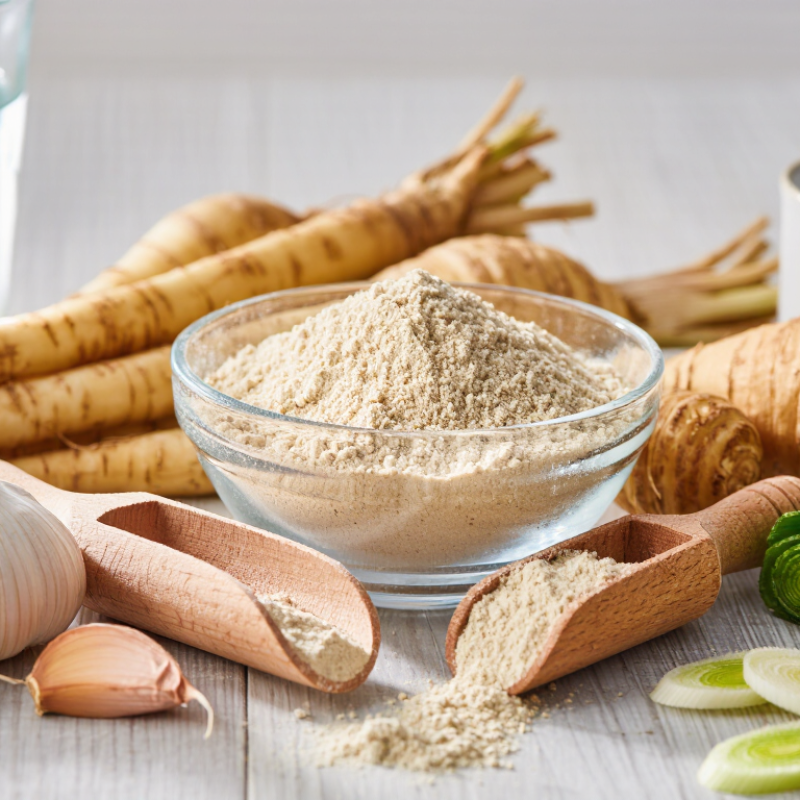
Inulin Powder is a plant-based dietary fiber found mainly in chicory root, Jerusalem artichokes, onions, garlic, and leeks. It has a mild sweetness and a fine, pale texture, making it useful in food, beverage, and nutrition applications. Manufacturers often add it to yogurt, smoothies, protein bars, baked goods, and fiber supplements. It can improve texture while increasing fiber content.
Professor Glenn Gibson, a leading prebiotic researcher, described a prebiotic as “a non-digestible food ingredient that beneficially affects the host by selectively stimulating the growth and/or activity of one or a limited number of bacteria in the colon.” This principle helps explain why Inulin Powder receives attention. The human body does not fully digest it in the small intestine. Instead, gut bacteria ferment it in the colon.
The practical details matter. A teaspoon may blend smoothly into coffee, while larger amounts can cause gas, bloating, or discomfort. Start slowly. Drink enough water.
Its effects are not identical for everyone. People with irritable bowel syndrome or sensitivity to fermentable carbohydrates may need professional guidance. Product labels also vary in purity, serving size, and added ingredients. Some claims sound stronger than the evidence supports. That deserves caution.
Used thoughtfully, Inulin Powder can support daily fiber intake and provide prebiotic benefits. It is not a cure-all. Understanding its source, dosage, texture, and tolerance creates a more realistic view of how this ingredient works.
What Is Inulin Powder?
Inulin powder is a plant-based soluble fiber found naturally in chicory root, onions, garlic, leeks, and some other plants. It belongs to a group of carbohydrates called fructans. Unlike ordinary sugar, the human body does not fully digest inulin in the small intestine.
It reaches the colon, where beneficial gut bacteria can ferment it. For this reason, inulin is commonly described as a prebiotic fiber. Commercial inulin powder is usually fine, pale, and mildly sweet. It may be added to yogurt, oatmeal, smoothies, baked foods, or drinks to increase fiber content without dramatically changing flavor. It can also improve texture, making some foods feel creamier.
Small amounts may be easier to tolerate. Larger servings can cause gas, bloating, or loose stools, especially for people sensitive to fermentable carbohydrates. That detail is easy to overlook. A practical approach is to begin with a small portion and observe personal comfort for several days. Labels should be checked carefully because products differ in fiber concentration and serving size.
Inulin is useful, but it is not automatically suitable for everyone. My own view is that its benefits depend less on impressive claims and more on regular tolerance, a varied diet, and enough water.
How Inulin Powder Is Made and Where It Comes From
What Is Inulin Powder and How Is It Used?
Inulin powder is a naturally occurring dietary fiber made mainly from chicory roots. It also exists in plants such as Jerusalem artichokes, agave, onions, garlic, and leeks. Chicory is commonly selected because its roots contain a relatively high and consistent amount of inulin. The plant grows underground, where the roots store carbohydrates as fructan chains.
Manufacturing begins with washing and slicing the roots. Warm water draws the inulin into a liquid extract. Producers then filter the extract to remove soil, plant fibers, and other unwanted materials. Further purification reduces minerals, proteins, and natural color compounds. The liquid is concentrated before being dried, often through spray drying. This creates a fine powder that mixes easily with water, yogurt, cereal, or baked foods.
The final powder can vary in sweetness, texture, and solubility. These differences depend on the plant source and the length of its fructan chains. Longer chains usually taste less sweet. Shorter chains may dissolve more readily. Processing is not perfectly uniform, either. That matters when comparing products. A careful buyer should check the ingredient label, fiber amount, and serving guidance. Too much inulin may cause gas or bloating, especially for people who rarely eat high-fiber foods. Small portions are often easier to tolerate.
Nutritional Properties and Digestive Effects of Inulin
What Is Inulin Powder and How Is It Used?
Inulin is a soluble dietary fiber found naturally in plants such as chicory root, onions, garlic, and Jerusalem artichokes. Manufacturers dry and mill these plant sources into a mild-tasting powder. It provides little digestible energy because the small intestine cannot fully break it down. Instead, beneficial bacteria ferment it in the colon.
That fermentation produces short-chain fatty acids, which support the gut environment. Inulin may also improve stool softness and regularity when consumed with enough fluid. Some research links it with improved calcium absorption, although results can vary between individuals. It is a prebiotic, not a probiotic. That distinction matters.
In the kitchen, a small amount can be stirred into oatmeal, yogurt, soup, or a smoothie. It can also add body to baked foods without much sweetness. Start with about two to three grams daily, then increase slowly if comfortable. Too much too soon may cause gas, bloating, cramping, or loose stools. It can be uncomfortable.
People with irritable bowel syndrome may react strongly because inulin is a high-FODMAP carbohydrate. A low-FODMAP plan may require limiting it during symptom-control phases. Reading the ingredient label is useful, since inulin may appear under related names, including chicory root fiber. The powder is not a cure for digestive disease, and its benefits are not identical for everyone. Personally, I would treat it as a flexible fiber tool, not a guaranteed gut solution.
Common Food, Beverage, and Supplement Uses
Inulin powder is a soluble, fermentable dietary fiber found naturally in chicory root, onions, garlic, and bananas. It tastes mildly sweet. Its neutral flavor makes it practical in everyday recipes.
In baked foods, manufacturers use inulin to add body, retain moisture, and partially replace sugar or fat. Home cooks can stir it into oatmeal, yogurt, smoothies, or homemade energy bites. It can also soften the mouthfeel of reduced-sugar drinks. In coffee and powdered beverages, small amounts may improve texture without creating a heavy taste. According to the National Academies’ Dietary Reference Intakes report, adults generally need 14 grams of fiber per 1,000 calories. Inulin can help fill that gap, but it cannot replace vegetables, legumes, whole grains, or fruit.
Supplement powders offer a concentrated option. Start low. A sudden increase may cause gas, bloating, or loose stools, especially for sensitive users. The U.S. Food and Drug Administration recognizes inulin and certain fructans as dietary fiber under its dietary-fiber guidance. However, labeling and product quality still deserve attention. Check the serving size and the full ingredient list. I would not treat inulin as a cure-all. Its effects vary between individuals, and research does not support every popular wellness claim. My practical view is simple: use it as a small recipe ingredient, not a shortcut for an unbalanced diet.
Safety, Dosage, and Possible Side Effects
Inulin powder is a soluble dietary fiber found naturally in chicory root, onions, garlic, and some grains. It tastes mildly sweet and dissolves best in yogurt, oatmeal, smoothies, or water. In the gut, inulin is fermented by beneficial bacteria, which may support regular bowel movements and a healthier microbiome. Individual responses vary, though. That matters.
For many adults, a cautious starting amount is 2–3 grams daily. After several days, the amount may increase gradually toward 5–10 grams, depending on tolerance and the product label. Take it with enough fluid. A sudden large serving can cause gas, bloating, abdominal cramps, or loose stools. These effects may feel uncomfortable rather than dangerous, but persistent symptoms deserve medical advice. My practical caution is simple: more fiber is not automatically better.
People with irritable bowel syndrome may react strongly because inulin is a fermentable FODMAP. Those with bowel disorders, diabetes, or a history of food allergy should ask a qualified healthcare professional before using it. Pregnancy, breastfeeding, and regular medication use also warrant individualized guidance. Inulin may affect digestion and could make some medicines harder to tolerate when taken together. Stop using it if swelling, breathing difficulty, or widespread hives occur, and seek urgent care. Evidence supports useful fiber effects, but it is not perfect, and supplement quality can differ between products.
Inulin Powder: Practical Intake Levels and Possible Digestive Effects
Inulin is a soluble, fermentable dietary fiber commonly used to increase fiber intake and support the growth of beneficial gut bacteria. A cautious approach is to start with about 2–3 g per day and increase gradually. Around 5–10 g per day is commonly used in supplements, while a single intake of approximately 20 g or more may increase the likelihood of gas, bloating, abdominal discomfort, or loose stools. Individual tolerance varies, and adequate fluid intake is recommended.