
7 Tips for Sourcing Barley Grass Juice Powder?
Sourcing barley grass juice powder can look simple until a sample arrives with dull color, grassy odor, or an unclear test report. For buyers, quality begins long before the powder reaches a warehouse. It starts with the barley variety, growing region, harvest timing, and juice extraction method. A bright green appearance is useful, but it does not prove purity. Experienced sourcing teams compare specifications, supplier records, and independent laboratory results. They also ask uncomfortable questions. Was the crop exposed to heavy metals? How is moisture controlled? Can each batch be traced?
This article presents seven practical tips for evaluating Barley Grass Juice Powder suppliers with greater confidence. The guidance focuses on documentation, testing, processing, packaging, pricing, and communication. A credible supplier should provide a current certificate of analysis, allergen details, microbiological results, and origin information. Testing should match the intended market and applicable food regulations. Small details matter, such as a sealed foil bag, a clear lot number, and storage instructions suited to real warehouse conditions. Some buyers overvalue low prices and overlook inconsistent color or delayed answers. That mistake can become expensive. Even strong suppliers may have gaps, and one audit cannot reveal everything. Use samples, written specifications, and repeat testing before making a larger commitment. The goal is not a perfect promise. It is a transparent, defensible purchasing decision.
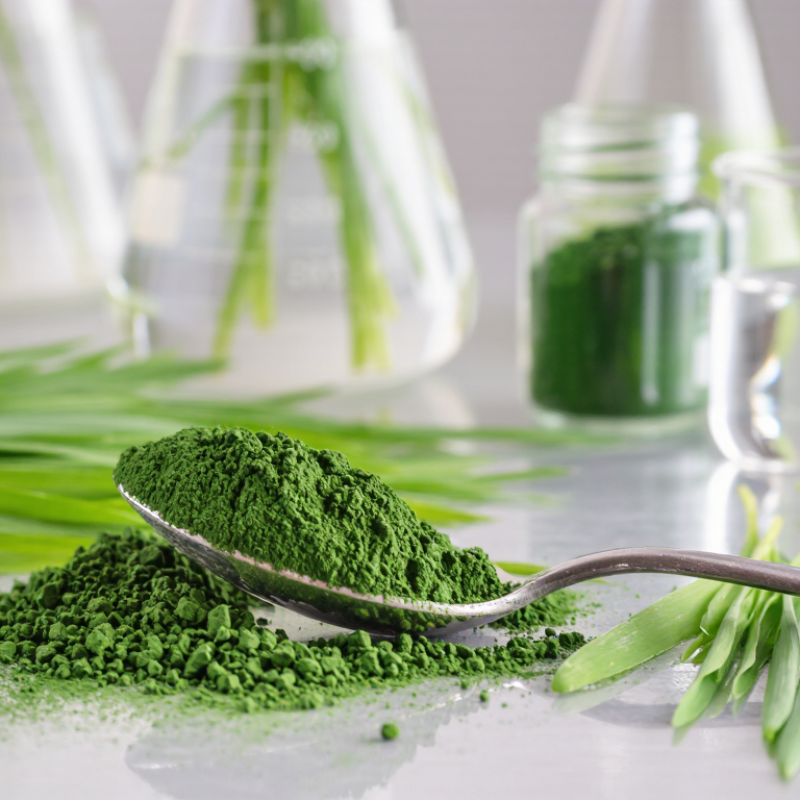
Define Quality Standards for Barley Grass Juice Powder
7 Tips for Sourcing Barley Grass Juice Powder
Define quality before requesting quotations. Specify Hordeum vulgare L., plant part, harvest stage, and juice-extraction method. Require traceability from field to finished powder. Each lot should include moisture, microbiology, pesticide residues, heavy metals, and identity results.
Appearance helps, but vivid green color proves little. I have seen color treated as a quality shortcut, and that is a weak decision.
Use validated testing methods and clear acceptance limits. The USDA Pesticide Data Program’s 2022 Annual Summary reported that about 99% of tested samples were below EPA tolerance levels or had no detectable residues. That supports routine screening, not blind confidence.
Ask laboratories to report detection limits, not only “pass” results. For microbial safety, align processing controls with FDA Juice HACCP expectations, including a validated 5-log pathogen reduction where applicable. Powdering does not automatically remove contamination risks.
Set limits for lead, arsenic, cadmium, and mercury using Codex CXS 193-1995 and local requirements. Request ISO 22000-based food safety records, allergen controls, sanitation logs, and an authentic certificate of analysis.
Verify results with occasional independent testing. Seven checks sound simple. They are not. Suppliers may provide complete documents, yet weak sampling can still hide variation.
A practical specification should also cover storage temperature, packaging barriers, shelf-life evidence, and batch-to-batch chlorophyll consistency. Avoid claims that the data cannot support.
Identify Reliable Manufacturers and Ingredient Suppliers
7 Tips for Sourcing Barley Grass Juice Powder
Reliable sourcing begins with the manufacturer’s raw material control. Ask where the barley grass is grown, when it is harvested, and how quickly it reaches processing. Fresh-looking powder is not enough. Request botanical identity records, lot numbers, and a clear traceability map from field to finished product. Supplier experience matters, especially when weather changes crop quality.
Review the processing details carefully. Confirm drying temperatures, juice extraction methods, moisture limits, and packaging conditions. Ask for a recent certificate of analysis for each production lot. It should cover identity, microbiological safety, heavy metals, pesticides, and moisture. Independent laboratory testing adds credibility. Still, a polished certificate is not proof by itself. Verify the laboratory and compare results across several lots. Small inconsistencies deserve questions.
Evaluate the supplier’s quality system, audit history, and manufacturing standards. Visit the facility when possible, or request a live video inspection. Check whether samples match the commercial specification, including color, odor, solubility, and flavor. Request stability data and realistic shelf-life conditions. Some suppliers answer quickly but provide vague records. That is a warning. Compare minimum order quantities, lead times, storage requirements, and replacement terms before signing. A lower price may hide weaker testing or unstable supply. I would also keep a retained sample from every approved lot. It may seem excessive, but it helps investigate unexpected changes later. Reliable communication is part of product quality.
7 Tips for Sourcing Barley Grass Juice Powder? - Identify Reliable Manufacturers and Ingredient Suppliers
| Tip | Sourcing Dimension | Recommended Specification or Evidence | How to Verify | Reliable-Supplier Signal |
|---|---|---|---|---|
| 1 | Confirm the raw-material identity | The material should be identified as juice powder made from young barley grass, botanically classified as Hordeum vulgare. The specification should state whether the product is whole-plant powder, juice powder, or an extract. | Review the botanical name, plant part, harvest stage, processing flow, country of origin, and product description on the specification and certificate of analysis. | Clear identity documentation with no ambiguous terms such as “green superfood blend” used in place of the actual ingredient name. |
| 2 | Define the juice-processing method | Require a documented sequence covering washing, juice separation, concentration if used, drying, milling, and packaging. Spray drying is common, but the carrier should be declared because it can affect the ingredient’s composition and labeling. | Request the process flow diagram, carrier statement, drying temperature range, moisture-control procedure, and allergen cross-contact controls. | The supplier can explain processing controls and provides consistent information across the specification, label declaration, and batch records. |
| 3 | Set measurable quality parameters | Establish limits for appearance, color, odor, taste, particle size, moisture, water activity, solubility or dispersibility, and bulk density. The exact limits should be agreed for the intended application rather than copied from a generic product sheet. | Compare representative pre-shipment samples with the approved master sample and test moisture and water activity using validated laboratory methods. | A complete specification includes numerical limits, sampling procedures, test methods, and defined actions for out-of-specification batches. |
| 4 | Verify microbiological safety | The finished powder should be tested for total aerobic microorganisms, yeast and mold, coliforms or Escherichia coli, and pathogens such as Salmonella. Destination-market requirements should determine the final acceptance limits. | Check batch-specific laboratory results and the analytical methods, such as ISO 4833-1 for aerobic colony count, ISO 21527 for yeast and mold where applicable, ISO 6579-1 for Salmonella, or equivalent validated methods. | Results are linked to the lot number, show units and detection limits, and are issued by a competent internal or independent laboratory. |
| 5 | Screen contaminants and agricultural residues | The risk assessment should cover heavy metals, pesticide residues, mycotoxins where relevant, foreign matter, and unauthorized substances. Limits must follow the regulations of the target market. | Request multi-residue pesticide testing by LC-MS/MS and GC-MS/MS where appropriate, heavy-metal testing by ICP-MS or ICP-OES, and a documented contaminant-risk assessment. | Testing covers the actual growing region and crop season, not only a generic annual report or an undated declaration of compliance. |
| 6 | Evaluate traceability and food-safety systems | Each lot should be traceable from farm or approved raw-material source through processing, packaging, storage, and shipment. A preventive food-safety plan should address biological, chemical, and physical hazards. | Review the lot-code system, recall procedure, supplier-approval program, sanitation records, internal audits, and current third-party food-safety certification if available. | The supplier can complete a trace-back exercise and provide controlled records without relying solely on marketing claims. |
| 7 | Test commercial fit before placing a large order | Assess sample performance in the final application, including flavor, color, sedimentation, dispersibility, processing stability, packaging compatibility, shelf life, minimum order quantity, lead time, and storage conditions. | Conduct a documented pilot trial using at least one representative lot and compare results against the approved product specification and finished-product requirements. | The supplier supports sample retention, change notification, shelf-life data, packaging validation, and a written corrective-action process. |
Note: Microbiological, contaminant, labeling, and certification requirements should be finalized according to the product category and destination-market regulations.
Verify Testing, Certifications, and Product Traceability
Sourcing barley grass juice powder requires more than checking color and price. Ask for recent laboratory reports for every production batch. The report should confirm identity, moisture, microbial safety, heavy metals, pesticides, and relevant contaminants. A polished certificate is not enough. Verify the laboratory’s accreditation and testing methods independently.
Certifications can strengthen supplier evaluation, but their scope matters. Check whether they cover the actual facility, product category, and current production period. Organic, food safety, and quality certifications should be valid and easy to verify. Request the certificate number, issuing body, audit date, and expiration date. Small details reveal weak documentation. Do not accept copied files without questions.
Traceability should work backward and forward. Each package needs a lot number linked to harvest records, processing dates, storage conditions, and shipment details. Ask whether the supplier can identify the farm source within hours, not days. This practical test often exposes gaps. I once focused too heavily on certification logos and overlooked unclear lot records. That was a useful warning. Paperwork can look complete while the supply chain remains uncertain. Review retention samples, recall procedures, and temperature records when available. Good suppliers answer clearly, but no system is perfect. Leave room for follow-up testing, especially when the powder’s color, smell, or texture changes unexpectedly.
7 Tips for Sourcing Barley Grass Juice Powder
Verify testing, certifications, and product traceability with this practical sourcing checklist.
Each bar represents one verification checkpoint to complete: review the certificate of analysis, confirm contaminant testing, check the testing laboratory, validate certifications, trace the lot, review processing details, and confirm storage and shelf-life information. This is a checklist, not supplier performance data.
Compare Pricing, Packaging, Minimum Orders, and Lead Times
7 Tips for Sourcing Barley Grass Juice Powder
Tip 1: Compare landed pricing, not only the quoted kilogram price. USDA’s WASDE report estimates 2024/25 global barley production near 145 million tonnes. However, juice powder costs also reflect drying, testing, packaging, freight, and currency changes. Ask suppliers for prices at 100, 500, and 1,000 kilograms.
Tip 2: Request a clear specification sheet. It should state moisture, microbiological limits, pesticide screening, heavy-metal testing, and whether the powder is pure juice powder or blended with grass powder. A recent COA should match the production lot. Small details matter.
Tip 3: Compare packaging by protection and total cost. Use moisture-resistant inner liners, sealed bags, and suitable outer cartons. Packaging machinery industry reports from PMMI show continued investment in flexible and protective formats, but cheaper packaging may increase caking or spoilage risks. Request samples after storage.
Tip 4: Treat minimum orders as cash-flow decisions. A low MOQ may carry a higher unit price, while a large MOQ can create inventory pressure. Calculate monthly usage, shelf life, and warehouse capacity before negotiating.
Tip 5: Separate production time from shipping time. Ask for raw-material purchasing, processing, testing, packing, and dispatch dates. UNCTAD’s Review of Maritime Transport 2024 highlights continuing disruption risks in global shipping. Build buffer days.
Tip 6: Confirm documentation before payment. Check origin records, allergen statements, traceability, and applicable food-safety certifications.
Tip 7: Start with a pilot order. It may reveal clumping, color variation, or slower customs handling. I would not skip this step, even when the sample looks excellent.
Evaluate Samples Before Finalizing a Purchase Agreement
Before signing a purchase agreement, request production samples from the exact batch intended for delivery. Barley grass juice powder should dissolve evenly, smell fresh, and show a stable green color. Color alone proves little. Heat, oxidation, and poor drying can reduce quality while preserving appearance.
Ask for three sealed samples from separate batches. Compare moisture, microbial counts, heavy metals, pesticide residues, and chlorophyll content. ISO 17025 laboratories provide stronger evidence because their testing competence is independently assessed. The 2023 FAO Food Outlook also highlights how supply disruptions can affect ingredient availability and pricing. Therefore, check whether the supplier can repeat the same specifications during shortages.
Review the certificate of analysis carefully. It should show test methods, batch numbers, laboratory details, and actual results, not only “passed” statements. For microbial testing, request methods aligned with USP <61> and USP <62>, where applicable. Test the powder after opening, too. Clumping or a sour odor may reveal moisture exposure. This small step is often missed.
A 2023 report from the International Food Information Council found that consumers increasingly value transparency and ingredient information. Buyers should apply that expectation to suppliers. Verify the claimed serving size against laboratory results. Ask for stability data under normal warehouse conditions. One weakness remains: a single sample cannot represent every future shipment. Add approval rights, retesting terms, and rejection criteria to the agreement. That detail protects the purchase decision.


