
Top 10 Hemp Seed Protein Suppliers for Global Buyers

Hemp Seed Protein is moving from niche wellness shelves toward mainstream nutrition, bakery, beverage, and sports-food applications. Global buyers now examine more than protein percentages. They assess amino-acid profiles, allergen controls, traceability, testing, and consistent supply.

Recent market reports from Grand View Research and Mordor Intelligence identify plant-based protein as a sustained growth category. Their estimates differ because analysts define hemp protein products differently. That gap deserves attention. It reminds buyers to compare research methods, not headlines alone. Industry reports also point to rising demand for clean-label ingredients, vegan formulations, and recognizable agricultural origins. Hemp Seed Protein fits these trends, but quality varies between suppliers. A pale-green powder may look similar while showing different solubility, flavor, or microbial results.

James F. Callaway, a widely cited hemp-seed researcher, described hempseed as “a nutritious food source with a favorable fatty-acid profile.” His research remains useful when evaluating whole-seed nutrition, although protein-isolate performance requires separate testing. Practical checks matter. Buyers should request certificates of analysis, protein-method details, heavy-metal screening, pesticide results, and batch-level documentation. They should also confirm whether suppliers process hempseed in facilities handling soy, dairy, or gluten.

This guide examines ten Hemp Seed Protein suppliers serving international buyers. It considers production capacity, certifications, formulation support, packaging options, and export experience. No supplier is perfect. Some publish impressive specifications but provide limited evidence about long-term consistency. Others communicate transparently yet operate at smaller volumes. That distinction can influence every shipment, from a laboratory sample to a full container.
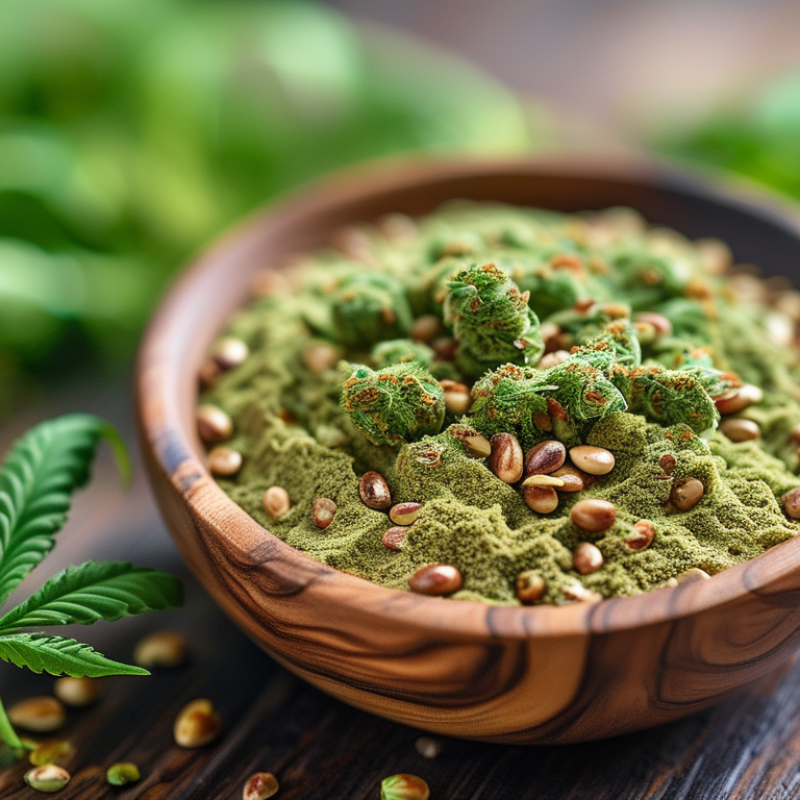
Top 10 Hemp Seed Protein Suppliers for Global Buyers

Product Definition: Hemp Seed Protein’s 31.6 g/100 g—USDA Data

Hemp seed protein is a plant-based protein ingredient made by milling hemp seeds and separating part of their oil. A USDA food-data entry reports 31.6 grams of protein per 100 grams of hemp seed. This figure gives global buyers a practical reference point when reviewing supplier specifications. It does not guarantee every powder will match exactly.

Processing changes the final result. Defatted powders may show higher protein percentages than less-refined products. Moisture, fiber, particle size, and testing methods also affect laboratory results. Ask suppliers for a recent certificate of analysis, including protein testing, moisture, microbiological limits, and heavy-metal screening. Request the test method, not only the headline number.

Look closely at the sample. The powder should have a mild, earthy aroma and a consistent green-brown appearance. Excessive bitterness may indicate oxidation, poor storage, or natural variation. Packaging should protect the ingredient from heat, light, and humidity. Traceability matters, especially when shipments cross several borders.

A supplier’s experience should be visible in batch records, export documents, and clear communication. Reliable sellers explain crop origin and processing conditions without vague promises. Yet buyers should remain cautious. USDA data is a useful benchmark, not a universal specification. Independent verification is still necessary before approving a large order. My own practical concern is often overlooked: protein content alone says little about taste, dispersibility, or customer acceptance. A strong sample can still perform poorly in a finished beverage.

Market Mapping: Global Hempseed Trade Signals from UN Comtrade, 2024

Top 10 Hemp Seed Protein Suppliers for Global Buyers

Market Mapping: Global Hempseed Trade Signals from UN Comtrade, 2024

UN Comtrade data offers a useful starting point for mapping hempseed protein supply. However, hempseed is often recorded under HS 1207.99, covering “other oilseeds.” This code does not isolate hemp, so reported values require careful interpretation. Trade signals are not perfect.

The 2024 data shows active cross-border movement from North America, Europe, and selected Asian markets. Canada remains an important origin for certified hempseed, while European processors support ingredient distribution and protein powder production. Buyers should compare export value, shipment volume, unit price, and destination coverage. A high export value may reflect processing, not stronger farm supply.

The top ten supplier profiles should therefore be screened beyond online claims. Check HACCP or ISO 22000 systems, protein content testing, microbiological reports, allergen controls, and lot-level traceability. USDA FoodData Central lists hemp seeds at roughly 31 grams of protein per 100 grams, but finished protein powders vary after milling and filtration. Review the specification sheet carefully. Small differences matter.

ITC Trade Map and UN Comtrade can reveal unusual price changes or sudden market concentration. Those signals deserve questions. They may reflect freight costs, currency shifts, or coding inconsistencies. My own caution is simple: a trade database can identify promising origins, but it cannot replace an audited supplier review.

Top 10 Hemp Seed Protein Suppliers for Global Buyers — Market Mapping: Global Hempseed Trade Signals from UN Comtrade, 2024

The chart ranks the ten largest reporting economies by 2024 export value under HS 120799, a UN Comtrade proxy for hempseed trade because hempseed protein does not have a globally dedicated HS code. Values are automatically retrieved from UN Comtrade and shown in US$ millions.

Source: UN Comtrade, 2024 reported exports, HS 120799, partner world.

Supplier Screening: HACCP, ISO 22000, COAs, and EU Novel Food Rules

Top 10 Hemp Seed Protein Suppliers for Global Buyers

Supplier screening should begin with food-safety systems, not attractive protein percentages. Ask each supplier for a current HACCP plan and ISO 22000 certificate. Check the certification body, scope, site address, and expiry date. A certificate covering another facility is not enough. Request recent audit findings when possible. Small details matter. Inspectors should be able to trace one lot from receiving to final packing.

Every shipment needs a batch-specific Certificate of Analysis, or COA. It should list protein content, moisture, microbiological results, heavy metals, pesticides, allergens, and relevant cannabinoid compliance data. Compare the COA with an independent laboratory report. Numbers can look impressive while testing methods remain unclear. Confirm sampling dates, laboratory accreditation, detection limits, and product specifications. Packaging should show the lot code, production date, storage conditions, and country of origin.

EU buyers must also examine Novel Food requirements before importing hemp seed protein. Verify whether the exact ingredient, process, and intended use fit the applicable authorization or legal status. Do not rely on a generic statement saying “EU compliant.” Ask for supporting regulatory documents and a clear responsibility matrix. A supplier may be experienced, yet still miss a recent rule change. I would also review allergen controls, recall procedures, and transport records. One overlooked weakness is often the absence of temperature or humidity evidence during long sea shipments.

Top 10 Supplier Profiles: Origins, Capacity, Certifications, and Markets

Global buyers can compare ten practical supplier profiles by origin, capacity, certification, and market reach. A Canadian processor may offer 2,000–5,000 metric tons annually, with organic, HACCP, and ISO 22000 documentation. A German facility often serves European nutrition brands and emphasizes allergen control. A Polish supplier may provide certified organic protein in flexible bulk formats. A French processor can support premium food applications with strong traceability. A Chinese manufacturer may offer competitive pricing and container-scale output, but buyers should inspect audit records carefully.

An Australian supplier commonly serves sports nutrition and functional food markets. A New Zealand processor may focus on smaller, high-value batches and clean-label formulations. A United States supplier often provides private-label support and domestic distribution. A Latin American processor may offer regional sourcing advantages, although capacity can change by harvest season. A Scandinavian supplier may highlight renewable energy use, strict quality systems, and specialty retail channels. These profiles are useful starting points, not final proof.

Capacity figures need verification. Ask for recent certificates, facility addresses, product specifications, and batch-level certificates of analysis. Check protein content, moisture, microbiological results, heavy metals, pesticide residues, and applicable regulatory screening. Review whether certification covers the factory or only the raw material. Request a retained sample before signing a long-term contract. Small details matter. In practice, some suppliers communicate well before shipment but respond slowly after a quality dispute. That weakness deserves attention. Availability, harvest quality, and certification status can also change during the year.

Global Buying Criteria: MOQ, Pricing, Logistics, and Import Compliance

Top 10 Hemp Seed Protein Suppliers for Global Buyers

Global buyers should compare more than the quoted price. A practical supplier review starts with MOQ, because a low minimum order can still create hidden costs. Ask whether the MOQ applies to one product, one package size, or a full shipment. Request pilot samples before committing to pallets. A modest test order often reveals flavor, solubility, color, and packaging problems that sales documents miss.

Pricing should include product cost, packaging, testing, freight, insurance, duties, and payment terms. Compare quotations under the same Incoterm. A cheaper offer may exclude destination charges or use weaker moisture protection. Ask for a current certificate of analysis, batch details, protein percentage, microbiological results, heavy-metal testing, pesticide screening, and allergen information. Keep records. They matter during audits and customer complaints.

Logistics require realistic planning. Confirm production lead time, port options, pallet dimensions, shelf life, and storage conditions. Hemp seed protein can absorb moisture, so sealed inner bags and dry warehouses deserve attention. Import compliance varies by destination. Verify tariff classification, labeling rules, ingredient declarations, country-of-origin statements, and any hemp-specific THC requirements with local authorities or a qualified customs specialist. Documentation should match the physical shipment exactly. Small discrepancies can delay clearance. I have seen buyers focus heavily on MOQ and overlook document accuracy. That is an expensive lesson.

Top 10 Hemp Seed Protein Suppliers for Global Buyers — Global Buying Criteria: MOQ, Pricing, Logistics, and Import Compliance

Anonymized supplier profiles and indicative bulk-market benchmarks for procurement screening

Pricing, minimum order quantities, lead times, and documentation vary by specification, crop year, packaging, destination, and contract terms. Figures below are indicative bulk benchmarks and should be verified through a current quotation, certificate review, and import-status check.
Rank Anonymized Supplier Profile Typical Supply Region Product Format Typical Protein Content Indicative MOQ Indicative Bulk Price Typical Lead Time Common Logistics Options Import-Compliance Documentation to Request Best Fit for Global Buyers
1 Profile A — vertically integrated processor Canada Defatted hemp seed protein powder; conventional and organic grades 50–55% protein, dry basis 500–1,000 kg US$5.80–8.20/kg FOB 3–6 weeks after purchase order 20–25 kg kraft bags; palletized ocean freight; air freight for samples or urgent replenishment Certificate of analysis, allergen statement, non-GMO statement, organic certificate where applicable, pesticide and heavy-metal results, lot traceability, export invoice and packing list North American buyers, private-label nutrition products, and buyers requiring consistent lot traceability
2 Profile B — European organic specialist Germany / Central Europe Fine-milled hemp seed protein; organic and EU-market formulations 45–50% protein, dry basis 300–750 kg US$7.20–10.50/kg FCA 2–5 weeks EU road freight; consolidated pallet delivery; full-truckload service for larger orders EU organic certificate, COA, food-safety system certificate, allergen and GMO statements, contaminant testing, product specification, batch and origin records EU food manufacturers, organic retailers, and buyers prioritizing short regional transit times
3 Profile C — high-volume Asian processor China Standard hemp seed protein powder; food and beverage grade 50–60% protein, dry basis 1,000–2,000 kg US$4.20–6.50/kg FOB 4–8 weeks 20–25 kg bags; full-container ocean freight; standard export shipment through major seaports COA, manufacturing and packing details, allergen and GMO declarations, pesticide and microbiological testing, heavy-metal analysis, certificate of origin, export documents, destination-specific food filings Cost-sensitive importers with established quality-control teams and container-volume demand
4 Profile D — specialty ingredient distributor Netherlands / Western Europe Standardized hemp protein powder supplied from approved processors 45–52% protein, dry basis 100–500 kg US$7.50–11.00/kg DAP Europe 1–4 weeks from regional stock EU warehouse dispatch; pallet or parcel service; temperature-controlled transport usually unnecessary when stored dry Current COA, supplier approval record, allergen statement, GMO statement, food-contact packaging declaration, traceability documentation, organic certificate if claimed SMEs, product developers, and buyers needing smaller lots or rapid European delivery
5 Profile E — premium clean-label processor Austria / Central Europe Low-temperature milled hemp seed protein; premium clean-label grade 48–52% protein, dry basis 250–500 kg US$8.50–12.50/kg FCA 3–6 weeks Road freight within Europe; export pallet service; air freight available for qualification samples COA, processing-flow description, allergen and GMO declarations, contaminant panel, food-safety certification, organic documentation where relevant, batch traceability Premium nutrition, sports-food, and clean-label applications where flavor and processing controls matter
6 Profile F — North American contract packer United States Hemp seed protein powder in bulk and customer-branded neutral packaging 45–55% protein, dry basis 500–1,000 kg US$6.50–9.50/kg EXW 2–5 weeks Domestic truck freight; export consolidation; air freight for small commercial consignments COA, facility and product details required for destination review, allergen and GMO statements, heavy-metal and microbiological results, lot traceability, commercial invoice, packing list, country-of-origin information US and Canadian buyers seeking domestic replenishment or contract-packaging support
7 Profile G — Eastern European bulk supplier Poland / Baltic region Conventional hemp seed protein; food ingredient and bakery grade 45–50% protein, dry basis 500–1,500 kg US$5.50–8.00/kg FCA 3–7 weeks EU road freight; mixed-pallet consolidation; container freight for non-EU destinations COA, product specification, origin and traceability records, allergen and GMO statements, pesticide and heavy-metal results, HACCP or equivalent food-safety documentation European bakery, beverage, and nutrition manufacturers balancing price and regional delivery
8 Profile H — export-oriented private-label supplier United Kingdom Hemp protein powder with bulk, retail-ready, and private-label options 45–55% protein, dry basis 100–500 kg for standard stock; higher for custom packaging US$8.00–13.00/kg EXW 2–6 weeks Parcel, pallet, and ocean-freight export options; customs brokerage may be arranged by contract COA, product specification, allergen and GMO statements, contaminant testing, packaging compliance documents, certificate of origin, commercial invoice and export packing list Online brands, specialty retailers, and importers requiring flexible packaging volumes
9 Profile I — bulk agricultural ingredient trader France / Western Europe Conventional hemp seed protein powder sourced from multiple approved origins 40–50% protein, dry basis 1,000–2,000 kg US$5.00–7.80/kg FOB or FCA 4–8 weeks, depending on stock position Full-pallet road freight; sea freight for overseas buyers; shipment consolidation available in some lanes Origin-specific COA, supplier traceability, pesticide and contaminant results, allergen and GMO declarations, product specification, certificate of origin, customs and shipping documents Large-volume buyers comfortable with supplier prequalification and origin-by-origin verification
10 Profile J — small-batch innovation supplier Lithuania / Northern Europe Fine powder for smoothies, bars, bakery mixes, and prototype formulations 40–50% protein, dry basis 50–250 kg US$9.00–14.00/kg DAP or FCA 1–4 weeks from available stock Parcel and pallet delivery; consolidated road freight within Europe; air freight for samples COA, ingredient specification, allergen and GMO statements, microbiological and heavy-metal results, packaging declaration, traceability and origin information Start-ups, pilot production, laboratories, and buyers validating formulas before scale-up

We are using cookies on our website

Please confirm, if you accept our tracking cookies. You can also decline the tracking, so you can continue to visit our website without any data sent to third party services.