
Top Drip Tape Fittings for Global Buyers?

Choosing the right Drip Tape Fittings is rarely a simple catalog decision. Global buyers must examine compatibility, pressure tolerance, material quality, and field performance. A connector may fit 16 mm tape perfectly, yet still leak after several hot afternoons. Small failures can waste water, fertilizer, labor, and crop yield.

Irrigation engineer Charles M. Burt once cautioned, “Drip irrigation is not a forgiving system.” His warning remains practical. Good fittings should create a firm seal without cutting the tape. They should also withstand sunlight, changing temperatures, and repeated installation. Buyers should check barbed dimensions, gasket quality, wall thickness, and operating pressure. Filtration matters too. Fine particles can block narrow passages or damage valves.

Field experience often reveals more than product photographs. A fitting tested beside a dusty greenhouse may behave differently from one tested in a clean warehouse. That difference matters. Some products appear reliable, but their clamps loosen during thermal expansion. Others perform well initially and become brittle after prolonged ultraviolet exposure. No single design suits every farm. This is where judgment becomes imperfect, and careful comparison is necessary.

This guide examines leading Drip Tape Fittings for international purchasers. It considers irrigation layout, crop conditions, shipping reliability, documentation, and after-sales support. Buyers should request samples before placing large orders. A short pressure test can expose weak threads, uneven barbs, or poor seals. The best choice is not always the cheapest. It is the fitting that performs consistently when the field is hot, distant, and unforgiving.
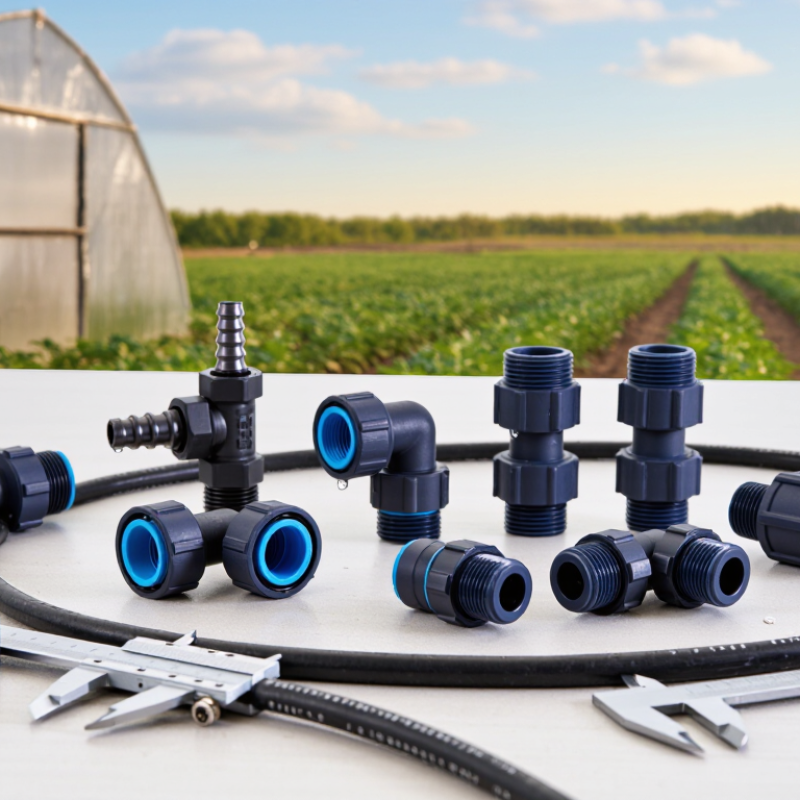
Top Drip Tape Fittings for Global Buyers?

What Drip Tape Fittings Are and How They Work

Drip tape fittings connect thin irrigation tape to a water supply line, allowing controlled delivery near plant roots. Common parts include takeoff connectors, grommets, valves, end closures, and repair couplers. Each fitting has a specific task. A takeoff creates the outlet, while a valve adjusts or stops the flow. An end closure seals the tape after installation.

The fitting works through a tight mechanical connection. A grommet sits inside a punched hole in the supply pipe. The connector then presses into the grommet and holds the drip tape in place. Water enters the tape through the connector and moves along its built-in emitters. Pressure matters. Too much pressure may stretch the tape or force leaks around weak joints. Too little pressure can produce uneven watering at the far end.

Global buyers should check tape diameter, wall thickness, pipe size, and operating pressure before ordering. A fitting that looks correct may still loosen in hot soil or under repeated movement. Clean cuts improve sealing. Dirt on the pipe can cause slow leaks. Leaks happen.

In practical installations, hand-tightening is often safer than excessive force, especially with softer plastic parts. However, this advice is not universal. Some systems need a tool or a different connector style. I would test a small section first, measure flow at several outlets, and inspect the joints after one watering cycle. That simple check can reveal compatibility problems before a full field installation.

Top Drip Tape Fittings for Global Buyers

Drip tape fittings connect thin-wall irrigation tape to the mainline, create branch connections, join tape sections, change direction, or close the end of a row. The chart shows common nominal tape-side sizes used with each fitting type. Actual compatibility depends on tape outside diameter, wall thickness, connector design, and operating pressure.

Most agricultural drip tape systems use approximately 16–17 mm tape, while 20–22 mm tape is also used in higher-flow or longer-row layouts. Select fittings with a matching tape-side diameter and a secure gasket, barb, or compression seal.

Key Drip Tape Fitting Types for Different Irrigation Systems

Top Drip Tape Fittings for Global Buyers?

Key Drip Tape Fitting Types for Different Irrigation Systems

Drip tape fittings must match the tape wall, water pressure, and field layout. In thin-wall systems, barbed takeoff fittings create a firm connection through a punch hole. Their teeth should enter cleanly, without crushing the tape. A loose joint can spray water beside the crop row.

Compression fittings suit repeated installation and greenhouse layouts. They hold the tape with a nut or sleeve, making seasonal removal easier. For manifold systems, threaded adapters connect tape outlets to rigid pipes. Check thread standards carefully. A small mismatch may cause slow leaks.

Layflat hose systems often use saddle takeoffs and locking valves. These fittings help control separate irrigation zones. Repair couplers are useful after accidental cuts from hoes or machinery. End plugs and flush valves manage line cleaning. Sediment can collect near the final outlet.

In my field checks, fitting choice often matters more than expected. I once selected a connector by outside diameter alone. The tape looked compatible, but the seal weakened under pressure. That mistake showed why wall thickness, water quality, and operating pressure need equal attention. Some fittings still require hand testing. A catalog cannot reveal every field condition.

How to Compare Materials, Sizes, and Connection Designs

Top Drip Tape Fittings for Global Buyers?

How to Compare Materials, Sizes, and Connection Designs

Material choice affects leakage, service life, and field repairs. Polypropylene fittings are lightweight and economical for seasonal systems. Acetal fittings usually provide better stiffness and thread accuracy. Nylon can handle demanding connections, but chemical compatibility still requires checking. FAO AQUASTAT reports that agriculture uses about 70% of global freshwater withdrawals. Small leaks therefore deserve serious attention. I have seen a low-cost fitting waste water within hours.

Size matching is not simply choosing 16mm or 22mm tape. Measure the tape’s actual outside diameter, wall thickness, and inlet diameter. Tolerances differ between manufacturers and production batches. A barbed connector grips quickly, while compression designs offer cleaner installation and easier maintenance. Threaded take-offs are useful near valves and filters, but overtightening can crack plastic bodies. ISO 9261 specifies performance and testing requirements for emitters and emitting pipes, yet it does not replace field testing. Pressure, filtration, and water chemistry can change results.

Tips: Carry a caliper, not only a ruler. Test ten connections before ordering thousands. Check UV exposure, fertilizer compatibility, and working pressure. A fitting that seals in a cool warehouse may loosen under hot sunlight. I still recheck this assumption, because installation skill often matters as much as material selection. UN-Water’s World Water Development Report also highlights agriculture’s continuing pressure on freshwater resources. Reliable connections are a practical efficiency measure.

Top Drip Tape Fittings for Global Buyers? - How to Compare Materials, Sizes, and Connection Designs

Fitting Type Common Material Compatible Tape Sizes Typical Tape Wall Range Connection Design Typical Working Pressure Main Advantages Important Buying Check
Straight Barbed Coupler UV-stabilized polypropylene 16, 17, 20, and 22 mm 0.15–0.38 mm Internal barbs inserted into both tape ends; clamps may be added Usually up to about 1.0 bar, depending on tape and clamp quality Low cost, quick installation, suitable for repairing or extending tape Match the barb diameter to the tape inside diameter and verify sealing at the operating pressure
Straight Compression Coupler Polypropylene body with elastomer sealing ring 16, 17, 20, and 22 mm 0.15–0.40 mm Nut or locking collar compresses the tape against an internal seal Commonly about 1.0–1.5 bar when correctly installed Better repeatability and easier disassembly than basic barbed fittings Check the allowable tape thickness, seal material, and whether the collar can be tightened by hand
Tape Take-Off Adapter UV-stabilized polypropylene or acetal 16, 17, 20, and 22 mm tape 0.15–0.38 mm A perpendicular outlet connects the tape to a header, hose, or microtube Generally 0.7–1.5 bar, subject to outlet and sealing method Creates independent irrigation rows from a main supply line Confirm outlet thread or barb size, gasket dimensions, and the required punch-hole diameter
Tape Start Connector Polypropylene with rubber or EPDM washer 16, 17, 20, and 22 mm 0.15–0.40 mm Connects a tape line to a drilled header through a grommet or sealing washer Typically 0.7–1.5 bar in field drip systems Suitable for modular row layouts and seasonal installation Check header-wall compatibility, hole size, gasket hardness, and leak resistance
Tape End Stop Polypropylene or acetal 16, 17, 20, and 22 mm 0.15–0.38 mm Folding, clamping, or threaded plug closure at the tape end Usually up to about 1.0 bar for folding or clamp styles Allows line flushing and can be reopened for maintenance Select a design that does not overstretch thin-wall tape during closing
Tape Repair Clamp Polypropylene, nylon, or acetal Usually 16–22 mm, depending on clamp range 0.15–0.40 mm External clamp or hinged body seals around a damaged section Commonly about 0.7–1.0 bar Fast repair without cutting out a long section of tape Measure the flat tape width and confirm the clamp accommodates the actual wall thickness
Threaded Tape Manifold Connector Glass-filled polypropylene or acetal 16, 17, 20, and 22 mm tape; 1/2 or 3/4 inch outlet options 0.20–0.40 mm Tape inlet combined with a female or male pipe thread for valves and manifolds Often about 1.0–2.0 bar, subject to thread and seal design Integrates drip tape with filtration, fertigation, valves, or rigid pipework Specify thread standard, such as BSP or NPT, and confirm the outlet flow capacity
Flush Valve Connector UV-stabilized polypropylene with elastomer seal 16, 17, 20, and 22 mm 0.15–0.38 mm Removable valve or cap provides an open flushing path at the line end Usually about 0.7–1.5 bar Helps remove sediment and supports routine line maintenance Check opening size, seal replacement availability, and compatibility with filtered water
Buyer comparison tip: Before ordering, confirm the tape nominal diameter, actual wall thickness, outlet thread standard, operating pressure, UV exposure, water quality, and whether the fitting must be reusable or permanently installed.

Global Standards for Drip Tape Fitting Quality and Compatibility

Top Drip Tape Fittings for Global Buyers?

Global buyers should judge drip tape fittings by measured compatibility, not appearance. A fitting may look universal, yet its barb diameter can vary by millimeters. That small difference can cause leaks under pressure. Quality checks should confirm tape thickness, inner diameter, and connector tolerance. ISO 9261 can support evaluation of agricultural irrigation components and emitting products. It should not replace local requirements or application testing.

Reliable fittings usually use consistent, irrigation-grade materials with suitable UV and chemical resistance. Buyers should request pressure-test results, material details, and batch traceability. In outdoor storage, weak plastic may become brittle before installation. A practical inspection includes pulling the tape firmly, checking the seal, and testing joints at working pressure. Do not test only one sample.

Thread compatibility also matters. BSP and NPT threads are not interchangeable, even when they seem similar. Compression fittings, barbed connectors, valves, and take-off adapters must match the tape system. Water quality changes the decision too. Fertilizer residues, sand, and hard water can stress seals and narrow passages. Proper filtration is often more important than a cheaper fitting.

Field experience shows that many failures begin with unclear specifications. I have seen good fittings paired with unsuitable tape. That mistake is easy to miss.
Samples should be tested in the buyer’s actual climate, pressure range, and installation method. Certification documents help, but honest performance data matters more. Some suppliers still report ideal laboratory results, not field behavior. That gap deserves careful questions.

How to Choose Suppliers and Manage International Orders

Top Drip Tape Fittings for Global Buyers?

How to Choose Suppliers and Manage International Orders

Selecting drip tape fittings is not only a price decision. It affects water pressure, field maintenance, and crop consistency. Experienced buyers compare connector size, material strength, sealing design, and compatibility with their existing tape. A fitting that looks suitable may leak after repeated installation.

I usually ask suppliers for technical drawings, material details, and production samples. Check the sample with your actual drip tape, not a similar roll. Measure the insertion force and inspect the gasket after several connections. Small details matter. Threads should engage smoothly. Barbs should hold firmly without cutting the tape.

Supplier evaluation needs evidence. Request recent quality records, packaging photos, and a clear inspection process. Confirm production capacity before placing a large order. A low quotation may hide weak packaging or inconsistent dimensions. My early purchasing plans focused too much on unit cost. That caused delays and extra labor in the field.

For international orders, write every requirement into the purchase agreement. Include fitting specifications, quantities, tolerances, carton labels, delivery terms, and inspection timing. Confirm whether prices include inland transport, export handling, or insurance. Keep a buffer for port congestion and seasonal demand. Share destination details early, because incorrect documents can hold a shipment.

Use staged payments carefully and keep written communication. Ask for production photos before dispatch. Independent inspections can be useful for larger orders. Still, no process is perfect. A final sample check may reveal issues missed during factory review. Good buyers record those findings and adjust the next order.

We are using cookies on our website

Please confirm, if you accept our tracking cookies. You can also decline the tracking, so you can continue to visit our website without any data sent to third party services.