
10 Water Sprinkler Buying Tips for Global Buyers?

Choosing the right Water Sprinkler is rarely as simple as comparing prices on a supplier website. Global buyers must connect product performance with local water conditions, crop needs, installation methods, and maintenance capacity. A sprinkler that performs well on a European test field may struggle with dusty water or unstable pressure elsewhere. Real purchasing experience shows that small details often create the largest costs.

These ten buying tips examine the practical checks behind a dependable decision. Buyers should review flow rate, spray diameter, operating pressure, materials, connection size, and expected service life. Polypropylene may suit some agricultural applications, while brass or stainless steel can offer stronger resistance in demanding environments. However, stronger materials do not automatically guarantee better performance. A poorly matched nozzle can waste water and leave dry patches beside the plants.

Supplier evidence matters. Ask for test data, installation guidance, quality records, spare-part availability, and clear warranty terms. Confirm whether the product has been tested under conditions similar to your project. Certifications may also differ by destination, so buyers should verify current requirements with qualified local professionals. Do not rely on attractive photographs alone.

There is no universal choice.

Budget planning should include filters, fittings, labor, freight, and future repairs. It is also wise to request samples or conduct a small field trial before placing a large order. Even experienced buyers can misjudge pressure loss across long pipes. Careful questions, measurable specifications, and honest supplier communication make the final decision more reliable.
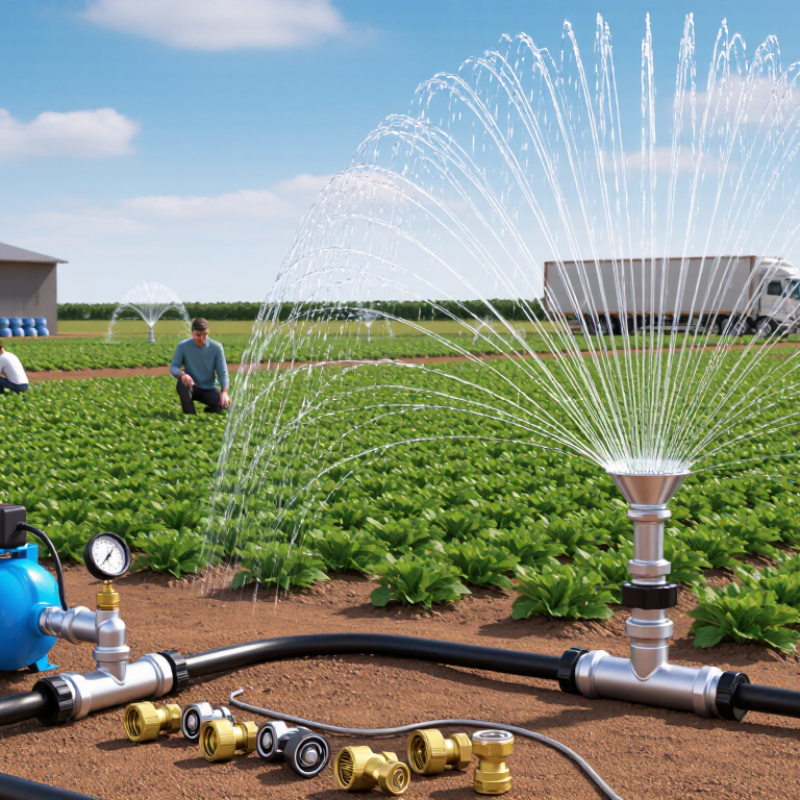
10 Water Sprinkler Buying Tips for Global Buyers?

Identify the Water Sprinkler Type and Intended Application

Choosing the right water sprinkler begins with its intended application. A lawn sprinkler should deliver even coverage across grass and garden beds. An agricultural sprinkler may need longer reach, higher flow, and resistance to outdoor dust. Fire protection systems require certified designs, reliable pressure control, and strict compliance with local safety codes. These uses are not interchangeable.

Tips: Map the area before selecting a sprinkler. Measure the coverage diameter, water pressure, flow rate, and connection size. A rotating model can suit open lawns, while a fixed spray head may work better near narrow planting rows. Check the water source, too. A weak pump can create dry patches and disappointing performance.

Observe the site at different times. Wind can distort spray patterns, especially in coastal or exposed locations. Soil type also matters; heavy clay may need slower application to prevent runoff. Test one unit before ordering large quantities. This small step can reveal uneven coverage, noisy movement, or difficult maintenance. I have found that product charts are useful, but they rarely show every field condition. Leave room for adjustment. A slightly larger model is not always better, because excessive flow may waste water and damage delicate plants. Choose materials suited to sunlight, moisture, temperature changes, and expected service frequency. Reliable buying decisions come from matching technical data with real operating conditions.

Evaluate Coverage, Flow Rate, Pressure, and Water Efficiency

10 Water Sprinkler Buying Tips for Global Buyers

Coverage should match the field, garden, or landscape shape, not just the catalog drawing. Measure throw distance at the available pressure. A sprinkler covering 12 meters on paper may reach less on sloped ground or in strong wind. Check the spray pattern, adjustment range, and overlap between units. Uneven overlap creates dry patches and hidden overwatering.

Flow rate and pressure must be evaluated together. A high-flow sprinkler may perform poorly when several units share one line. Ask for operating pressure, nozzle output, connection size, and recommended spacing. Use a pressure gauge and, when possible, a flow meter during testing. Water quality matters too. Fine particles can block small nozzles, while hard water may leave deposits. Filtration is not optional in many installations.

Tips: Compare water use per square meter, not only liters per minute. Test one sprinkler first. Observe the edges. Review performance under local wind conditions, because laboratory results may feel too optimistic. Automatic control can reduce waste, but only when schedules match soil absorption and weather. Short watering cycles often work better on compacted ground. Still, this is not universal. Local soil, crop needs, and seasonal pressure changes can overturn a neat calculation. Select materials suited to local temperatures, ultraviolet exposure, and approved water-system standards. Reliable suppliers should provide test data, installation guidance, and clear replacement specifications.

10 Water Sprinkler Buying Tips for Global Buyers: Evaluate Coverage, Flow Rate, Pressure, and Water Efficiency

No. Buying Factor Typical Data or Benchmark What to Check Practical Buying Guidance
1 Coverage Radius and Pattern Fixed spray sprinklers commonly cover a radius of about 2–5 m. Rotary and impact sprinklers commonly cover about 6–20 m, depending on pressure and nozzle size. Confirm whether the spray pattern is full-circle, part-circle, rectangular, or adjustable. Choose a pattern that matches the landscape shape. Head-to-head coverage, where one sprinkler reaches the next, generally improves uniformity.
2 Flow Rate Typical household sprinkler flow ranges from approximately 4–25 L/min. Large impact or agricultural units may use approximately 20–80 L/min or more. Compare the sprinkler's required flow with the available water supply and pipe capacity. Avoid combining too many high-flow sprinklers on one zone. The total zone flow should remain below the reliable supply capacity.
3 Operating Pressure Fixed sprays often operate around 1.5–3.0 bar (22–44 psi). Rotors and impact sprinklers commonly require about 2.5–5.5 bar (36–80 psi). Check the minimum and maximum pressure stated for the nozzle or sprinkler. Low pressure can reduce radius and create uneven watering. Excessive pressure can cause misting, leakage, and poor distribution.
4 Water Distribution Uniformity A well-designed irrigation zone should aim for a distribution uniformity of approximately 70% or higher; higher values indicate more even application. Look for matched precipitation rates, consistent nozzles, and an even spray pattern. Do not judge performance only by maximum radius. Even coverage is more important than distance alone.
5 Water Efficiency Rotary or multi-stream sprinklers generally apply water more slowly than fixed sprays, helping reduce runoff on many soil types. Check precipitation rate, droplet size, shut-off performance, and resistance to wind drift. For sloped, compacted, or clay soils, select a lower application rate and use shorter watering cycles when possible.
6 Area and Application Rate A precipitation rate of approximately 10–25 mm/hour is common for many landscape sprinkler zones, although actual values vary by nozzle and spacing. Compare the application rate with the soil infiltration rate and the required watering depth. Use cycle-and-soak scheduling if the sprinkler applies water faster than the soil can absorb it.
7 Wind Performance Fine mist droplets are more easily moved by wind. Larger, pressure-controlled droplets generally maintain a more predictable pattern. Review wind tolerance, nozzle design, and whether the spray can be adjusted for windy conditions. For exposed areas, avoid excessive pressure and very fine sprays. Watering during low-wind periods can also reduce losses.
8 Filtration and Clogging Resistance Small nozzles may require filtration commonly in the range of about 80–120 mesh, depending on the manufacturer's specification. Check recommended filter size, nozzle passage diameter, and ease of cleaning. Use suitable filtration for well water, surface water, or recycled water. Clogged nozzles can significantly reduce uniformity.
9 Material and Climate Suitability Common materials include UV-resistant plastics, stainless steel, brass, and engineered polymers. Freezing conditions can damage water-filled components. Evaluate UV exposure, water chemistry, temperature range, corrosion resistance, and freeze protection. Select materials for the actual climate and water quality. In freezing regions, provide drainage or seasonal winterization.
10 Installation, Compatibility, and Maintenance Common connection sizes include 1/2 inch and 3/4 inch for small systems, while larger systems may use 1 inch or larger connections. Verify thread standard, connection size, replacement nozzle availability, spare parts, and cleaning access. For international procurement, confirm metric or imperial threads, local water standards, packaging requirements, and after-sales parts support.

Note: Performance figures are typical application ranges, not guaranteed ratings. Actual coverage, flow, and pressure depend on nozzle size, installation spacing, elevation, pipe friction, water quality, and operating conditions.

Check Materials, Durability, Maintenance, and Climate Compatibility

10 Water Sprinkler Buying Tips for Global Buyers

Material selection affects service life, water use, and repair frequency. FAO’s AQUASTAT data reports that agriculture uses about 72% of global freshwater withdrawals. Small inefficiencies can therefore become expensive. Choose corrosion-resistant plastics, stainless steel, or treated metals for wet environments. Check UV resistance before installing sprinklers under strong sunlight. Thin plastic may look economical, but brittle threads often fail during winter removal.

Durability also depends on pressure and water quality. Ask for tested operating ranges, impact resistance, and replacement-part availability. Hard water can clog narrow nozzles, while sandy water can damage moving parts. A removable filter helps, but it still needs regular cleaning. No sprinkler is maintenance-free. In practice, a five-minute inspection can reveal cracked seals, uneven rotation, or blocked nozzles. Those details matter more than attractive packaging.

Climate compatibility requires more than matching the spray radius. The IPCC reports increasing risks from drought and heavy rainfall in many regions. Select adjustable flow for dry climates and stable anchoring for windy locations. In cold areas, drain the system before freezing conditions. In humid regions, inspect metal connections for corrosion. ISO 15886 irrigation sprinkler standards provide useful performance references, but local testing remains important. Manufacturer claims can be incomplete. Compare field conditions, water pressure, soil type, and seasonal temperatures before purchasing.

Compare Standards, Certifications, Installation, and Supplier Support

10 Water Sprinkler Buying Tips for Global Buyers

Standards and certifications should match the building risk, not simply the supplier’s catalog. Check whether the sprinkler complies with NFPA 13, EN 12259, ISO 6182, or your local authority’s requirements. Certification documents should show the exact model, temperature rating, response type, and production traceability. A generic certificate is not enough. Ask for test reports, material details, and current validity dates. Confirm acceptance with the project consultant before placing a bulk order.

Installation conditions can change the correct selection. Review water pressure, flow demand, K-factor, thread type, pipe material, and ambient temperature. Corrosive rooms may require extra protection. Storage areas often need different spacing and discharge performance. Provide accurate ceiling drawings. Small errors can affect hydraulic calculations. Supplier support matters here. Reliable suppliers should offer layout guidance, installation manuals, inspection procedures, and responses from qualified technical staff. Clear communication helps across time zones.

Request sample inspections before shipment. Check threads, finish, protective caps, markings, and packaging. Keep batch records and spare units for maintenance. Warranty terms should explain response times, replacement procedures, and exclusions. Do not judge support by fast sales replies alone. Ask how they handle damaged goods or revised project requirements. No checklist is perfect. Site conditions are sometimes misunderstood, and even experienced buyers can miss local approval details. Independent engineering review remains a sensible safeguard.

Review Total Cost, Shipping Factors, Warranty, and After-Sales Service

For global buyers, the purchase price is only the starting point. Calculate the landed cost before approving a water sprinkler order. Include product price, export packaging, ocean or air freight, insurance, customs duties, and inland delivery. Small accessories can also increase the final bill.

Shipping details deserve close attention. Ask for carton dimensions, gross weight, pallet limits, and the estimated departure schedule. A low freight quote may exclude port handling or destination charges. Confirm the delivery term in writing, because different terms transfer costs and responsibilities at different stages. Build a buffer for seasonal congestion. Delays happen.

Warranty language should be practical, not impressive. Check the coverage period, proof requirements, excluded damage, and response time. Ask whether replacement nozzles, seals, or connectors are available separately. After-sales service should include installation guidance, troubleshooting documents, and a clear contact channel. Request sample service records or response commitments when possible. This creates useful evidence.

A careful buyer should test a small shipment before placing a large order. Inspect spray pattern, pressure performance, thread accuracy, and packaging damage on arrival. Keep photographs and inspection notes. One mistake is trusting a warranty without checking return freight responsibility. Another is ignoring local water conditions, which may shorten service life. These details often decide whether a sprinkler remains economical after installation.

10 Water Sprinkler Buying Tips for Global Buyers

Use this planning scorecard to compare suppliers beyond the unit price. The percentages represent a practical review weighting for total cost, delivery risk, product compliance, warranty, and after-sales support; buyers should adjust them to match their project requirements.

We are using cookies on our website

Please confirm, if you accept our tracking cookies. You can also decline the tracking, so you can continue to visit our website without any data sent to third party services.