
How to Buy Pure Lycopene Powder for Your Business Needs?
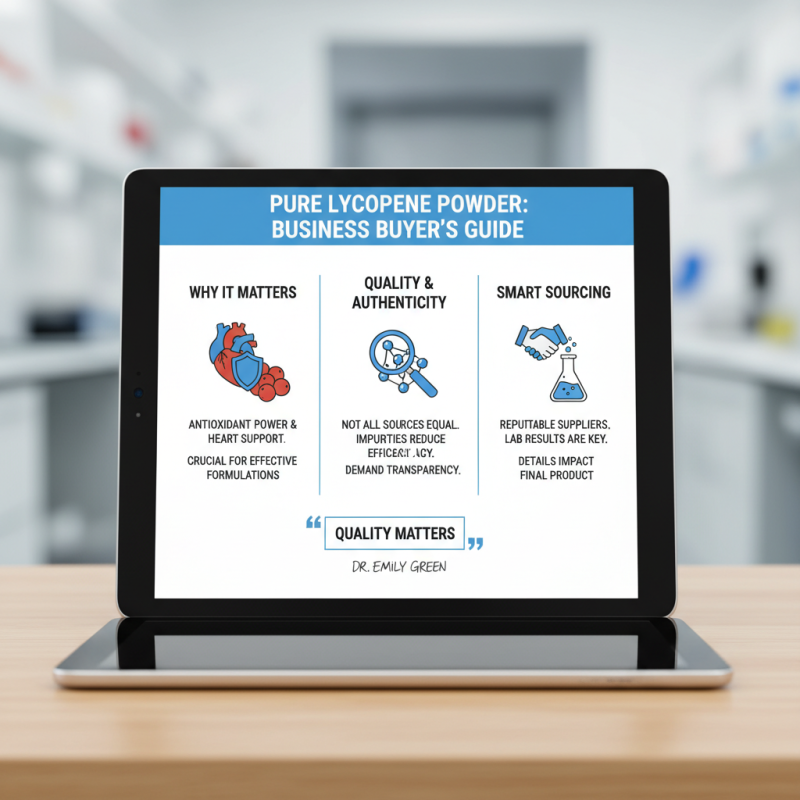
When considering business needs, procuring Pure Lycopene Powder is crucial. Dr. Emily Green, a leading expert in nutraceuticals, emphasizes, "Quality matters when sourcing lycopene; it's vital for effective formulations." This sentiment resonates throughout the industry.
Pure Lycopene Powder offers numerous health benefits. It is known for its antioxidant properties and potential heart health support. However, not all sources are created equal. Buyers must navigate a landscape filled with varying quality and purity. Authenticity is paramount, as impurities can lead to ineffective products.
Engaging with reputable suppliers is essential. Demand transparency and lab results to ensure quality. Remember, even small differences in sourcing can impact your final product's efficacy. Paying attention to details is critical for success in the lycopene market.
Understanding Lycopene: Definition and Health Benefits
Lycopene is a powerful antioxidant found in tomatoes and other red fruits. It belongs to the carotenoid family and has been linked to various health benefits. Research shows that lycopene can reduce the risk of chronic diseases, particularly prostate cancer. A study from Harvard University found a 20% lower risk of prostate cancer in men with high lycopene consumption.
In addition to its cancer-fighting properties, lycopene supports heart health. Data indicates that it may help lower LDL cholesterol and blood pressure. A report by the American Heart Association emphasized the importance of carotenoids in reducing cardiovascular diseases. Integrating lycopene into your diet may enhance overall health.
Tips: Start with small doses when adding pure lycopene powder to your products. Monitor how it interacts with other ingredients. Quality matters significantly; look for pure, high-grade sources. Contemplate the sourcing practices of suppliers, as they directly impact product quality. Transparency in the supply chain is crucial for reliable products.
Key Sources and Production Methods of Pure Lycopene Powder
When looking for pure lycopene powder, it's essential to understand its sources and production methods. Lycopene is a powerful antioxidant commonly found in tomatoes and other red fruits. The extraction process is crucial to ensure high purity. Typically, manufacturers use solvent extraction or supercritical fluid extraction. These methods help retain the beneficial properties of lycopene while removing impurities.
Tomato processing facilities often stand out as reliable sources. They focus on standardized extraction to produce high-quality lycopene. It’s vital to check the sourcing practices of these facilities. Some may not adhere to stringent quality controls, which could affect the product's effectiveness. Transparency in the production process is key. Certifications and lab results can provide reassurance about purity levels.
Pay attention to geographical sourcing too. Lycopene from regions with optimal growing conditions may have enhanced properties. Analyzing these details can guide your purchase decisions. Relying on experience and feedback from previous buyers might be beneficial, but make sure it’s from trusted sources. Misleading information can lead to poor choices, resulting in subpar products for your business.
How to Buy Pure Lycopene Powder for Your Business Needs?
| Source | Production Method | Purity Level (%) | Typical Uses | Pricing (per kg) |
|---|---|---|---|---|
| Tomato Extract | Solvent Extraction | 95% | Nutraceuticals, Supplements | $150 |
| Red Pepper | Cold Pressing | 90% | Food Industry, Health Foods | $180 |
| Watermelon | Saponification | 99% | Cosmetics, Supplements | $200 |
| Pink Grapefruit | High-Temperature Extraction | 97% | Dietary Supplements, Functional Foods | $220 |
Evaluating Quality: Purity Standards and Testing for Lycopene
When purchasing pure lycopene powder, evaluating quality is critical. Purity standards may vary widely. It is essential to rely on methods like high-performance liquid chromatography (HPLC) for testing purity levels. According to a 2022 report from the Journal of Nutritional Science, only 30% of commercial lycopene powders meet the expected purity criteria of 95% or higher. This raises concerns about reliability in sourcing.
Another aspect to consider is the origin of the lycopene. Sourcing from reputable suppliers can significantly ensure quality. Studies suggest that lycopene derived from organic tomatoes tends to have higher antioxidant activity. The antioxidant capacity can be quantified, revealing significant differences in products from various sources.
Transparency in testing methods is vital. Some suppliers may lack clear evidence of their product's purity. Third-party testing can provide added assurance of quality. However, not all third-party labs maintain consistent standards. Businesses must research the certifications and testing procedures used by suppliers before making decisions. Inconsistent quality can lead to negative impacts on both product integrity and customer trust.
Navigating the Market: Selecting Reliable Suppliers for Lycopene
When selecting reliable suppliers for lycopene, thorough research is essential. Look for companies with a solid reputation in the market. Their years of experience can be a good indicator of quality. Consider suppliers who provide certifications for their products. This adds a layer of trustworthiness.
Tips: Check online reviews. Engage with other businesses in your industry. They can offer insights on their experiences with different suppliers. Keep an eye on the supplier's production process. Transparency in sourcing and manufacturing is crucial.
It's also vital to assess the supplier's customer service. Are they responsive to inquiries? Do they offer support during the purchasing process? Excellent communication can signal reliability. Always ask for samples before making large orders. This step can prevent potential disappointments.
Be cautious of deals that seem too good to be true. They often come with hidden risks. It’s a balancing act—finding quality while ensuring cost-effectiveness. Establishing long-term relationships with trusted suppliers can yield better outcomes. Quality products will positively impact your business in the long run.
Cost Analysis and Budgeting for Lycopene in Your Business Strategy
When budgeting for pure lycopene powder, consider several key factors. The global lycopene market is projected to reach $90 million by 2026, driven by its health benefits. As a business, understanding the pricing dynamics is essential. Quality lycopene can range from $200 to $400 per kilogram, depending on purity and source. Evaluate suppliers carefully to ensure you get the best value.
Incorporating lycopene into your products may offer a competitive edge. However, the cost of sourcing high-quality ingredients can impact margins. A study by Grand View Research indicates that consumer awareness of health benefits is on the rise. This means demand could increase. Yet, participating in emerging trends requires precise budget forecasting.
Keep in mind the importance of negotiating bulk pricing. Discounts can significantly lower costs. Assess your production volume. Smaller orders may lead to higher prices per unit. Establishing a long-term relationship with suppliers may also yield better deals. Balancing these financial considerations is critical for sustainable growth in your business strategy.


