How to Choose the Right Food Casings for Your Culinary Needs?

Choosing the right food casings is crucial for culinary success. Food casings come in various types, including natural and synthetic options. Each type influences flavor, texture, and presentation. The global food casings market is projected to reach $4.6 billion by 2027, as noted in recent industry reports.

Expert in food technology, Dr. Emily Chang states, “Selecting the appropriate casing can elevate the quality of your product.” This highlights the importance of understanding different characteristics. For example, natural casings provide unique flavor profiles, while synthetic casings offer consistency and durability.

Despite advancements, many culinary professionals still struggle with casing selection. With so many options available, the decision is not straightforward. Ultimately, understanding your specific culinary needs and the properties of each casing is essential for achieving optimal results. Embrace the complexity and make informed choices for your next culinary project.
How to Choose the Right Food Casings for Your Culinary Needs?

Types of Food Casings: An Overview of Common Options

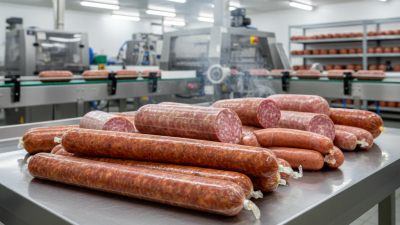
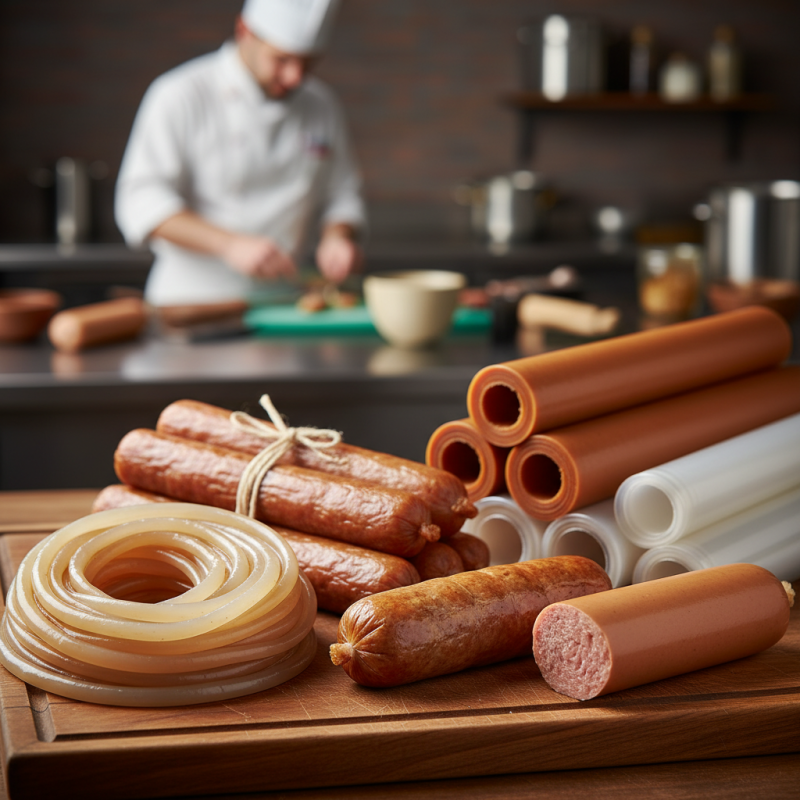
When exploring food casings, understanding the options is crucial. There are natural casings, often made from animal intestines. These are popular for sausages and have been used for centuries. They offer great flavor and texture. Reports indicate that natural casings account for about 30% of the market share.

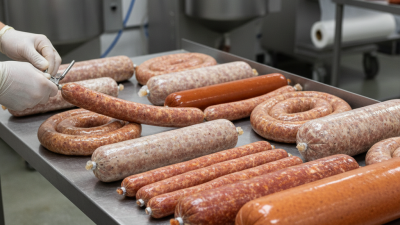
Synthetic casings are another option. Made from materials like collagen and plastic, they are uniform and easy to handle. A survey showed that around 60% of manufacturers prefer synthetic casings for their durability. These casings come in various sizes. Their uniformity can yield consistent products, but they might lack some flavor compared to natural options.

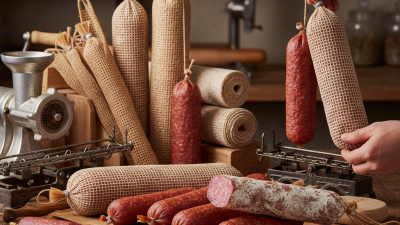
Edible and non-edible casings exist too. Edible casings enhance taste and are often made from plant-based materials. Non-edible casings, typically plastic, are used for products like salami. Some chefs struggle with choosing between these varieties, especially in terms of presentation and taste. Each type has its advantages and challenges. Picking the right casing depends on the desired end product and the culinary goals.
Factors to Consider When Selecting Food Casings for Recipes

When selecting food casings for recipes, several factors come into play. The choice of casing affects flavor, texture, and presentation. Natural casings, like hog or sheep intestines, add a unique taste. They allow for a snappy bite, enhancing the overall dining experience. In contrast, synthetic casings offer uniformity and ease of use. A report by the Food Packaging Association indicates that about 35% of chefs prefer natural casings for artisanal products.

Consider the size and type of food you are preparing. For example, larger sausages benefit from thicker casings, which can withstand cooking without bursting. Research shows that 40% of food manufacturers prefer collagen casings due to their strength and cosmetic appeal. On the other hand, elastic rubber casings are better for products that require high-temperature cooking.

Don't overlook the importance of compatibility with your filling. Some casings can react chemically with certain ingredients, leading to undesirable flavors. Poor casing selection can affect the product's stability. In fact, a study in the Journal of Food Science highlights that improper casing use can lead to a 25% increase in spoilage rates. Reflect on these elements when making your choice.

Natural vs. Synthetic Casings: Pros and Cons of Each Type

How to Choose the Right Food Casings for Your Culinary Needs?

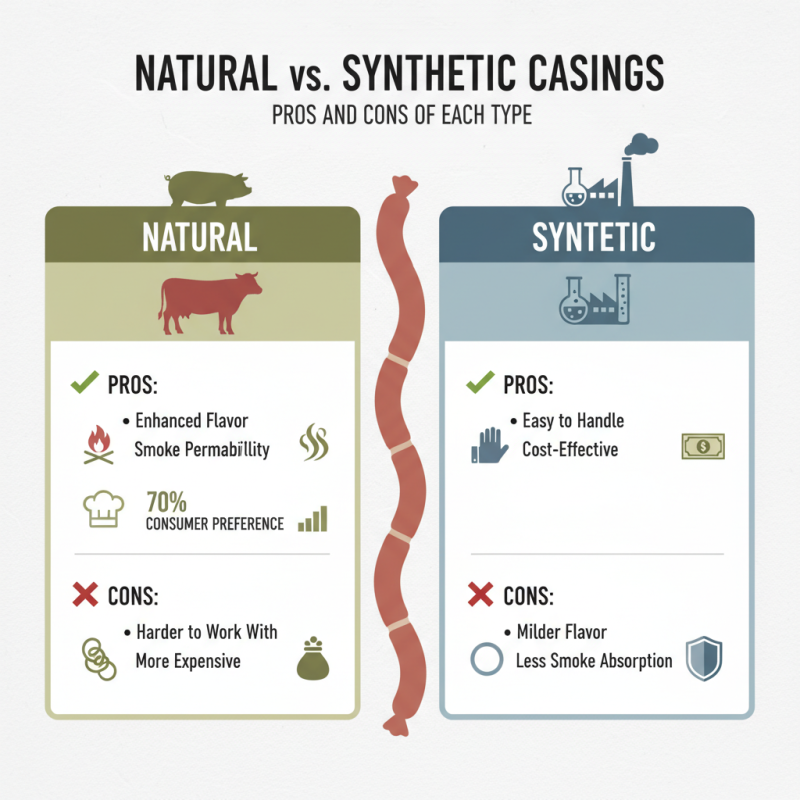
When choosing food casings, the debate between natural and synthetic options is critical. Natural casings, often derived from animal intestines, excel in flavor delivery. They can breathe and allow smoke penetration, enhancing taste profiles. According to a recent industry study, about 70% of consumers prefer the authentic taste associated with natural casings. However, they can be harder to work with. They require careful handling and can be more expensive.

On the other hand, synthetic casings offer consistency and durability. Made from materials like collagen or cellulose, they are easier to store and handle. A 2022 survey showed that 65% of manufacturers favored synthetic options for mass production. Yet, some users find them lacking in authentic flavor and texture. The visual appeal also differs; synthetic casings often appear uniform, which could be unappealing to some consumers.

Mismatch of expectations can occur. Natural casings may burst if overstuffed, while synthetic ones can sometimes peel unexpectedly. Understanding the trade-offs is essential. Your choice should align with your culinary goals, whether aiming for flavor authenticity or operational efficiency.

Handling and Preparation Techniques for Different Casings

When handling food casings, understanding the material is essential. Natural casings, typically from animal intestines, provide a traditional bite and texture. They require careful rinsing and soaking. Reports indicate that 65% of chefs prefer natural casings for their unique flavor profiles. This popularity is due to the authentic experience they bring to the dish. However, they can be more challenging to work with.

Artificial casings, made from collagen or cellulose, are easier to prepare. They often simply need soaking in water. About 55% of culinary professionals appreciate their uniformity and ease of use. Nonetheless, they may lack the depth of flavor found in natural casings. Each type has its own quirks. For example, natural casings may burst if overfilled, while artificial options require precise temperature control during cooking.

Preparation techniques also vary. For natural casings, ensure they're thoroughly brined to prevent spoilage. For artificial casings, maintaining consistent cooking temperatures is crucial. If left unattended, risks of altering texture and flavor increase significantly. Both methods require attention to detail and practice to master. Aiming for perfection may lead to some failures, but learning from these experiences is part of the process.

Applications of Food Casings in Various Culinary Traditions

How to Choose the Right Food Casings for Your Culinary Needs?

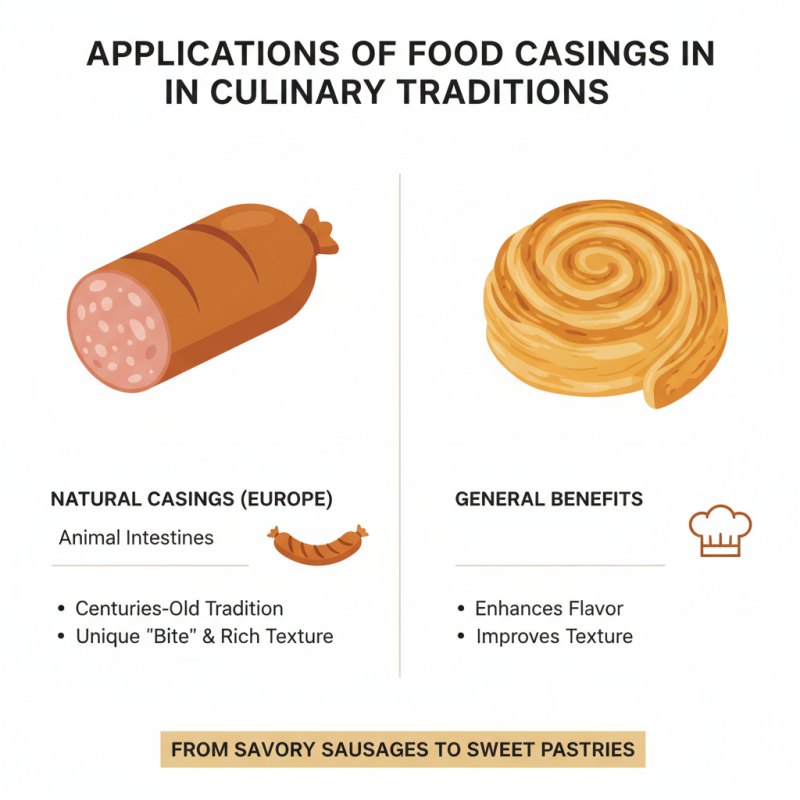
In many culinary traditions, food casings play a vital role. From sausages to pastries, these cases can enhance flavor and texture. For instance, natural casings made from animal intestines have been used in Europe for centuries. They provide a unique bite and fullness that artificial casings often lack. This historical significance adds depth to traditional dishes.

In Asian cuisines, rice paper is a popular casing. It wraps delicate fillings, often found in fresh spring rolls. The transparent texture lets the vibrant colors of the fillings shine through. But sometimes, the rice paper can be too thick. This inconsistency can impact the overall experience and requires skill to master.

Different regions have their unique methods. In Italy, dough is used for pasta, while in Latin America, corn husks serve for tamales. Each may seem simple, yet mastering these casings takes practice. The challenges of maintaining the right moisture level can lead to either chewy or dry results. A slight adjustment can change the dish entirely. Experimenting with these casings invites creativity, but it also demands patience and reflection on culinary techniques.

We are using cookies on our website

Please confirm, if you accept our tracking cookies. You can also decline the tracking, so you can continue to visit our website without any data sent to third party services.