
Top Tips for Choosing Silicone Rubber Hose for Your Projects?

When selecting a Silicone Rubber Hose for your projects, understanding its applications is vital. A report from the Rubber Manufacturers Association indicates that the silicone hose market is projected to grow by 5% annually due to increasing demand in automotive and industrial sectors. Industry expert Dr. John Smith emphasizes, "Choosing the right silicone rubber hose can significantly enhance project efficiency and durability."

Silicone rubber hoses are prized for their flexibility and resilience. They withstand high temperatures and harsh chemicals, making them ideal for various environments. However, not all silicone hoses are created equal. It is crucial to assess specifications such as temperature tolerance, pressure ratings, and intended use. Without proper research, you risk choosing a product that may not meet your project’s needs.

Moreover, while silicone hoses offer numerous benefits, their cost can be a concern. It's not uncommon for budgets to exceed projections due to premium pricing. Therefore, striking a balance between quality and affordability is essential. A thoughtful selection process will ensure that you not only avoid common pitfalls but also invest in a solution that truly meets your project’s demands.
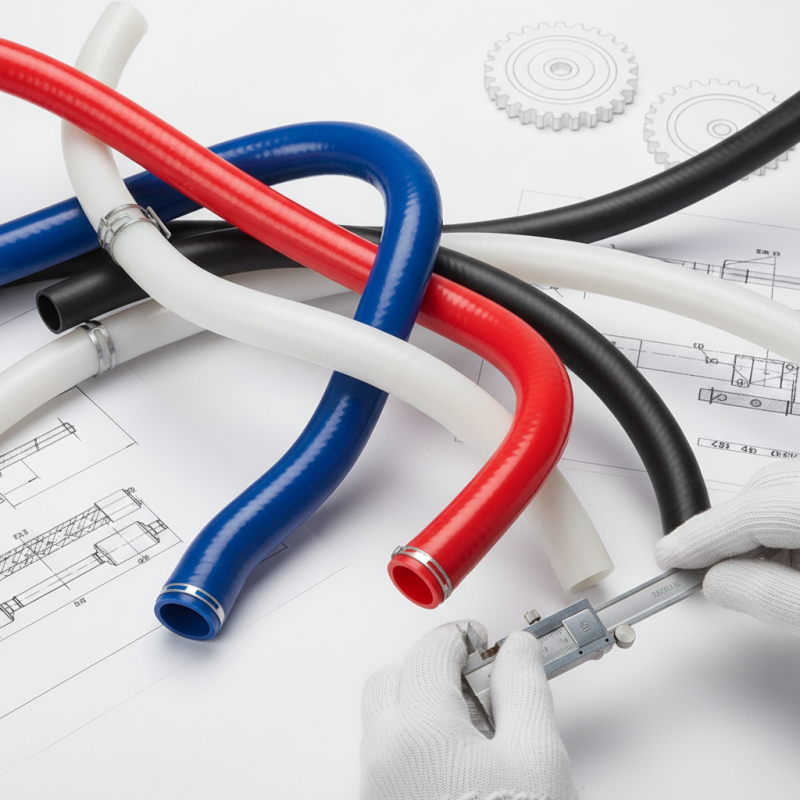
Top Tips for Choosing Silicone Rubber Hose for Your Projects?

Understanding the Properties of Silicone Rubber Hose for Applications

When selecting silicone rubber hoses for projects, understanding their properties is essential. Silicone rubber is known for its excellent thermal stability. It withstands extreme temperatures, ranging from -60°C to +230°C. This makes it suitable for various applications, including automotive and industrial uses.

Another key property is chemical resistance. Silicone rubber can resist many chemicals and fluids, which is vital in applications like food and beverage processing. However, it is crucial to realize that not all silicone hoses are created equal. Some may not perform well in specific chemical environments. Testing compatibility with your intended application is important.

Flexibility is also a significant advantage. Silicone hoses are highly flexible, allowing for ease of installation in tight spaces. Yet, this flexibility can also lead to challenges. In high-pressure applications, they might expand or kink. Evaluating your project’s specifics is necessary. With a careful selection based on these properties, silicone rubber hoses can significantly enhance your project’s performance.

Top Tips for Choosing Silicone Rubber Hose for Your Projects

Property Importance Recommended Specifications
Temperature Resistance Prevents hose degradation in extreme conditions -40°C to 200°C
Chemical Resistance Ensures long-lasting performance in various environments Compatible with oils, fuels, and most chemicals
Flexibility Allows for easy routing in tight spaces High flexibility rating (Shore A 50-70)
Pressure Rating Critical for safety in high-pressure applications Up to 150 psi
Color Options Enhances visibility and identification Various colors available (e.g., blue, red, black)

Identifying the Right Size and Length for Your Silicone Hose Needs

When selecting silicone rubber hose, size and length matter significantly. The diameter of the hose directly impacts flow rates in applications. According to industry reports by the Fluid Power Society, a hose with a small diameter may restrict fluid flow, causing pressure build-up. This can lead to system inefficiencies. Choosing a hose that is too large can result in decreased pressure and potential pulsations in your system.

Length is another crucial factor. A longer hose can create additional resistance and increase the risk of kinks, which can hinder performance. Research shows that for most applications, keeping the hose length as short as possible optimizes efficiency. Industry standards suggest that each bend adds potential loss in pressure, and each additional foot of the hose can introduce 1-2% efficiency loss.

These decisions are not always straightforward. The installation environment can affect your choices. For example, high-temperature applications may cause silicone to expand, influencing the fitting. It's essential to consider temperature, pressure, and the nature of the fluid when choosing hose length and diameter. Testing different configurations helps identify the best performance. Assess your project requirements carefully.

Evaluating Temperature and Pressure Resistance in Silicone Hoses

When selecting silicone rubber hoses, evaluating temperature and pressure resistance is crucial. Silicone hoses can handle a wide temperature range, often from -60°C to 200°C. This makes them suitable for various applications, including automotive and food processing. Reports show that silicone can maintain flexibility at low temperatures, which is vital for ensuring consistent performance.

Consider the pressure rating of the silicone hose. Many silicone hoses are rated for pressures between 5 to 30 psi. This range covers most industrial applications, but it is essential to match the hose to your specific needs. A mismatch can lead to failure and safety hazards, so always review technical specifications.

Tip: Don’t overlook the importance of compatibility with other materials. Some silicone hoses may degrade when exposed to certain chemicals. Properly evaluating the working environment can prevent unexpected failures. Additionally, ensure that the hose is of high quality; substandard products can result in leaks. Always refer to industry standards for temperature and pressure ratings to guide your decisions.

Considering Chemical Compatibility for Industrial Projects

When selecting silicone rubber hoses for industrial projects, chemical compatibility is crucial. Different substances can react negatively, affecting the hose's integrity. This can lead to leaks or failures over time. Conducting thorough compatibility tests is essential. Be sure to check how the silicone interacts with specific chemicals, including oils, acids, and solvents.

It’s easy to overlook this vital aspect. Many assume all silicone hoses are the same, which is a misconception. For example, a hose might perform well with water but react poorly to other liquids. Always gather data from manufacturers or reputable sources regarding chemical interactions.

Consider the temperature range where the hose will operate. High temperatures can amplify chemical reactions. This can lead to unexpected degradation. While silicone is generally stable, its performance can vary under different conditions. Taking these factors into account will help in making an informed choice.

Ensuring compatibility not only enhances safety but also prolongs the lifespan of your projects.

Budgeting and Sourcing High-Quality Silicone Rubber Hose Supplies

When budgeting for silicone rubber hose, quality must not be sacrificed. High-quality silicone hoses typically range from $0.50 to $5.00 per foot, depending on specifications. This price reflects their durability and performance. Investing in superior materials minimizes the risk of failure during projects. Your choices impact both safety and efficiency.

Sourcing supplies requires careful vetting. A recent industry report indicated that nearly 40% of silicone hoses fail due to subpar manufacturing. Look for suppliers who provide detailed product certification. Transparency in sourcing will ensure you avoid costly issues later. It’s also wise to read reviews and get feedback from experienced professionals. Often, firsthand accounts provide valuable insights that can’t be found in specifications alone.

Don’t overlook the importance of application requirements. The temperature range and pressure ratings of silicone hoses differ significantly. For example, a high-performance application may need hoses rated above 400°F. However, many suppliers may not clearly state these limitations. Inconsistent information makes it crucial to ask questions and clarify specifications before purchasing. Remember, the wrong choice can lead to project delays or create unnecessary risks. Choose wisely.

We are using cookies on our website

Please confirm, if you accept our tracking cookies. You can also decline the tracking, so you can continue to visit our website without any data sent to third party services.