


China Top Seaweed Extract Fertilizer Manufacturers for Global Buyers
Choosing a Seaweed Extract Fertilizer supplier in China involves more than comparing prices or reading product claims. Global buyers need to understand the raw material, extraction method, nutrient profile, and intended application. A clear product specification should identify key components and explain how the product is used. Ask for recent batch test reports and practical guidance on storage, dilution, and compatibility with common farm inputs. Details matter.
Manufacturers may offer liquid concentrates, soluble powders, or blends for different crops and production systems. These formats can vary in concentration and handling requirements, so compare them on an equivalent basis. Request samples when appropriate, and assess packaging, labeling, and response times alongside the technical data. A supplier’s ability to communicate clearly is useful evidence, though it is not proof of consistent quality.
This guide introduces considerations for evaluating China-based manufacturers serving international buyers, including production capabilities, quality documentation, customization, and export support. Buyers should verify claims directly and confirm that documents meet their own market and application requirements. A polished brochure can still leave important questions unanswered. That is worth remembering. Seaweed-based inputs may support a broader crop nutrition program, but results depend on product quality, crop conditions, and sound use. No single fertilizer solves every field problem.
What Seaweed Extract Fertilizer Is and How It Supports Plant Growth
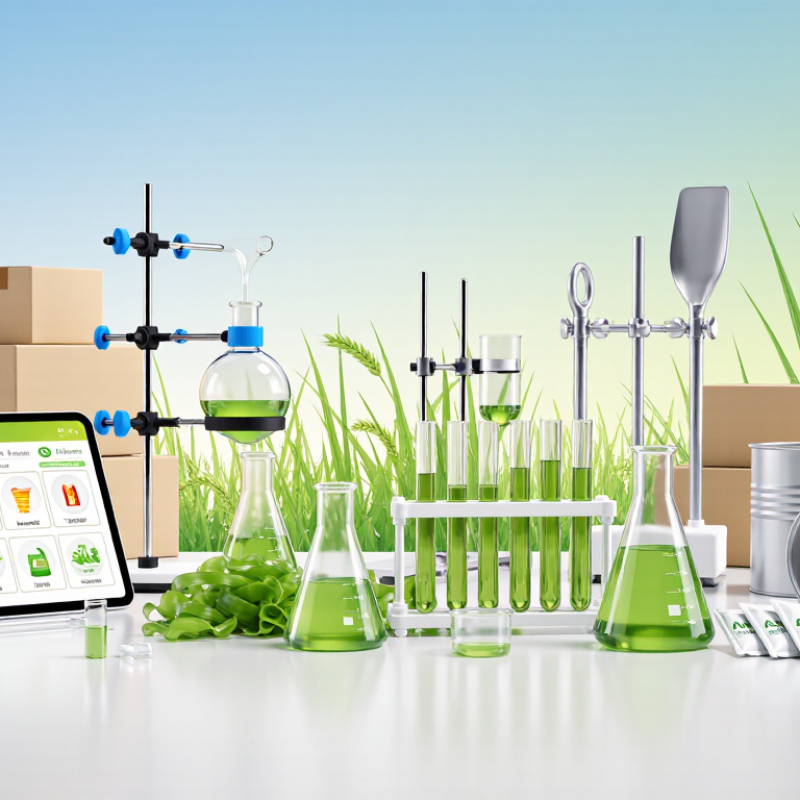
Seaweed extract fertilizer is made from processed marine algae, usually as a liquid concentrate or soluble powder. It may contain small amounts of minerals and natural compounds, including alginates and other carbohydrates. The exact composition depends on the seaweed species and processing method. It is not usually a complete source of nitrogen, phosphorus, and potassium, so it should not replace a balanced fertility plan. Its role is more supportive: some extracts may encourage root development, nutrient uptake, or plants’ responses to environmental stress. Effects can differ between crops and growing conditions.
In practical use, growers may apply a diluted extract to the soil or spray it on leaves, following the product directions. A seedling tray or a row of young vegetables can be treated carefully, rather than drenched. More is not better. Overuse can waste inputs, and concentrated spray may mark leaves, especially in hot sunlight. Results vary. Evidence is not perfectly uniform, and a response seen in one field may not repeat in another. Soil fertility, irrigation, and plant health still matter more than any single supplement. Seaweed extract can be one useful tool, but its limits deserve attention.
China Top Seaweed Extract Fertilizer Manufacturers for Global Buyers - What Seaweed Extract Fertilizer Is and How It Supports Plant Growth
Seaweed extract products are made from marine algae and are sold as liquids or powders. Their composition depends on the seaweed species and manufacturing process. They are commonly used as plant biostimulants; they should not be assumed to replace a complete, nutrient-balanced fertilizer.
| Seaweed source or product type | Common form and production notes | What it may contribute | Potential role in plant growth | What global buyers should verify |
|---|---|---|---|---|
| Ascophyllum nodosum Brown seaweed | Often sold as a liquid extract or soluble powder. Extraction conditions affect the final composition. | May contain soluble seaweed compounds, including polysaccharides and naturally occurring minerals; amounts vary by product. | Used in biostimulant programs intended to support plant vigor and tolerance to environmental stress; outcomes depend on crop and growing conditions. | Request species identification, country of harvest, extraction details, guaranteed analysis, and batch-specific test results. |
| Ecklonia maxima Brown seaweed | Used in some agricultural seaweed extracts; available product forms and concentration depend on the manufacturer. | Contains seaweed-derived organic compounds and minerals, with composition influenced by raw material and processing. | May be applied to soil or foliage as part of a crop-management program. Do not assume a specific growth response without crop-specific evidence. | Check the label for application routes, dilution instructions, crop suitability, and any locally required registration or approval. |
| Laminaria species Brown seaweed | May be used alone or blended with other seaweed materials; the species and blend should be stated on the product documentation. | Seaweed-derived polysaccharides and mineral components can be present; their levels are product-specific. | Can supply organic seaweed constituents in a biostimulant formulation. It is not, by itself, proof of a complete N-P-K nutrient supply. | Compare declared nitrogen, phosphate, potash, micronutrients, organic matter, and water-solubility data across products. |
| Sargassum species Brown seaweed | Raw-material origin and species can vary. Harvesting, cleaning, and contaminant controls are important parts of sourcing. | Mineral and organic composition varies with species, location, season, and processing. | May be formulated for soil or foliar use, subject to the product label and local rules. | Ask for traceability and suitable tests for heavy metals, salinity, microbial quality, and other market-specific contaminants. |
| Liquid seaweed extract Finished product form | Convenient for dilution and liquid application equipment. Storage stability and compatibility depend on formulation. | Concentration, pH, density, and nutrient content should be specified on technical documents or the label. | Can be used for labeled foliar or soil applications; follow the manufacturer’s directions and avoid untested tank mixes. | Verify shelf life, storage temperature, packaging options, dilution rate, pH, and compatibility information. |
| Water-soluble seaweed powder Finished product form | Concentrated dry format that may reduce shipping volume. Solubility and residue levels vary by product and process. | The product specification should state moisture, solubility, concentration, and declared nutrient content. | Can be dissolved for labeled application if the product is intended to be water-soluble. | Request solubility data, moisture specification, batch certificate of analysis, packaging details, and handling instructions. |
Buyer note: Seaweed extract composition and performance vary by species, harvest conditions, processing, formulation, crop, and application. Review the product label and technical data, and check the import, fertilizer, and biostimulant requirements in the destination market before purchase.