2026 Top Mahogany Fibrous Casings Buying Guide
Choosing the right mahogany fibrous casings requires more than comparing colors, prices, or carton sizes. The casing must suit the product, stuffing equipment, smoke cycle, cooking temperature, and planned shelf life. Its mahogany surface should remain even after processing, without pale patches, wrinkles, or loose seams. A casing that looks attractive before stuffing may behave differently inside a humid smokehouse.
Dr. Joseph G. Sebranek, a respected meat-science educator, emphasizes a practical principle: “Packaging is part of the process, not an afterthought.” That idea matters when selecting mahogany fibrous casings. Fiber strength influences stuffing speed and shape retention. Porosity affects smoke absorption. Diameter consistency supports accurate portion control. Small details become visible on the finished sausage.
This 2026 buying guide examines those details from a buyer’s perspective. It considers casing size, moisture performance, color consistency, smoke permeability, storage conditions, and supplier support. It also explains how to compare samples under real production conditions, rather than trusting a catalog photograph alone. Test a short batch. Measure weight loss. Inspect the surface after chilling. Record what changed.
There is no perfect casing for every recipe. That is easy to forget. A stronger casing may not deliver the desired bite. A darker casing may hide surface variation instead of solving it. Buyers should question technical claims, request specifications, and confirm food-contact compliance for their market. Some decisions remain uncertain until production trials begin. That is not failure; it is responsible purchasing.
Mahogany Fibrous Casings Defined: Cellulose, Fiber Reinforcement, and Uses
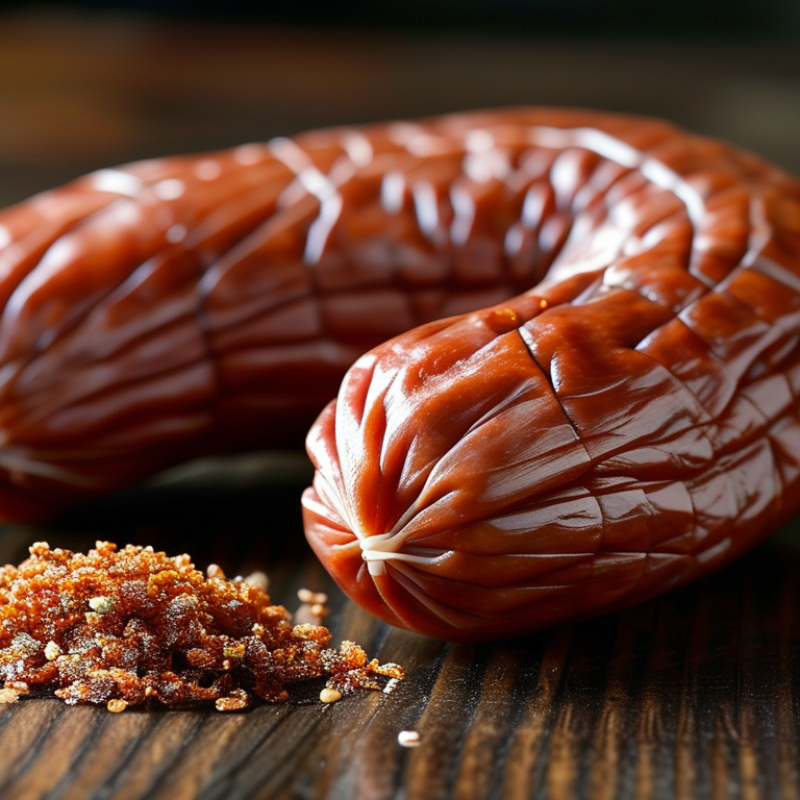
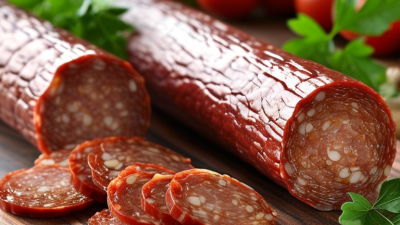
Mahogany fibrous casings are food-grade casings made from regenerated cellulose and reinforced with paper-like fibers. Their deep reddish-brown color gives cooked sausages a traditional, smoked appearance. Cellulose provides structure during filling and cooking. Fiber reinforcement adds strength, especially when the casing holds dense meat mixtures. These casings are usually removed before eating. However, product specifications can differ by supplier and application.
In practical production, mahogany casings suit cooked sausages, luncheon meats, luncheon rolls, and molded deli products. Their uniform diameter supports consistent portioning and slicing.
Their surface can also accept smoke, color, and printed information, depending on the construction. When buying in 2026, check diameter, length, shrinkage, cooking temperature, stuffing pressure, and peeling performance. A casing that looks perfect on a sample may behave differently on a faster filling line. I would test it under real production conditions.
Tips: Match the casing size to the finished product, not the raw batter. Confirm moisture and oxygen barrier needs with the technical sheet. Store unused casings in a cool, dry area. Avoid sudden temperature changes. Review food-contact documentation before purchase. Test several batches, because one trial is rarely enough. My own preference is to record filling pressure, cooking loss, and peel quality together. That record often reveals small problems early.
Caliber Selection: Match 40–120 mm Casings to Product Diameter
Caliber selection decides how a mahogany fibrous casing performs on the filling line. The stated size means approximate diameter in millimeters. A 40–55 mm casing suits narrow salami, snack sticks, and compact cooked sausages. Sizes from 60–85 mm fit luncheon loaves and medium smoked sausages. The 90–120 mm range supports large-format deli products, whole-muscle rolls, and thick bologna-style items.
Match the casing to the finished product diameter, not only the filling horn. A 40 mm casing on a coarse, chunky mix can create weak corners and visible air pockets. An oversized 110 mm casing may produce wrinkles, uneven smoke color, and slow heat transfer. In practice, check the filled diameter at three points along each test piece. Record stuffing pressure, clip spacing, cooking loss, and final shrinkage. Small differences matter.
The OECD-FAO Agricultural Outlook 2024–2033 projects global meat production to grow by about 12% over the outlook period. That growth increases demand for consistent, scalable casing formats. FAOSTAT’s 2024 data also place recent global meat production above 350 million tonnes annually. These figures support standardized caliber planning, but they do not replace trials. I would question any supplier chart promising one size for every recipe. Salt level, protein extraction, thermal expansion, and cooling conditions can change the result. Leave room for testing. Calibration is not perfectly clean.
Safety Compliance: Check FDA 21 CFR 177.2600 and EU 1935/2004
2026 Top Mahogany Fibrous Casings Buying Guide
Safety Compliance: Check FDA 21 CFR 177.2600 and EU 1935/2004
When buying mahogany fibrous casings, review every material layer, not only the outer color. Check whether FDA 21 CFR 177.2600 applies to the casing’s rubber-based components or coatings. The rule concerns repeated-use rubber articles that contact food. Your supplier should identify the relevant material category clearly. Ask for composition details, intended food type, temperature limits, and contact duration. Vague paperwork creates avoidable risk.
For European distribution, verify compliance with EU Regulation 1935/2004. The casing must not transfer substances that endanger health, alter food composition, or damage taste and smell. Request a Declaration of Compliance, migration test results, and traceability records. Test conditions should match real processing, including heating, cooling, humidity, and storage time. A clean sample should remain stable after filling and cooking.
Inspect the casing at receiving. Look for uneven fibers, brittle edges, strange odors, or coating separation. Keep batch numbers beside production records. No certificate lasts forever. Formulas, suppliers, and processing temperatures can change quietly. I have found that a document may cover one layer but omit another. That gap needs questions, not assumptions. Independent laboratory testing is wise when claims seem incomplete or unusually broad. Compliance is practical evidence, not a printed promise.
2026 Top Mahogany Fibrous Casings Buying Guide - Safety Compliance: Check FDA 21 CFR 177.2600 and EU 1935/2004
| Buying Dimension | Recommended Specification or Checkpoint | Why It Matters | Evidence to Request | Buyer Rating Guide |
|---|---|---|---|---|
| Product construction | Confirm that the casing is a regenerated-cellulose fibrous casing with a paper-fiber reinforcement and a declared food-contact coating or barrier layer. | Construction affects stuffing strength, smoke permeability, peeling performance, and the applicable compliance assessment. | Technical data sheet, construction description, coating declaration, and product specification. | High: construction and coating are clearly identified. Low: “fibrous” is stated without material details. |
| Mahogany appearance | Use a consistent dark reddish-brown or mahogany visual target; define acceptable shade variation under the purchasing specification. | Color consistency supports product recognition and reduces batch-to-batch appearance variation. | Approved color sample, color tolerance, lot-release inspection record, and storage guidance. | High: a physical or digital master standard is supplied. Low: color is described only as “mahogany.” |
| Nominal flat width | Select the width according to the finished product diameter and filling equipment; common commercial ranges include approximately 40–100 mm, subject to the supplier’s catalog. | Correct sizing improves filling control, appearance, cooking yield, and peelability. | Declared flat width, tolerance, recommended stuffed diameter, and trial sample results. | High: width and tolerance are measured and documented. Low: only a nominal size is provided. |
| Length and roll format | Compare roll length, net casing length, roll outside diameter, core size, and roll direction with the filling-machine requirements. | Machine compatibility affects changeover time, material waste, and line efficiency. | Packaging specification, roll drawing, core dimensions, and usable-length declaration. | High: all roll dimensions and usable length are stated. Low: length is estimated by weight only. |
| Stuffing performance | Verify performance with the actual meat formulation, stuffing pressure, clip size, linking method, and target diameter. | A casing that performs well in one process may split, wrinkle, or underfill in another. | Documented production trial, breakage rate, diameter control, and recommended operating conditions. | High: trial data are generated on the buyer’s equipment. Low: only generic claims are supplied. |
| Thermal process resistance | Validate the casing against the complete cooking, smoking, cooling, and storage cycle; do not rely on a universal temperature claim. | Time, temperature, humidity, pressure, and product formulation can change casing behavior. | Process window, test protocol, post-process inspection, and application-specific validation report. | High: limits are tied to a defined process. Low: an unsupported maximum temperature is listed. |
| Peelability | Confirm whether the casing is intended to be peeled after cooking and identify any required soaking, cooling, or stripping conditions. | Peel performance affects line speed, surface appearance, and product loss. | Peel test method, acceptable peel force or defect rate, and application instructions. | High: peelability is measured on the finished product. Low: “easy peel” is unqualified. |
| FDA compliance review | Check whether any rubber component or elastomeric article is intended for repeated food contact and, where applicable, assess it against FDA 21 CFR 177.2600. | 21 CFR 177.2600 covers rubber articles intended for repeated use. It is not automatically a complete legal basis for every cellulose or coated fibrous casing. | Material composition, supplier compliance statement, extraction or migration data where relevant, and intended-use statement. | High: the exact material and regulatory basis are identified. Low: a blanket “FDA approved” claim is used. |
| EU framework compliance | Verify compliance with Regulation (EC) No 1935/2004, including suitability for the stated food-contact use and traceability requirements. | The framework regulation requires food-contact materials not to endanger health, transfer constituents in harmful quantities, or adversely change food. | EU Declaration of Compliance where applicable, supporting test data, traceability information, and intended food categories. | High: the declaration covers the actual casing structure and use conditions. Low: only an unspecific certificate is supplied. |
| Good Manufacturing Practice | For EU supply, confirm manufacturing controls consistent with Regulation (EC) No 2023/2006 on good manufacturing practice for food-contact materials. | Documented quality systems help control contamination, formulation changes, and production consistency. | Quality manual or certification, change-control procedure, hygiene controls, and batch-release records. | High: GMP controls are documented and auditable. Low: compliance is asserted without quality-system evidence. |
| Plastic coating or tie layer | If the casing contains a plastic layer, identify the polymer, additives, and applicable EU plastic-material requirements, including Regulation (EU) No 10/2011 when its scope applies. | The coating may determine migration limits and the documents needed to support the food-contact assessment. | Layer structure, substances of concern, specific migration data, overall migration data, and use-condition classification. | High: each layer is covered. Low: only the paper or cellulose component is documented. |
| Printing inks and colorants | Confirm that external printing, pigments, dyes, and colorants are suitable for the intended food-contact configuration and do not migrate through the casing. | The finished article must be assessed as supplied, including inks and colored layers. | Ink declaration, pigment information, migration assessment, and finished-article test report. | High: finished-article data are available. Low: only raw-material statements are provided. |
| Barrier and smoke behavior | Define the required smoke permeability, moisture or oxygen barrier, and surface adhesion for the intended sausage process. | Barrier properties influence smoke uptake, color development, moisture loss, and shelf-life performance. | Permeability or process data, smokehouse trial results, and finished-product shelf-life validation. | High: data match the intended process. Low: “smokeable” or “high barrier” is not quantified. |
| Hygiene and microbiological control | Require hygienic packaging, clean handling, lot identification, and a defined microbial-control program appropriate for a food-contact packaging material. | Casing contamination can affect product safety and production shutdown risk. | Certificate of analysis, hygiene specification, packaging inspection, and nonconformance procedure. | High: every lot is traceable and released against defined criteria. |
| Storage conditions | Store in the original packaging in a clean, dry area protected from direct sunlight, excessive heat, moisture, and chemical contamination; follow the supplier’s specified temperature and humidity limits. | Cellulose-based materials can change dimensionally or lose performance when exposed to unsuitable humidity or handling. | Shelf-life statement, storage limits, transport requirements, and packaging integrity specification. | High: conditions and shelf life are clearly defined and monitored. |
| Traceability and change control | Require batch coding, raw-material traceability, retained samples, complaint handling, and advance notification of material or process changes. | Traceability supports rapid investigation, targeted withdrawal, and regulatory documentation. | Batch certificate, traceability map, change-notification policy, and recall procedure. | High: one finished roll can be traced to production records and component lots. |

Process Performance: Verify 71°C Core Targets, Smoke Transfer, and Peelability
2026 Top Mahogany Fibrous Casings Buying Guide
Process performance should guide every mahogany fibrous casing purchase. In production, measure the coldest sausage core, not the oven reading. Use a calibrated probe and verify the 71°C core target consistently. Measure the cold spot. A casing may look firm while the center remains underprocessed. Record time, humidity, chamber temperature, and product diameter for each trial.
Smoke transfer depends on casing structure, surface moisture, airflow, and smoke density. A deep mahogany color does not always mean strong smoke absorption. Check the aroma after cooling, then compare several slices from different rack positions. My own trials have shown uneven transfer when casings touch or airflow changes. That result was inconvenient, but it exposed a process weakness. Peelability also needs a practical test. Cool the product under the intended schedule, then remove the casing slowly. Watch for meat loss, tearing, or a sticky film.
Tips: Keep casing moisture consistent before stuffing. Avoid overfilling, especially near the clip. Test peelability after refrigerated storage, not only when warm. Record defects honestly. Small variations matter. A supplier’s technical sheet helps, but your line conditions remain decisive. I would request samples across different diameters and run repeated batches before approving a larger purchase. One successful batch is not enough.
2026 Buying Scorecard: Compare MOQ, Roll Length, Lead Time, and Cost per 100 m
2026 Top Mahogany Fibrous Casings Buying Guide
A practical scorecard starts with four numbers: MOQ, roll length, lead time, and cost per 100 meters. Grand View Research valued the global flexible packaging market at USD 268.82 billion in 2023, with projected growth through 2030. That expansion increases supplier choice, but not necessarily purchasing clarity. Mahogany fibrous casings often require color approval, diameter checks, and moisture-controlled storage. Record each condition beside the quoted price.
MOQ can hide cash-flow pressure. A low unit price is less attractive when several months of inventory occupy your warehouse. Compare MOQ with monthly consumption and shelf-life expectations.
Roll length also deserves attention. Longer rolls may reduce splice changes, yet they can create more unused material during setup. Measure actual waste from trial production, not only the supplier’s specification.
Lead time should include artwork approval, sampling, production, and export handling. Smithers’ flexible packaging outlook highlights supply-chain resilience and shorter production cycles as continuing industry priorities.
Cost per 100 meters is simple: total delivered cost divided by total purchased meters, then multiplied by 100. Include freight, inspection, duty, and expected waste.
My own scorecards have occasionally missed storage losses. That mistake is expensive.
A useful comparison records both quoted cost and effective cost after production waste. Three trial rolls may reveal more than a polished spreadsheet.
Related Posts
-
2026 How to Choose Mahogany Fibrous Casings?
-
How to Choose Mahogany Fibrous Casings for Your Needs?
-
How to Choose the Best Fibrous Casing Suppliers for Your Needs?
-
Top Tips for Finding Reliable Fibrous Casing Suppliers?
-
Best Meat Nets for Perfect Grilling Results in Your Backyard
-
Top 10 Benefits of Using Ham Netting for Your Business?