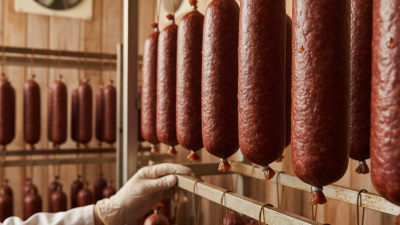
What Are the Top 10 Mortadella Casing Suppliers?

Choosing the right supplier can shape every stage of mortadella production. The casing affects filling speed, product appearance, cooking performance, and shelf presentation. A strong supplier must provide more than attractive samples. It should offer stable dimensions, reliable sealing, and clear food-contact documentation.

This guide examines ten notable mortadella casing suppliers through practical purchasing criteria. These include material quality, diameter options, stuffing performance, thermal resistance, print accuracy, and delivery reliability. Traceability also matters. Buyers should be able to identify production batches and review relevant certificates before placing large orders.

Small details matter.

A casing that wrinkles around the filling may create uneven slices. Weak seams can cause losses inside a commercial cooker. Suppliers with responsive technical teams can help adjust soaking times, stuffing pressure, and clip selection. However, supplier rankings are not permanent. Product lines, certifications, prices, and regional distribution can change without much notice.

The comparison combines publicly available specifications, manufacturer information, industry experience, and common buyer concerns. It does not replace a factory trial or an independent compliance review. Some suppliers publish extensive technical data, while others provide limited public information. That difference can affect perceived reliability, but it does not always prove product quality.

Before selecting a partner, request samples and test them under real production conditions. Check diameter consistency, print adhesion, cooking shrinkage, and storage behavior. Confirm that documentation matches your market’s requirements. The best mortadella casing supplier is not simply the largest name. It is the partner that performs consistently when production becomes demanding.
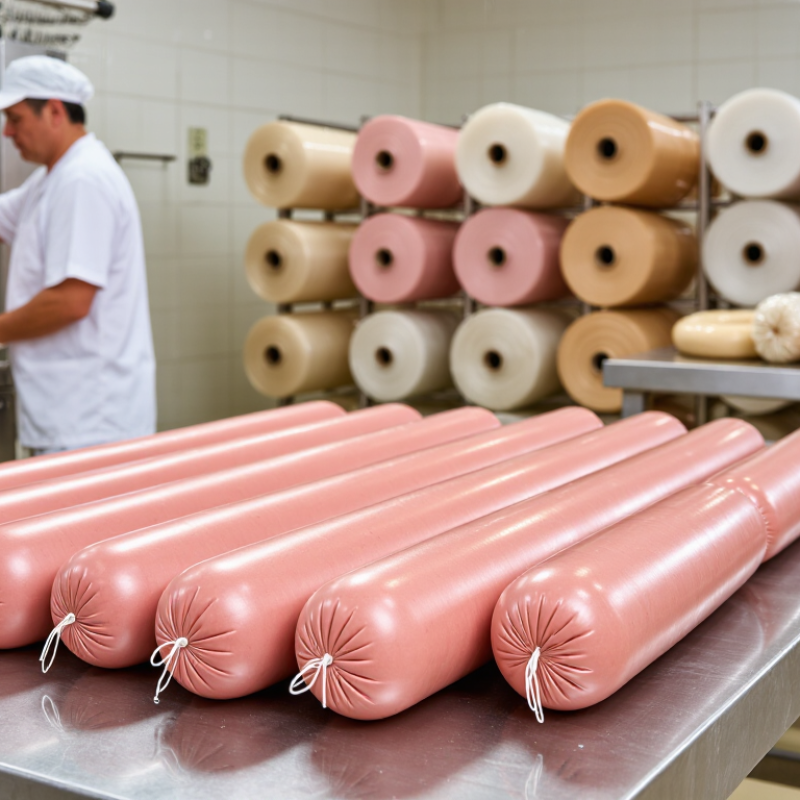
What Are the Top 10 Mortadella Casing Suppliers?

What Is Mortadella Casing and Why Does It Matter?

Mortadella casing is the flexible covering that shapes and protects this large, finely textured sausage. It keeps the filling compact during stuffing, cooking, cooling, and slicing. The casing also affects the product’s appearance, moisture retention, and bite. Some casings are natural, while others use collagen or food-grade synthetic materials. Each type behaves differently under pressure and heat.

A reliable casing should resist splitting when filled tightly. It should also release cleanly without tearing the surface. A smooth, even casing creates neat slices with fewer air pockets. That detail matters at the cutting line. If the casing allows excessive moisture loss, the mortadella may become dry around the edges. If it holds too much moisture, the texture can feel soft or greasy. Small differences become visible after several production batches.

When comparing the top ten mortadella casing suppliers, buyers should examine diameter accuracy, thickness consistency, packaging, traceability, and technical support. Ask for samples and test them on the actual stuffing equipment. Check how the casing handles soaking, filling, cooking, and cooling. Supplier documentation should clearly state storage conditions and intended food contact use. No casing performs perfectly in every facility. Humidity, filling pressure, and operator technique can change the result. A supplier that responds honestly to these limitations is often more useful than one offering impressive claims.

How to Evaluate Mortadella Casing Suppliers

Evaluating mortadella casing suppliers requires more than comparing prices. The right supplier must match casing performance with your filling, cooking, peeling, and storage conditions. MarketsandMarkets valued the global meat packaging market at about USD 13.4 billion in 2023, with continued growth expected through 2028. This expansion increases supplier choice, but also raises quality risks.

Ask each supplier for food-contact certificates, batch traceability, technical specifications, and recent test reports. Check diameter tolerance, tensile strength, permeability, shrinkage, and thermal stability. A casing may look excellent before stuffing and still split during cooking. Request samples from at least three production batches. Test them on your equipment, not only in laboratory conditions. Measure filling speed, surface wrinkles, cooking loss, peelability, and final slice appearance. Small differences matter.

The supplier should also explain storage limits and moisture protection. ISO 22000 certification can indicate a structured food-safety system, but certification does not guarantee perfect casing performance. Verify the certificate independently. A low price can hide higher waste, slower production, or rejected slices. The uncomfortable part is that technical documents may appear complete while practical support remains weak. Evaluate response time, corrective-action records, and sample consistency. Keep a simple scorecard, yet leave room for judgment. Numbers help, but they do not replace a failed cooking trial. Industry packaging research from Smithers also highlights rising demand for reliable barrier performance, making oxygen and moisture control important during extended distribution.

What Sets the Top 10 Mortadella Casing Suppliers Apart?

The top 10 mortadella casing suppliers stand apart through measurable consistency, not attractive catalogs. FAO reported global meat production at about 361 million tonnes in 2022, increasing pressure on processors to reduce waste. Reliable suppliers respond with controlled diameter, stable moisture, and predictable filling performance. Small differences matter. A casing that stretches unevenly can create air pockets, loose slices, or damaged edges during cooking.

Technical support is another clear separator. The strongest suppliers provide batch-level traceability, food-contact documentation, and practical guidance on stuffing pressure. They also test tensile strength, permeability, shrinkage, and seal performance under production conditions. The 2024 MarketsandMarkets meat-processing equipment report highlights automation, yield control, and traceability as major industry priorities. Casing suppliers now need to support those systems, not simply deliver rolls or lengths. Fast answers help, but tested answers matter more.

Sustainability increasingly affects purchasing decisions. Suppliers using certified renewable materials, lighter packaging, and documented waste controls can reduce environmental pressure without weakening performance. However, sustainability claims require evidence. A recent industry review from Research and Markets identifies material efficiency and process optimization as continuing themes in food manufacturing. That sounds convincing, yet real factories expose weaknesses. Trial batches should measure stuffing speed, cooking loss, diameter retention, and slicing quality. Price alone is a poor comparison. One overlooked variable can erase the savings.

Which Casing Types and Features Do Leading Suppliers Offer?

Leading mortadella casing suppliers usually offer natural, collagen, fibrous, cellulose, and plastic casings. Each type supports a different production goal. Natural casings provide an irregular, traditional appearance and pleasant bite. Collagen casings offer consistent diameter and easier machine handling. Fibrous casings are popular for larger mortadella because they hold shape during cooking. Cellulose options can support efficient peeling after processing. Plastic casings provide strong moisture and oxygen barriers.

Suppliers also differ in casing features. Common options include adjustable diameters, high elasticity, controlled shrinkage, and easy peeling. Some casings allow smoke penetration, while others protect delicate aromas during heating. Internal coatings may reduce sticking and improve product release. Pre-tied ends, shirred lengths, printing, and clip compatibility can save labor on busy filling lines. A casing that looks suitable on paper may still wrinkle around the edges.

In production trials, temperature and filling pressure often expose hidden problems. A casing can split when overfilled or lose shape during cooling. I would test diameter, stuffing speed, cooking loss, and peel quality with the actual recipe. Salt level, fat particles, and water content can change casing performance. Food-contact documents, batch traceability, and storage instructions also deserve close attention. Not every supplier provides the same technical depth. That difference matters when a batch must look uniform on a retail shelf.

What Are the Top 10 Mortadella Casing Suppliers? - Which Casing Types and Features Do Leading Suppliers Offer?

The entries below are non-ranked supplier capability profiles, not named or verified companies. They summarize casing types and features commonly available in the food-packaging market; exact specifications and suitability should be confirmed with each supplier.

Profile Casing types typically offered Relevant features Potential mortadella application Points to verify
1. Large-caliber fibrous casing specialist Fibrous cellulose casing Reinforced construction; designed for strength and dimensional stability in larger sausage formats. A possible choice for large cooked mortadella chubs where a firm, consistent casing is required. Available caliber, stuffing limits, cooking conditions, and whether the casing is peelable.
2. Cellulose casing specialist Cellulose casing, including large-format options where available Commonly used as a processing casing for cooked sausages; some formats are removed after cooking. May suit products that are cooked in the casing and then peeled before packaging or slicing. Caliber availability, peeling performance, and compatibility with the production line.
3. Polyamide casing supplier Single-layer or coextruded polyamide casings Plastic casing options can provide a controlled barrier to moisture and gases; barrier performance varies by construction. A possible option for cooked mortadella sold in a non-edible casing, subject to the desired shelf life and process. Barrier specifications, cook temperature, sealing method, peelability, and food-contact compliance.
4. Multilayer barrier casing supplier Multilayer plastic casings, often based on polyamide with other polymer layers Layer structures can be selected to balance gas and moisture barrier, strength, and processing needs. May be considered for cooked, chilled mortadella when packaging performance is a priority. Actual layer structure, barrier data, storage conditions, and suitability for the intended cook process.
5. Peelable casing supplier Peelable cellulose or plastic casing formats Designed to separate from the cooked product; peeling behavior depends on casing, product formulation, and process. Can support products that are peeled before slicing or retail presentation. Peeling consistency after cooking and chilling, surface quality, and line-speed requirements.
6. Non-peelable barrier casing supplier Plastic barrier casings intended to remain on the product until use Can help protect the product during storage; casing is generally removed by the consumer or at food service. May fit whole chubs sold with the casing intact, depending on the market and labeling requirements. Barrier properties, opening method, labeling, and whether the casing is suitable for the planned heating process.
7. Printed casing supplier Printable fibrous or plastic casing, subject to construction and print requirements Can carry product information or graphics on the casing; printing and ink suitability must be specified for the application. May support identification or presentation of whole mortadella chubs. Print durability through processing, approved ink system, print area, and applicable labeling rules.
8. Custom-caliber casing supplier Fibrous, cellulose, or plastic casings in selected diameters, depending on the supplier May offer a choice of diameter and layflat width to match equipment and finished-product dimensions. Useful when a producer needs a specific chub size or wants to match existing stuffing equipment. Tolerance, shrink or expansion behavior, minimum order quantities, and production lead time.
9. Casing conversion and format supplier Pre-cut, shirred, reeled, or otherwise converted casing formats, depending on material Format options can improve handling and fit different stuffing or clipping workflows. May help producers standardize casing preparation for mortadella runs. Format compatibility, stuffing-horn fit, clip system, and packaging configuration.
10. Food-contact documentation-focused supplier Food-grade cellulose, fibrous, or plastic casing options, subject to product range Provides technical documentation and material information to support customer compliance review. Potential fit for manufacturers that require documented material and process specifications. Request current declarations, intended-use conditions, migration information where applicable, and market-specific compliance documents.

Selection note: Large mortadella products are commonly evaluated with large-caliber fibrous, cellulose, or non-edible plastic casing options. The best choice depends on product diameter, cooking and chilling conditions, peeling needs, storage targets, equipment, and local food-contact rules. Confirm all technical claims with the casing manufacturer.

How to Compare Quality, Compliance, Pricing, and Delivery Options

Comparing Mortadella Casing Suppliers: Quality, Compliance, Pricing, and Delivery

A casing can look flawless on a sample reel and still split during stuffing. Compare suppliers using production-line trials, not appearance alone. Check diameter tolerance, tensile strength, permeability, and performance after cooking and chilling. Ask for lot-specific test records and traceability details. For food-contact materials, request current declarations of compliance and supporting migration-test documentation relevant to your product and sales markets. A certificate by itself is not proof that every casing performs consistently.

Demand forecasts matter, but they do not replace supplier checks. The OECD-FAO Agricultural Outlook 2024–2033 projects global meat consumption to rise by about 12% over the decade, increasing pressure on dependable processing inputs. Compare quotations on a like-for-like basis: casing type, usable length, minimum order, freight, and payment terms. Then check lead times, safety stock, and how quickly the supplier reports delays. Request a small trial shipment before agreeing to regular volumes. Keep one detail in mind: the cheapest quote may cost more if reels arrive late or vary between batches. That is easy to overlook.

We are using cookies on our website

Please confirm, if you accept our tracking cookies. You can also decline the tracking, so you can continue to visit our website without any data sent to third party services.