China Top Butchers Netting Suppliers for Global Buyers?
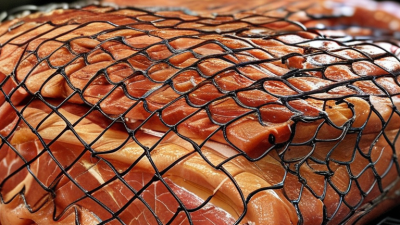
China has become a major sourcing base for food-processing textiles, including butchers netting used for ham, roast meats, roulades, and formed products. The opportunity is substantial. FAO’s 2023 Statistical Yearbook reported approximately 361 million tonnes of global meat production in 2022. USDA Foreign Agricultural Service reports also identify China as the world’s leading pork-producing market. These figures indicate strong demand for reliable processing materials, not merely low-cost products.
Quality still decides the purchase.
For global buyers, supplier selection should examine yarn composition, mesh stability, elasticity, food-contact suitability, traceability, and production consistency. A capable Chinese manufacturer should provide technical specifications, sample testing, batch records, and clear packaging information. Netting that stretches unevenly may leave loose edges around a cooked ham. A weak tube can split during stuffing, cooking, or cooling. These are small failures with expensive consequences.
This guide introduces leading China butchers netting suppliers and explains how buyers can compare them. It considers manufacturing experience, export capability, customization, certifications, and response quality. OECD-FAO Agricultural Outlook 2024–2033 anticipates continued growth in global meat consumption, although regional demand will not move evenly. That makes dependable supply planning more important. Supplier rankings can change. Public claims also need verification. A polished website is not proof of stable production. Buyers should request current test documents, production samples, and references before committing to large orders.
What Is Butcher Netting and How Is It Used?
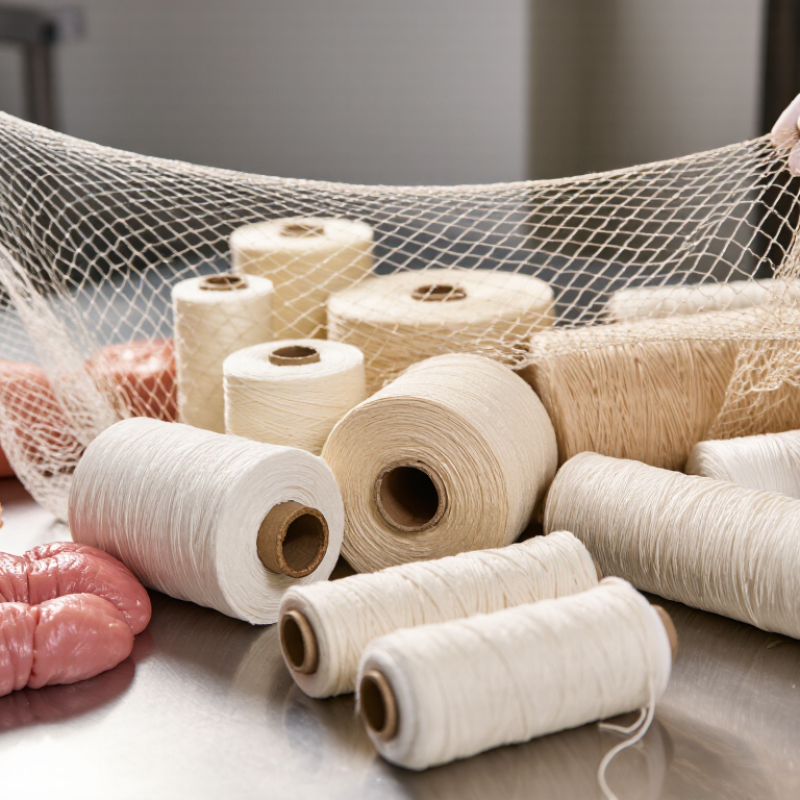
Butcher netting is a flexible food-processing material used to hold meat in a stable shape. It usually consists of elastic fibers arranged in a tubular mesh. The netting fits over roasts, hams, poultry rolls, and formed meat products. It keeps slices compact during tying, cooking, smoking, cooling, and transport.
During production, workers select netting by diameter, stretch, mesh pattern, and heat resistance. A suitable size grips the product without cutting into its surface. It also creates an even appearance after cooking. Some netting supports smoking by allowing air and smoke to contact the meat. It is not edible. Operators must remove it before serving unless the product is specifically designed for safe consumption.
For global buyers, sourcing from China requires more than comparing prices. Request food-contact documentation, material details, temperature limits, tensile testing, and batch traceability. A factory should provide samples that match the requested diameter and stretch. Test the netting on the actual product, not only on a supplier’s sample frame. Fit matters. Oversized netting may loosen during cooking, while tight netting can leave deep marks. I have found that packaging photos often hide these problems. A practical trial should inspect appearance, removal, breakage, odor, and residue after processing. Suppliers with stable quality controls can also support custom colors, mesh sizes, and packaging quantities. Still, customization can increase lead time and inspection work. That trade-off deserves careful review.
Key Types of Butcher Netting Available in China
China’s butcher netting market offers several practical constructions for global buyers. Elastic knitted netting is widely used for roasts, ham, poultry, and formed meat products. It stretches around irregular cuts while maintaining a firm shape during cooking. Cotton netting gives a traditional appearance and allows smoke to reach the surface. Polyester netting provides stronger recovery and consistent sizing. Some products combine elastic fibers with cotton or polyester yarns.
Mesh size also matters. Fine mesh can create a smoother surface, while wider mesh leaves clearer markings and improves airflow. Suppliers may offer oven-safe, smoke-compatible, or cooking-specific versions. Check the label carefully. Food-contact declarations, temperature data, and production-lot traceability should be available. Experienced Chinese manufacturers can also adjust tube diameter, stretch range, color, and packing format for different processing lines.
A common sourcing mistake is choosing the lowest price before testing the netting on the actual cut. Tight roasts may split weak seams, while loose mesh can leave uneven marks. Request samples using your target meat size, cooking method, and weight. Review odor, fiber shedding, and recovery after cooking. Specifications can look perfect on paper, yet feel wrong during production. Ask how defects are recorded and corrected. Reliable suppliers should explain their process clearly, even when the answer is not ideal.
China Top Butchers Netting Suppliers for Global Buyers? - Key Types of Butcher Netting Available in China
| Netting Type | Common Material Structure | Typical Applications | Typical Stretch or Size Range | Main Processing Benefits | Important Buyer Checks |
|---|---|---|---|---|---|
| Elastic Meat Netting | Food-contact elastic yarn combined with polyester, cotton, or a blended outer structure | Roasts, hams, rolled pork, poultry rolls, and formed meat products | Often supplied in multiple diameters and stretch grades; the usable diameter depends on the product shape and filling method | Holds irregular products together, supports even shaping, and can improve slicing consistency | Confirm recovery force, maximum product diameter, cooking temperature, and whether the netting is designed for direct food contact |
| Cotton Butcher Netting | Food-grade cotton yarn, sometimes combined with an elastic support yarn | Traditional roasts, cured meats, smoked products, and products requiring a natural appearance | Available in different mesh openings, yarn counts, and product diameters | Provides a traditional surface pattern and helps maintain product shape during handling and cooking | Check shrinkage, wet strength, lint control, colorfastness, and compatibility with the intended cooking process |
| Polyester Meat Netting | Knitted or braided food-contact polyester yarn, with or without elastic components | Cooked meats, deli rolls, poultry products, chilled foods, and products requiring repeatable dimensions | Manufactured in different mesh sizes, diameters, and load-bearing specifications | Good dimensional stability, low moisture absorption, and consistent performance in automated processing | Verify melting or softening limits, food-contact documentation, seam or knot strength, and suitability for smokehouse use |
| Polyamide or Nylon Netting | Food-contact polyamide yarn, generally knitted into an elastic or semi-elastic mesh | High-strength meat rolls, processed meat products, and applications requiring strong containment | Produced in several mesh constructions and diameter ranges according to product weight and shape | High tensile strength, good abrasion resistance, and reliable support during stuffing and transport | Check heat resistance, moisture behavior, elasticity after cooking, and compliance with the destination market’s food-contact rules |
| Cooking Netting | Heat-resistant food-contact textile yarns, commonly polyester, cotton, or blended constructions | Oven cooking, steaming, boiling, roasting, smoking, and sous-vide-style processing where permitted by the specification | Size is selected according to the uncooked product diameter, expansion allowance, and cooking equipment | Maintains a compact shape during thermal processing and assists with uniform portion formation | Obtain the validated temperature and time limit, intended cooking medium, extractables information, and removal instructions |
| Smoking and Roasting Netting | Heat-resistant knitted textile mesh designed to permit airflow, smoke contact, and surface browning | Smoked ham, roast beef, poultry rolls, cured products, and hanging products | Mesh opening and diameter are selected to balance product support with smoke and heat exposure | Supports hanging, improves surface contact with smoke, and helps create a consistent exterior pattern | Confirm smokehouse temperature, hang-load capacity, discoloration resistance, and compatibility with hooks or clips |
| Netting with Spun or Elastic Core | Outer textile covering around an elastic core, typically combined with polyester, cotton, or polyamide yarn | Products with variable diameters, stuffed roasts, formed loaves, and high-volume production lines | Specified by relaxed diameter, working diameter, stretch ratio, and recovery force | Accommodates filling variation while applying continuous pressure around the product | Request stretch-force curves, core composition, recovery after heating, and performance data for the target filling equipment |
| Roast and Deli Netting | Decorative and functional knitted mesh using cotton, polyester, polyamide, or blended yarns | Retail-ready roasts, sliced deli products, luncheon meat, and premium presentation products | Selected by finished diameter, visual mesh pattern, stretch, and required portion weight | Improves appearance, supports portion control, and helps protect the product during handling | Check visual uniformity, color options, food-contact status, packaging cleanliness, and compatibility with slicing equipment |
| Netting for Automatic Stuffing Lines | Machine-compatible elastic mesh supplied in rolls, sleeves, or continuous tubular formats | Industrial production of uniform roasts, hams, poultry rolls, and formed meat portions | Specified by roll length, tube diameter, stretch performance, mesh pattern, and filling speed | Reduces manual handling and supports consistent output on stuffing, clipping, and hanging equipment | Conduct a machine trial and confirm roll core dimensions, feed direction, break strength, splice control, and delivery consistency |
How to Evaluate Chinese Butcher Netting Suppliers
Choosing a Chinese butcher netting supplier requires more than comparing quoted prices. Start by checking material specifications, mesh size, elasticity, and heat resistance. Ask for recent test reports and production samples, not only catalog photographs. A reliable supplier should explain whether the netting suits cooked ham, poultry rolls, or other processed meats. Their technical answer should be clear and measurable. Request batch records, food-contact declarations, and a traceable quality-control process. Verify factory capacity through a live video inspection or an independent audit. This reveals storage conditions, knitting equipment, and packaging discipline. A polished showroom proves little.
Tips: Send a detailed product brief with dimensions, weight range, cooking temperature, and expected yield. Order a small trial batch before signing a large contract. Measure breakage, shrinkage, color stability, and removal performance after cooking. Keep samples from every approved batch. This simple habit can expose changes later. Ask how complaints are recorded and corrected. Vague answers deserve caution.
Communication also matters. Suppliers should confirm tolerances, lead times, carton markings, and shipment documents in writing. Compare their answers with actual sample performance. One practical lesson is that low-cost netting may fail when tested outside room temperature. That detail is easy to miss. A strong evaluation includes price, but not price alone. Consider consistency across several batches, response speed, and willingness to discuss limitations. No supplier performs perfectly; honest disclosure is more useful than confident promises.
Quality Standards and Certifications for Global Buyers
For global buyers, butcher netting quality begins with food-contact safety, not appearance. China-based suppliers should provide material declarations, batch records, and migration test reports for every production lot. The World Health Organization estimates that 600 million people suffer from foodborne illness each year. Netting touches meat directly, so weak documentation creates serious supply-chain risk.
Look for suppliers operating under HACCP and ISO 22000-based food safety systems. ISO 9001 can support process consistency, but it does not prove food-contact suitability. Buyers should also request compliance with applicable food-contact rules, such as EU Regulation 1935/2004 or relevant United States requirements. Test reports should identify polymer type, dyes, additives, testing methods, and laboratory accreditation. A certificate alone is not proof. It may be outdated, incomplete, or unrelated to the actual netting grade. Auditing the factory, checking cleaning controls, and reviewing traceability records provide stronger evidence. Small details matter, including sealed cartons, readable labels, and stable storage conditions.
Tips: Ask for a recent third-party migration report, not a scanned certificate only. Confirm whether the tested sample matches your final mesh size and color. Request a retained sample from the same batch. Ideally, test it again before large-volume purchasing. I would also examine supplier complaints and corrective actions; perfect records can look less believable than transparent ones. WHO and FAO food-safety guidance both support risk-based controls, yet many buyers still focus mainly on price and delivery time. That habit deserves reconsideration.
Export, Pricing, and Order Considerations for International Buyers
China’s leading butcher netting suppliers serve buyers seeking elastic meat nets, cooking nets, and food-grade wrapping solutions. Product quality varies widely. Experienced exporters usually provide material specifications, mesh size, stretch range, heat resistance, and sample testing reports. Ask whether the netting uses food-contact compliant materials for your destination market. A clear technical sheet matters more than attractive catalog photos.
Pricing depends on fiber type, diameter, color, tensile strength, packaging, and order volume. Request a quote based on exact dimensions, not a general product name. Confirm minimum order quantities and whether sample costs are refundable. For export orders, compare FOB, CIF, or other suitable shipping terms carefully. Freight charges can change the final cost significantly. I once underestimated carton volume, and the shipping adjustment reduced the expected margin.
Before production, approve a physical sample and written specification. Check elasticity after stretching, cutting resistance, odor, cleanliness, and performance during cooking or processing. Ask about production lead time, batch consistency, inspection procedures, and replacement policies. Independent pre-shipment inspection can reduce avoidable disputes. It is not perfect, though. Small differences may still appear between batches.
Use strong export packaging with moisture protection and readable carton labels. Confirm documents, customs requirements, and food-contact declarations with your importer or local authority. Payment terms should match your risk level, especially for a first order. Keep every agreement in writing. (207 words)
Related Posts
-
7 Tips for Buying Butchers Elastic Netting
-
How to Choose Meat Netting UK Suppliers in 2026?
-
10 Best Tips for Using Cooking Meat Netting to Enhance Flavor and Presentation
-

2026 Best Cooking Netting Options for Global Buyers?
-

Top Plastic Casings in Technology and Their Applications?
-
How to Choose Clear Fibrous Casings for Best Sausage Making?