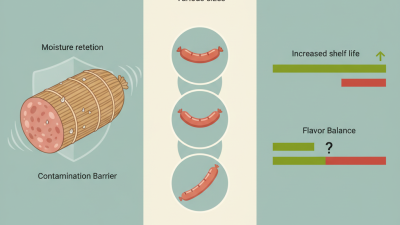
7 Best Facts on Whether Cellulose Casing Is Edible
Cellulose casings can look like a thin, clear skin around hot dogs, sausages, and some deli meats. They are commonly made from regenerated cellulose, a material derived from plant fibers. But does that mean cellulose casing edible? Not necessarily. Many cellulose casings are designed to hold a sausage’s shape during processing and are peeled away before the product reaches your plate. The casing may be suitable for food contact without being intended to eat. That distinction matters.
A quick look at the package can help. Check whether it says “remove casing” or identifies the casing as edible. If the label is unclear, ask the manufacturer rather than guessing from appearance. Cellulose itself is not usually broken down like ordinary food; much of it passes through the digestive system as insoluble fiber. Still, the casing’s construction and intended use can vary by product. A familiar snap or smooth surface does not tell you everything. Small detail, big difference. This guide explores seven practical facts, including how cellulose casings are made, why producers use them, and how to tell them apart from edible casings. It also considers what to do if you accidentally swallow a small piece. There is no need for alarm in most ordinary situations, but individual sensitivities and product instructions deserve attention. Labels are useful, though not perfect. When in doubt, remove the casing and follow the package directions.

What Cellulose Casing Is and How It Is Made
Cellulose casing is a thin, manufactured tube made from regenerated cellulose, a material derived from plant fibers such as wood pulp or cotton linters. It is not simply a strip of plant tissue. The fibers are purified and processed into a viscous solution, then pushed through a small opening into a setting bath. The bath helps the material form a continuous film. Afterward, the casing is washed, softened, and dried. The exact process can vary, but clean equipment and controlled processing matter because the casing will contact food.
The finished tube is flexible and often transparent, with a smooth surface that helps sausages keep a uniform shape. It can be gathered into long lengths and filled with meat mixture. A familiar example is the thin skin around some skinless frankfurters: the casing holds the sausage during cooking, then is peeled away. So cellulose does not automatically mean edible. Many cellulose casings are designed to be removed, and their intended use should be checked on the product information. The material’s plant origin can sound reassuring, but origin alone does not tell you whether a casing is meant to be eaten. That distinction is easy to miss.
7 Best Facts on Whether Cellulose Casing Is Edible — What Cellulose Casing Is and How It Is Made
| No. | Fact | What It Means |
|---|---|---|
| 1 | Cellulose casings are generally not edible | Standard cellulose sausage casings are designed to be peeled off before the sausage is eaten. Check the package instructions, since casing materials and directions can vary. |
| 2 | Cellulose comes from plant material | Cellulose is a structural carbohydrate found in plants. Casing manufacturers commonly use purified wood pulp or cotton linters as a source of cellulose. |
| 3 | The casing is made from regenerated cellulose | In a typical manufacturing process, cellulose is chemically processed into a soluble form, then formed into a thin tube and regenerated as cellulose in a setting bath. |
| 4 | It is formed as a continuous tube | The prepared cellulose solution is extruded through a tube-shaped opening into a coagulating bath. The bath helps the material set into a seamless casing. |
| 5 | The casing is washed and finished | After formation, the casing is washed and may be treated with a food-grade plasticizer, such as glycerol, to help it remain flexible. It is then prepared for use. |
| 6 | It is commonly used for skinless sausages | Cellulose casings hold sausage filling during processing and help create a uniform shape. They are often peeled away after cooking or smoking to produce skinless products. |
| 7 | Cellulose itself is not digested like starch | Human digestive enzymes do not break down cellulose into sugar. While cellulose is a plant fiber, that does not make a manufactured sausage casing intended to be eaten. |
How Cellulose Casings Differ From Natural Casings
7 Best Facts on Whether Cellulose Casing Is Edible
How Cellulose Casings Differ From Natural Casings
Cellulose casings are made from processed plant cellulose and are commonly used for sausages shaped in uniform, smooth tubes. They help hold the filling during cooking, but are usually peeled off before the sausage is eaten. Natural casings are typically cleaned animal intestines. They can be eaten and often remain on the sausage, adding a tender bite and a slight snap. Not every product follows the same pattern.
The difference is noticeable at the table. A cellulose casing may come away in a thin, clear sleeve, while a natural casing usually clings to the sausage and browns during cooking. Natural casings can also let smoke and moisture pass through, which affects flavor and texture. Cellulose casings are more consistent in size, but consistency is not the whole story. I wouldn’t identify a casing by appearance alone; processing and product styles vary.
Tips: Check the package for peeling instructions. If a casing feels tough or separates easily, remove it rather than guessing. When unsure, ask the seller or manufacturer.
Whether Cellulose Casing Is Edible
Cellulose sausage casing is usually not meant to be eaten. It is made from plant-derived cellulose and formed into a thin tube that helps sausages keep their shape during processing. Many cellulose casings are removed after cooking, leaving the smooth sausage surface. Usually, no. Cellulose itself is not broken down by human digestive enzymes, and a casing may feel papery or tough when chewed. Food-contact use does not automatically mean a casing is intended to be swallowed.
I would not judge by appearance alone. Some casings are difficult to distinguish at a glance, while edible casings, such as many natural or collagen types, are designed to remain on the sausage. Check the package directions, or ask the maker if the information is unclear. If a thin layer peels away easily, remove it rather than guessing. That small detail is easy to miss when food is served hot, and the casing can cling to the sausage. A little uncertainty is better than assuming every casing is edible.
7 Best Facts on Whether Cellulose Casing Is Edible
The chart uses a simple classification: 1 means the casing is typically eaten with the sausage; 0 means it is typically removed. Cellulose casings are generally peeled off before eating. Natural casings are generally edible, while plastic casings are removed. Always follow the product label.
Why Cellulose Casings Are Used in Sausage Production
Cellulose casings help sausage makers produce links with a consistent shape and size. They are made from regenerated plant cellulose, formed into thin tubes, then filled with seasoned meat. Their even diameter helps equipment portion and twist sausages quickly. That matters on busy production lines.
The casing holds the mixture together during cooking and helps each link keep its familiar form. Many skinless sausages, including some frankfurters, are cooked in cellulose casings that are peeled away afterward. So, are they edible? Usually, no: these casings are designed to be removed, not eaten. Check the package or ask the maker when the casing type is unclear.
There is a trade-off. Cellulose can support efficient production, but it does not give the same bite as a natural casing. It may also be less suitable when a maker wants a casing that stays on the sausage. The details vary with the product and process; I may be oversimplifying a choice that depends on cooking conditions and the texture being made. A peeled link can look neat, yet the casing itself is meant to do its job and then come off.
How to Identify, Remove, and Dispose of Cellulose Casings
Cellulose casings are usually non-edible and removed before eating. They may look clear, glossy, and tightly wrapped around a sausage, but appearance alone is not proof. Check the package for “cellulose casing” or peeling instructions. When the casing is difficult to identify, ask the seller or consult the manufacturer’s product information. Don’t guess.
To remove one, let the sausage cool enough to handle, then make a shallow lengthwise slit with a small knife. Lift an edge and peel the film back slowly; avoid cutting into the meat. If it sticks, dampen the surface briefly and try again. Cellulose can tear into thin strips. Remove visible pieces before serving, especially for anyone who may have trouble chewing.
Put the peeled casing in household rubbish, not down the sink or toilet. Don’t assume it belongs in compost; local facilities may not accept processed casings. Wash your hands and utensils after handling. For uncooked sausages, follow the package’s cooking directions: USDA FSIS guidance sets 160°F for ground-meat products and 165°F for poultry. A thermometer is more reliable than judging color. Even so, a temperature reading cannot identify the casing type.
Related Posts
-
How to Use Fibrous Cellulose Casing for Sausage Making?
-
10 Essential Tips for Using Mahogany Fibrous Casings Effectively
-
2026 How to Choose the Best Netting for Roasting Meat?
-
How to Choose the Best Net for Cooking Meat?
-
What Are the Top China Meat Net Suppliers?
-
Top Food Casings Suppliers in China for Global Buyers?