


5 Best Nets for Smoking Meat How Do You Choose?
Choosing the right net for smoking meat can change how evenly your food cooks and how easily it handles. A suitable net supports the meat without blocking smoke or tearing during movement. It should also be made from food-safe material and tolerate the smoker’s working temperature. These details matter when handling brisket, poultry, fish, or smaller cuts.
In this guide, we examine five practical nets for smoking meat and compare their materials, mesh sizes, strength, heat resistance, and cleaning requirements. Stainless steel options usually offer durability and simple maintenance. Cotton or elastic nets may provide a tighter shape, but their temperature limits require careful checking. Always follow the manufacturer’s instructions, especially when using direct heat or high-temperature smokers.
There is no perfect choice.
A professional pitmaster may value firm support, while a home cook may prefer quick cleanup. In my experience, a net that looks strong can still stretch around a heavy roast. Small mesh can also hold the shape better, yet it may reduce smoke contact slightly. That trade-off deserves attention. We will consider real cooking situations, including lifting a hot roast, maintaining airflow, and preventing the net from sticking. The best option depends on your meat, smoker design, cooking temperature, and personal handling habits. Careful comparison is more reliable than choosing by appearance alone.
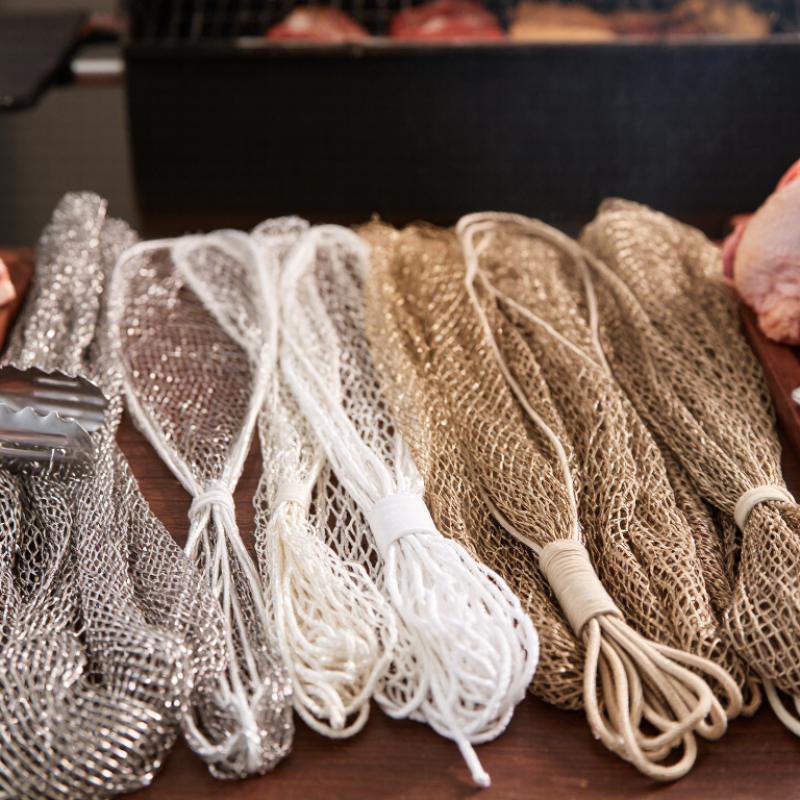
What Meat-Smoking Nets Are and How They Work
5 Best Nets for Smoking Meat: How Do You Choose?
Meat-smoking nets are food-safe mesh sleeves that hold a roast, ham, poultry, or sausage in a compact shape. They usually contain cotton, polyester, or heat-resistant elastic fibers. The mesh must be designed for food contact and rated for the smoker’s temperature.
The net works by applying gentle, even pressure around the meat. This helps prevent loose pieces from separating during smoking, cooling, and slicing. Its open structure allows warm air and smoke to reach more of the surface. Smoke must still circulate. A tight or damaged net can leave uneven color and restrict airflow.
From my smoking experience, mesh size matters more than appearance. A finer mesh supports soft, uneven cuts, while a wider mesh suits firm roasts and larger sausages. Measure the meat after shaping it, then choose a net with enough stretch. Do not force an oversized cut into a narrow sleeve. I once used a net that was too tight, and the meat cooked unevenly near the ends.
Check the label for temperature limits, food-contact approval, and removal instructions. Never place ordinary craft mesh near food or direct flame. A net does not cure or preserve meat; a reliable thermometer remains essential. Inspect the material for fraying before use, although I still sometimes miss a weak edge. That small mistake can matter.
5 Best Nets for Smoking Meat: How Do You Choose? — What Meat-Smoking Nets Are and How They Work
| Net Type | Typical Construction | Best Uses | How It Works During Smoking | Main Advantages | Important Limitations | Selection Guidance |
|---|---|---|---|---|---|---|
| Cotton Elastic Meat Netting | Woven cotton yarn combined with food-grade elastic strands. Common sizes are selected by the meat diameter the net is designed to cover. | Pork loin, pork shoulder, rolled beef, poultry rolls, and other boneless cuts that need a traditional netted appearance. | The elastic structure compresses the meat, helps hold a cylindrical shape, and leaves open areas that allow smoke and heat to reach the surface. | Natural-fiber appearance, good grip, attractive marks, and dependable shaping for many cooked or smoked roasts. | Cotton can absorb juices and may stick to the surface. It must be specifically sold and labeled for food use and the intended cooking temperature. | Choose it when appearance and traditional handling are priorities. Confirm whether the net is intended for direct heat, oven cooking, or smoking. |
| Polyester Elastic Netting | Food-contact polyester filaments combined with elastic components; supplied in different diameters, mesh patterns, and stretch levels. | Large roasts, formed meat products, poultry, ham-style products, and cuts requiring consistent compression. | The net applies even pressure around the product while its openings permit surface drying, smoke contact, and heat circulation. | Strong, dimensionally stable, less absorbent than cotton, and often easier to remove after cooking. | Not every polyester net is suitable for high heat, direct flame, or contact with a hot grate. Incorrect sizing can leave deep impressions or restrict expansion. | Use the manufacturer’s food-contact and temperature rating. Select a diameter that fits the product without excessive stretching. |
| Collagen Meat Netting | Edible netting made from collagen, a structural protein used in food casings and formed-meat applications. | Selected sausages, formed meat logs, portioned roasts, and products where removing the net is undesirable. | It holds the product during processing and may remain attached or become less noticeable as the collagen hydrates and cooks, depending on the product design. | Edible, neat presentation, consistent shape, and no separate net-removal step when used correctly. | It is less suitable for every large roast or long smoking process. Moisture, handling, and temperature requirements vary by construction. | Choose only a product clearly labeled edible and intended for the specific smoking or cooking process. |
| Fibrous or Cellulose Netting | Food-grade cellulose or fibrous material formed into a tubular support net; some versions are designed to be peeled away after cooking. | Processed meat rolls, deli-style products, cooked roasts, and applications needing uniform shape during heating. | The tubular structure supports the outer surface and helps maintain a compact form while smoke and heat reach exposed areas through the openings. | Uniform sizing, clean removal on suitable products, and good support for formed or emulsified meats. | Many versions are not edible and may not tolerate direct flame. Some can adhere to a dry or heavily smoked surface. | Verify whether the net is peelable, edible, or intended only as a processing aid before use. |
| Stockinette-Style Cotton Net | A close-knit cotton sleeve with a tubular, sock-like structure; it is generally less open than conventional elastic meat netting. | Brisket, bacon, cured meats, whole-muscle roasts, and products needing surface support during hanging or smoking. | It holds the cut together and supports the surface while still allowing smoke to contact the exposed fabric and meat. It does not create the same open diamond pattern as elastic netting. | Good surface support, easy loading for some cuts, and useful for hanging or protecting delicate edges. | It may reduce direct smoke contact compared with open mesh and can be harder to remove if the surface dries against the fabric. | Select it when containment and surface protection matter more than pronounced net marks. |
Related Posts
-
China Top Butchers Netting Suppliers for Global Buyers?
-
7 Tips for Buying Butchers Elastic Netting
-
How to Choose the Best Elastic Meat Netting for Your Needs?
-
How to Choose Meat Netting UK Suppliers in 2026?
-

10 Essential Tips for Using Cellulose Casing in Sausage Making?
-
2026 How to Choose the Best Netting for Roasting Meat?