Why Use Cellulose Sausage Casing for Sausage Production?

Why Use Cellulose Sausage Casing for Sausage Production?

Sausage production depends on more than seasoning, meat quality, and cooking temperature. The casing also shapes the product’s appearance, texture, stability, and handling performance. Cellulose sausage casing is widely used for skinless sausages because it supports efficient filling and consistent portion control. It forms a smooth surface around the emulsified meat mixture, helping manufacturers produce uniform links at commercial scale.

Dr. Joseph Kerry, a respected food-packaging specialist, has stated, “Packaging is an integral part of food production, not an afterthought.” This principle applies directly to sausage casing. Cellulose casing can provide reliable diameter control, clean peeling, and suitable permeability during smoking and cooking. Its porous structure may help smoke and moisture interact with the sausage under controlled processing conditions. The result can be a firm bite, even color, and cleaner production flow.

The benefits are practical. Operators can fill long casing strands quickly, reduce manual linking, and maintain repeatable product weights. Cellulose casing also suits sausages designed for peeling before retail packaging. That matters in high-volume facilities.

Still, the choice is not flawless. Cellulose casing is usually removed before consumption, unlike edible alternatives. Poor soaking, filling pressure, or cooking control can cause wrinkles, bursting, or uneven peeling. Experience matters here. Manufacturers should test casing diameter, stuffing equipment, recipe fat content, and thermal schedules together. A casing that performs well in one plant may behave differently elsewhere. Careful trials remain essential.
Why Use Cellulose Sausage Casing for Sausage Production?

What Is Cellulose Sausage Casing?

Why Use Cellulose Sausage Casing for Sausage Production?

What Is Cellulose Sausage Casing?

Cellulose sausage casing is a manufactured tube made from regenerated cellulose. It forms a clean, consistent package around the sausage mixture. Unlike natural casings, it is generally not designed for eating.

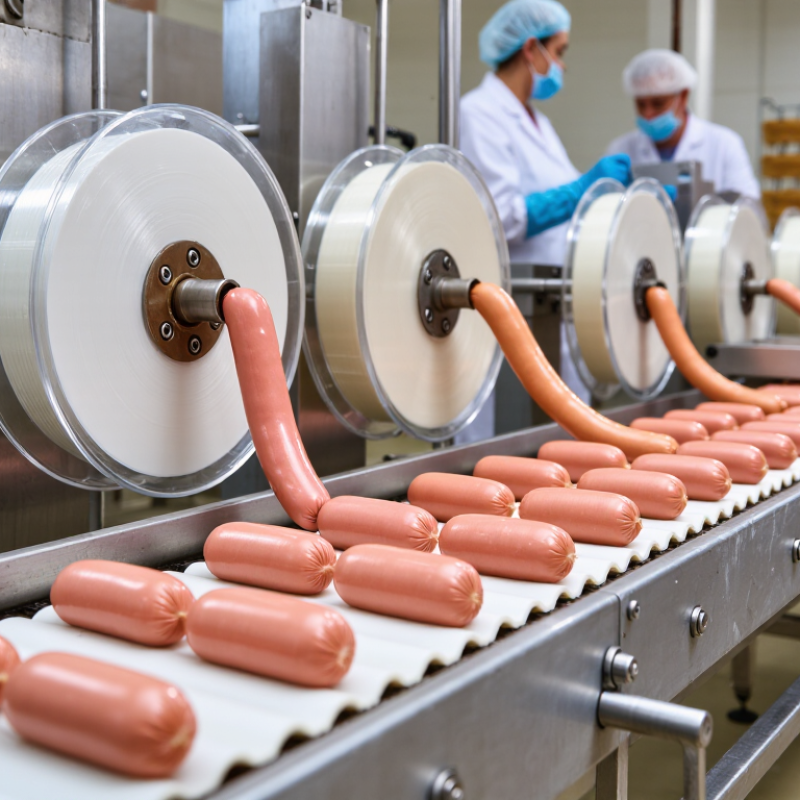
During production, processors fill the casing with seasoned meat or plant-based ingredients. The casing keeps each portion straight and evenly sized. Its smooth surface also supports efficient peeling after cooking or smoking.

It is thin, but useful.

Cellulose casing allows heat and some smoke to reach the filling. This can help develop a stable color and familiar smoked flavor. Its uniform diameter also improves cooking control. That matters when products move through high-volume equipment.

A practical detail is casing storage. Excess heat or low humidity can make cellulose brittle. Careful handling reduces splitting during stuffing and linking. The filling temperature matters too. A soft mixture may create weak spots and uneven shapes.

The casing is not a perfect solution. It usually needs removal before serving, which adds another processing step. Some producers may also prefer natural or alternative casings for a different bite and appearance. Choosing cellulose depends on the recipe, equipment, cooking method, and expected product texture.

The best evaluation comes from a controlled trial. Check fill weight, peelability, moisture loss, and surface appearance. Small adjustments can change the result.

How Cellulose Casing Is Made and Structured

Why Use Cellulose Sausage Casing for Sausage Production?

Cellulose casing begins with purified dissolving pulp, not animal skin. Manufacturers convert the pulp into a viscous cellulose solution. The solution passes through a narrow annular die. An acidic bath then regenerates the cellulose into a continuous tube. Washing removes process residues. Plasticizers keep the tube flexible during filling. Drying sets its final strength and diameter.

Its structure is a regenerated cellulose network with controlled pores. These pores allow smoke and moisture exchange during cooking. They also help the casing release cleanly after thermal processing. Calibrated diameters support consistent sausage weight and shape. The OECD-FAO Agricultural Outlook 2024–2033 projects global meat production to approach 382 million tonnes by 2033. That scale increases the need for repeatable, high-throughput casing performance. It is not a flawless process.

In practical production, humidity changes can affect casing flexibility before stuffing. Excessive tension may create weak spots near the clip or twist. Operators should check diameter, moisture, burst resistance, and peelability together. A casing that performs well in one recipe may behave differently in another. FAOSTAT data shows global meat production already exceeds 350 million tonnes annually. Small process variations can therefore create significant waste across large facilities. The often-missed detail is storage. Cellulose casing needs controlled temperature and humidity. Otherwise, the tube may feel brittle, uneven, or difficult to peel.

Why Use Cellulose Sausage Casing?

Common nominal stuffed diameters of cellulose casings used in sausage production

Cellulose casing is made by dissolving purified cellulose, regenerating it into a continuous film tube, and then washing, plasticizing, drying, and sizing the casing. Its uniform structure supports consistent filling, attractive product dimensions, good smoke permeability, and efficient high-speed processing. The diameter values shown are representative nominal sizes; actual size ranges vary according to sausage type and production specification.

How Cellulose Casing Supports Sausage Production

Cellulose sausage casing supports production by creating a consistent shape during stuffing, cooking, and smoking. Its smooth surface helps sausages release cleanly after processing. This can reduce tearing and improve line efficiency. Cellulose is generally non-edible, so manufacturers remove it before packaging or serving. The casing also allows smoke and heat to reach the filling evenly, supporting a repeatable flavor and texture.

In a busy plant, small details matter. Correct casing diameter helps control portion weight. Stable moisture and temperature reduce wrinkles, bursting, and uneven cooking. However, cellulose casing is not a universal fix. A casing may improve appearance while exposing problems in filling pressure or batter consistency. Experienced operators should test the casing with the exact recipe, equipment, and cooking cycle. Records of yield, peel loss, and defects make the decision more reliable.

Tips: Store casings in a clean, dry area, away from direct heat. Follow the supplier’s conditioning guidance before stuffing. Check diameter during production, not only at the final inspection. Use moderate stuffing pressure. Excess pressure can create weak spots. A short trial batch often reveals more than assumptions. The process may still need adjustment.

Key Benefits of Using Cellulose Casing

Why Use Cellulose Sausage Casing for Sausage Production?

Key Benefits of Using Cellulose Casing

Cellulose casing supports fast, consistent sausage production. It forms a firm tube around the filling and maintains a uniform diameter during stuffing. That consistency helps control portion weight and cooking time. In busy plants, operators also value its smooth peeling after thermal processing. The casing is non-edible, so manufacturers remove it before retail sale or food service. It can also support smoke penetration, depending on the formulation and processing conditions.

The scale of meat production makes process efficiency important. The FAO Food Outlook 2024 estimates global meat production at approximately 364 million tonnes. Even small reductions in rework can matter across such volumes. Cellulose casing often reduces visible wrinkles and improves product appearance. Its predictable dimensions may also simplify linking, spacing, and automated handling. Small details matter here.

Still, cellulose casing is not a universal solution. Excessive humidity, incorrect stuffing pressure, or poor cooling can cause tearing and difficult peeling. Experienced processors test casing performance with their exact recipe. They check moisture, fat content, smoke exposure, and cooking settings. A 2023 review in Meat Science also emphasizes that casing performance depends strongly on formulation and processing conditions. That reminder deserves attention. Reliable results come from controlled trials, not assumptions.

Processing, Peeling, and Storage Considerations

Why Use Cellulose Sausage Casing for Sausage Production?

Cellulose casing supports efficient sausage processing because it holds a consistent shape during stuffing and cooking. Its uniform diameter helps operators control portion weight and product appearance.

Keep the casing dry before use unless the supplier requires conditioning. Some casings need brief hydration, while others perform better after controlled moisture exposure. Follow the technical specification, not habit. That distinction matters.

During stuffing, maintain steady pressure and avoid overfilling the casing. Excess pressure can create wrinkles, splits, or uneven links. Secure the ends carefully, then apply the programmed heating and smoking cycle.

Cellulose casing is usually removed after cooking and chilling. Peeling works best when the casing has separated cleanly from the sausage surface. A short cooling period often improves handling. Not always, though. Product fat, moisture, and cooling speed can change the result.

Peel sausages gently to protect the surface and reduce waste. Inspect peeled links under bright light for torn areas, exposed filling, or trapped casing fragments.

Store finished products in clean, sealed packaging at the required refrigerated temperature. Limit temperature changes during transport and warehouse handling. Condensation can soften the surface and shorten quality life.

Production teams should record cooking temperatures, cooling times, peeling losses, and storage conditions. These records reveal small process failures before they become expensive. FIFO rotation remains practical, although packaging dates and actual temperature data deserve equal attention.

We are using cookies on our website

Please confirm, if you accept our tracking cookies. You can also decline the tracking, so you can continue to visit our website without any data sent to third party services.