How to Find Reliable Fibrous Casing Suppliers?

Reliable fibrous casing suppliers are not found by comparing price lists alone. They must be assessed through material performance, production consistency, food-contact documentation, and responsive technical support. PMMI reports continue to show that manufacturers are investing in packaging efficiency, automation, and quality control. These trends make supplier verification more important, especially when a casing must withstand stuffing pressure, smoking, cooking, and controlled peeling.

Tom Egan, a packaging industry specialist at PMMI, has emphasized that packaging decisions should connect product protection with operational efficiency. That principle applies directly to fibrous casing suppliers. A dependable partner should provide clear specifications, batch traceability, migration documentation, and practical trial support. Ask for samples. Test them on your line. Small differences in diameter, moisture balance, or shirred length can create visible defects, waste, and production delays.

Industry reports from Smithers and MarketsandMarkets also identify traceability, sustainability, and process automation as continuing packaging priorities. However, market reports can simplify real factory conditions. They rarely show how a casing behaves during a difficult stuffing run at 5:30 a.m. That is where supplier experience matters. Buyers should check complaint response times, minimum order quantities, lead-time history, and contingency plans. A polished website is not proof of reliability. Sometimes, the most useful supplier is the one willing to discuss a failed trial honestly.
How to Find Reliable Fibrous Casing Suppliers?

Define Fibrous Casings and Their Key Applications

Fibrous casings are durable, cellulose-based casings reinforced with paper fibers. They provide strength, shape control, and reliable filling performance. Unlike ordinary cellulose casings, their reinforced structure handles larger diameters and heavier sausage mixtures. Many types also support controlled smoke and moisture transfer.

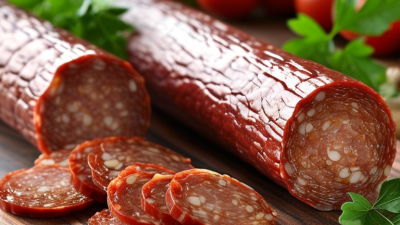
Their key applications include salami, luncheon meat, cooked ham, smoked sausage, and other molded meat products. Producers value them when a clean surface and consistent diameter matter. The OECD-FAO Agricultural Outlook 2023-2032 projects global meat production to reach about 382 million tonnes by 2032. This growth may increase demand for dependable processing materials, although casing demand will vary by product and region. That distinction is easy to overlook.

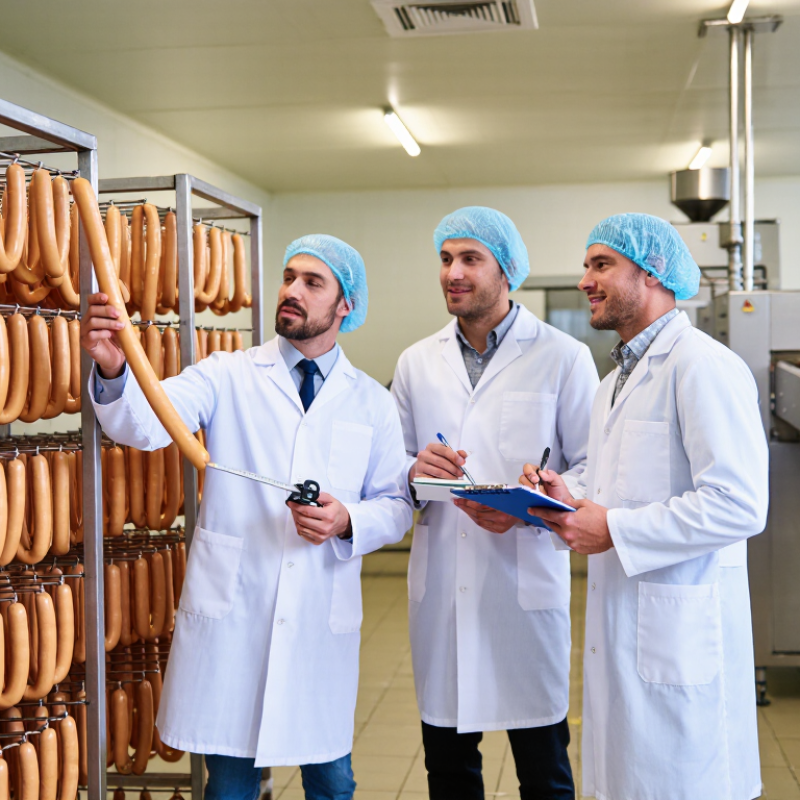
When evaluating fibrous casing suppliers, buyers should request documented diameter tolerance, burst strength, shrinkage data, and storage conditions. Food-contact compliance records should be current and traceable. A reliable supplier should also explain smoke permeability, recommended stuffing pressure, and peeling behavior. Trial production remains essential. A casing may perform well in a laboratory but wrinkle during high-speed filling. Small pilot batches can reveal weak seams, uneven moisture loss, or poor printing adhesion. Supplier audits, batch samples, and clear technical support provide stronger evidence than a polished sales sheet. Industry reports can indicate market direction, but they cannot replace hands-on validation.

How to Find Reliable Fibrous Casing Suppliers?

Fibrous Casings and Their Key Applications

Fibrous casings are paper-based, cellulose-reinforced casings used to provide uniform shape, strength, smoke permeability, and controlled processing performance for cooked, smoked, and dry-cured meat products.

The chart shows commonly used fibrous casing diameter ranges in millimeters for representative meat applications. Actual specifications vary according to product formulation, filling equipment, processing conditions, and supplier standards.

When evaluating suppliers, compare food-contact compliance, diameter consistency, tensile strength, smoke and moisture permeability, print quality, peelability, customization options, and batch-to-batch quality control.

Identify the Required Casing Specifications and Standards

How to Find Reliable Fibrous Casing Suppliers?

Before contacting a supplier, define the casing specifications for your product. Record the required diameter, length, wall thickness, color, moisture level, and shirring format. State whether the casing must be smoke-permeable, peelable, or suitable for high-temperature processing. Small differences can affect filling pressure and finished appearance. They matter.

Ask for documented performance standards, not general promises. Request burst-pressure data, dimensional tolerances, cooking resistance, and storage conditions. Food-contact declarations should identify the materials used and relevant testing methods. Depending on your market, suppliers may need to provide records aligned with recognized food safety systems and local regulations. Requirements vary, so verify them with your quality or regulatory team.

A reliable supplier should provide batch traceability, certificates of analysis, and controlled production records. Samples should be tested on your actual filling and cooking equipment. A casing that performs well in a sample room may behave differently on a fast production line. I have learned that supplier questionnaires can miss practical problems, especially during humidity changes. Ask how defects are investigated and how corrective actions are documented. Review audit evidence carefully. One certificate alone proves little. Clear tolerances and honest limitations are more useful than impressive language. Even experienced buyers sometimes overlook storage time, which can change casing flexibility. That detail deserves a written requirement.

Research and Shortlist Potential Fibrous Casing Suppliers

Research and Shortlist Potential Fibrous Casing Suppliers

Finding reliable fibrous casing suppliers starts with practical research, not attractive product pages. Check their manufacturing history, production capacity, and experience with your sausage formats. A supplier should explain casing diameter, wall strength, moisture tolerance, and recommended storage conditions clearly. Ask for technical data sheets, food-contact documentation, batch traceability records, and quality-control procedures. Vague answers are a warning sign.

Request samples before creating a shortlist. Test them on your filling line, not only by hand. Observe peeling, stuffing speed, breakage, printing quality, and cooking performance. Compare results across several batches when possible. Speak with technical staff directly. Their response time often reveals more than a polished quotation. I once focused too heavily on price and overlooked inconsistent sample dimensions. That mistake could have been avoided.

Tips: Score suppliers using the same checklist. Include quality, lead time, minimum order quantity, packaging, communication, and complaint handling. Verify whether they can support seasonal demand. Ask how they manage material changes or delayed shipments. Keep two or three qualified options, but do not treat every supplier as equally suitable. A lower price may hide extra waste, slower production, or difficult storage requirements. Recheck documents regularly, because a dependable supplier today may still need review later.

Evaluate Supplier Quality, Safety, and Production Capabilities

Reliable fibrous casing suppliers should prove quality with measurable evidence, not attractive samples. Request specifications for diameter tolerance, wall strength, moisture content, permeability, peelability, and stuffing performance. Compare three production lots, not one perfect roll. Inspect edges, seams, winding tension, and print alignment. Small defects can cause casing breaks during high-speed filling.

Safety needs stronger documentation. Ask for food-contact declarations, allergen controls, sanitation records, and lot-level traceability. A credible supplier should provide certificates of analysis and explain its recall procedure. The World Health Organization estimates that contaminated food causes 600 million illnesses and 420,000 deaths annually. That figure makes weak documentation unacceptable. Audit material storage, water quality, pest control, and employee hygiene. Paperwork alone is insufficient.

Production capability also requires practical testing. Confirm annual capacity, shift structure, backup equipment, lead times, and minimum order quantities. Request trial runs using your actual filling temperature, pressure, and cooking cycle. ISO 22000-based systems can support consistent hazard control, but certification does not guarantee perfect output. I would still review recent nonconformance data and corrective actions. Suppliers sometimes hide production limits until demand rises. That is a warning. A capable partner reports constraints early, maintains retained samples, and tracks every batch from raw fiber to shipment.

How to Find Reliable Fibrous Casing Suppliers? - Evaluate Supplier Quality, Safety, and Production Capabilities

Evaluation Dimension Recommended Benchmark Verification Evidence Weight Suggested Score
Food-Contact Compliance The casing material and inks, coatings, adhesives, and processing aids should comply with the destination market’s food-contact requirements. For the United States, applicable FDA food-contact regulations should be identified; for the European Union, Regulation (EC) No. 1935/2004 and relevant specific measures should be addressed. Declaration of compliance, material composition statement, migration test reports, and documented regulatory review for the intended food type and processing conditions. 20% 1–5
Food Safety Management A documented HACCP-based system should identify biological, chemical, and physical hazards throughout raw-material handling, casing production, storage, and dispatch. ISO 22000 or a recognized food-safety certification is a strong indicator of system maturity. Current certificate, scope statement, latest audit result, HACCP plan, corrective-action records, and traceability-test results. 15% 1–5
Quality Management System The supplier should maintain controlled specifications, approved changes, calibrated test equipment, nonconformance procedures, and corrective and preventive action records. ISO 9001 certification can support, but does not replace, food-safety verification. Quality manual, process-control plan, calibration records, internal-audit schedule, nonconformance trend, and sample certificate of analysis. 10% 1–5
Dimensional Consistency The supplier should define tolerances for flat width or diameter, wall thickness, reel length, casing weight, and moisture or conditioning level. Acceptance limits must be agreed in the product specification rather than based on informal descriptions. Approved technical specification, inspection records, statistical process-control charts, and results from pre-shipment samples. 10% 1–5
Mechanical Performance Testing should cover tensile strength, elongation, burst or pressure resistance, seam or clip compatibility, and resistance to tearing during stuffing, linking, cooking, smoking, or handling. Limits should reflect the customer’s filling equipment and process conditions. Validated test methods, laboratory reports, batch results, production-line trial records, and documented compatibility testing with the intended equipment. 15% 1–5
Microbiological and Chemical Controls The supplier should control microbial contamination, foreign material, allergens where relevant, residual processing chemicals, and unauthorized substances. Testing frequency and limits should be risk-based and aligned with the customer specification and destination-market regulations. Risk assessment, environmental-monitoring program, microbiological test results, chemical-residue controls, allergen statement, and laboratory accreditation details. 10% 1–5
Traceability and Recall Readiness Each shipment should be traceable to raw materials, production date, line or batch, inspection results, packaging records, and dispatch documentation. A documented mock recall should demonstrate that the system works in practice. Lot-code structure, traceability procedure, sample batch record, mock-recall report, retention-sample policy, and complaint-investigation records. 10% 1–5
Production Capacity and Scalability The supplier should demonstrate sufficient output for forecast demand, including peak-season requirements, while maintaining the same specification across production lines. Capacity figures should distinguish installed capacity from available capacity. Capacity statement, current utilization range, production schedule, equipment list, maintenance plan, staffing model, and contingency arrangements. 5% 1–5
Delivery Reliability Lead times, minimum order quantities, order-confirmation procedures, export documentation, and on-time-in-full performance should be clearly defined. A reliable supplier should communicate promptly when production or logistics risks arise. Anonymized delivery-performance records, agreed lead-time matrix, logistics procedure, safety-stock recommendation, and business-continuity plan. 5% 1–5
Technical Support and Change Control The supplier should provide application guidance, troubleshooting support, and advance notice of changes to materials, manufacturing location, process, packaging, or specifications. Significant changes may require renewed testing or customer approval. Technical data sheet, change-notification procedure, complaint-response target, trial-support records, and named technical contact role. 5% 1–5
Total Evaluation Weight 100% Maximum: 5.0
Scoring Guide: 1 = unacceptable or undocumented; 2 = significant gaps; 3 = meets basic requirements; 4 = well-controlled and independently verified; 5 = consistently excellent, fully documented, and supported by objective performance data. A weighted score of 4.0 or higher is generally suitable for shortlist consideration, subject to a successful sample trial and audit.

Compare Pricing, Samples, Certifications, and Delivery Terms

How to Find Reliable Fibrous Casing Suppliers?

Compare quotations on equal specifications, not on price alone. Request pricing per 1,000 meters, with diameter, length, color, moisture level, and packaging clearly stated. A cheaper roll may produce more breakage during stuffing. Ask for samples from at least three production batches. Test them on your actual filling line, including soaking time, stuffing pressure, cooking, cooling, and peeling. Record burst rates and casing shrinkage. Small details matter.

Certifications should support production control, not decorate a sales file. Check current ISO 9001, HACCP, and relevant food-contact compliance documents. Confirm the certificate holder, factory address, scope, and expiry date. Request batch traceability and recent audit results. FAO’s 2022 food-loss report estimated that 13.2% of food is lost before retail globally. Reliable casing performance can reduce avoidable waste, although it cannot solve every process problem. That distinction is important.

Delivery terms deserve the same scrutiny as technical quality. Compare minimum order quantities, production lead times, sample timing, shipment terms, insurance, and customs responsibilities. Ask whether the supplier keeps safety stock or depends on one raw-material source. Obtain a written tolerance for delivery delays. In one practical comparison, a supplier with a higher unit price offered steadier weekly deliveries and fewer emergency shipments. The first quote looked better. It was not. I would still question any promise without production records, reference samples, and a clear corrective-action process.

We are using cookies on our website

Please confirm, if you accept our tracking cookies. You can also decline the tracking, so you can continue to visit our website without any data sent to third party services.