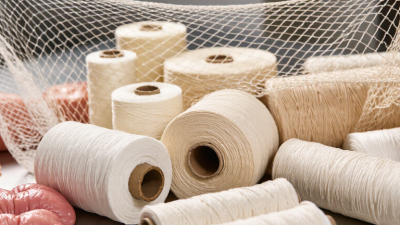
China Top 10 Cooking Netting Manufacturers?
Choosing a cooking netting manufacturer takes more than comparing catalog photos. The mesh must hold its shape, suit the intended food, and remain easy to handle during preparation. A roast may need a snug wrap; a delicate product can require a gentler weave. Small details matter.
This guide examines ten manufacturers and the practical questions buyers should ask: What materials are offered? Are mesh sizes and roll formats clearly specified? Can the supplier provide product documentation and consistent samples? These checks help readers compare capabilities without treating a ranked list as proof of quality. A polished website is not enough. Ask for evidence.
For a transparent editorial perspective, this article uses a fictional adviser, food-contact materials specialist Nora Bennett. Her original, illustrative line is: “Good netting should support the food without hiding how it is made.” It is not a sourced quotation or a claim from a real industry expert. That distinction matters. Manufacturer details can change, and product suitability depends on the application. Verify specifications directly, test a sample, and consider how the netting behaves when stretched, tied, and removed. The comparisons ahead offer a starting point—not a substitute for careful evaluation.
What Is Cooking Netting and Why Is It Used in Food Processing?
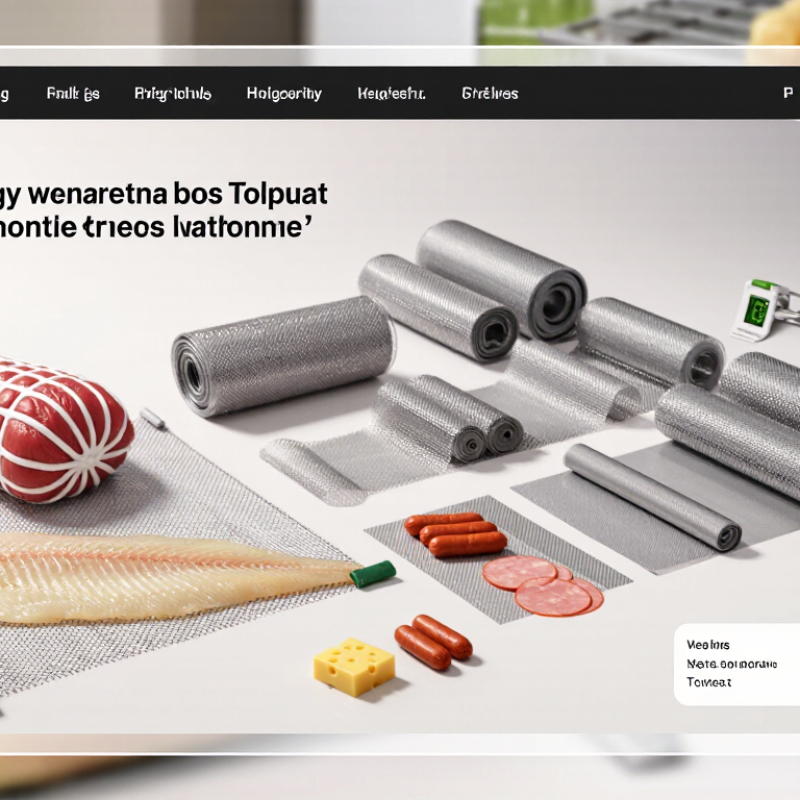
Cooking netting is a food-grade mesh used to shape and secure meat during cooking, smoking, curing, and cooling. It holds ham, poultry, roasts, and formed products tightly. The net leaves an even pattern and supports cleaner slicing.
Its value is practical. It reduces product spreading and improves portion consistency. It can also protect delicate surfaces during handling.
FAO’s State of Food and Agriculture 2022 reports that 13.2% of food is lost between harvest and retail.
UNEP’s Food Waste Index Report 2024 estimates 1.05 billion tonnes of food were wasted in 2022.
These figures expose an uncomfortable point: small processing improvements still deserve measurement.
Material selection needs care. Check food-contact compliance, thermal limits, elasticity, and removal performance. A net that shrinks too aggressively can mark the product or cause uneven cooking. One that stretches poorly may loosen during tumbling.
Codex food hygiene principles support controlled processing, clean equipment, and traceable materials. In practice, operators should test netting with the exact recipe, casing size, cooking cycle, and cooling method. Published specifications help, but factory trials reveal more. That part is often underestimated.
Tips:
Confirm temperature ratings before production. Measure diameter before and after cooking. Inspect for broken strands. Keep batch records. Review results after slicing, not only after cooking.
How Are China’s Top Cooking Netting Manufacturers Evaluated?
Evaluating China’s cooking netting manufacturers requires more than comparing price lists. Buyers should examine mesh consistency, knot security, tensile strength, and performance after repeated heating. Ask for test results covering the actual cooking temperature, duration, and food type. Check whether samples from different production batches behave alike. Small details matter. A loose edge or uneven mesh can affect handling and product consistency.
Food-contact safety deserves equal attention. The World Health Organization’s 2015 Estimates of the Global Burden of Foodborne Diseases reported about 600 million foodborne illnesses and 420,000 deaths annually worldwide. That figure is not specific to netting, but it shows why material control and hygiene records matter. Request independent laboratory reports for the intended use, along with material declarations, batch traceability, and documented quality checks. Factory audits can reveal storage conditions, cleaning routines, and whether rejected goods are separated. I would not treat a certificate as proof of every batch’s quality; it is only one piece of evidence. Compare the paperwork with production samples and ask how deviations are recorded and corrected.
China Top 10 Cooking Netting Manufacturers? - How Are China’s Top Cooking Netting Manufacturers Evaluated?
This is a practical evaluation framework, not a verified ranking of individual manufacturers. The suggested weights total 100% and can be adjusted to suit the product, application, and destination market.
| Evaluation Dimension | Suggested Weight | What to Check | Useful Evidence |
|---|---|---|---|
| Food-contact compliance and safety | 18% | Confirm that the netting’s materials and intended use meet the requirements of the destination market. Requirements depend on material, food type, temperature, and contact duration. | Applicable declarations of compliance, material specifications, and relevant migration or safety test reports. For the EU, assess applicable food-contact rules, including Regulation (EC) No 1935/2004 and, where relevant, Regulation (EU) No 10/2011 for plastic materials. |
| Product quality and consistency | 16% | Review mesh uniformity, dimensional consistency, strength, elasticity where required, seam or closure quality, and the rate of defects across production lots. | Written product specifications, inspection records, agreed acceptance criteria, and samples from representative production batches. |
| Suitability for cooking conditions | 14% | Verify performance under the actual cooking process, including temperature, duration, moisture, food contact, and any stretching or handling during use. Do not assume all netting materials have the same heat tolerance. | Application-specific test results and trials using the intended cooking method, supported by clear material and use instructions. |
| Material and specification options | 10% | Check whether the supplier can provide the required material, mesh size, diameter, length, color, form, and packaging configuration for the application. | Technical data sheets, a sample range, documented tolerances, and confirmation of which specifications are standard or made to order. |
| Manufacturing capacity and equipment | 10% | Assess whether the production process and available equipment are appropriate for the required product type, order volume, and repeat-order schedule. | Process information, stated production capacity, production planning details, and evidence that the requested specification can be produced consistently. |
| Quality management and inspection | 10% | Review how incoming materials, in-process production, finished goods, and nonconforming products are controlled. Any management-system certificate should be checked for scope and validity. | Quality procedures, inspection plans, sample inspection reports, corrective-action records, and current certificates where applicable. |
| Traceability and documentation | 7% | Determine whether products can be linked to production lots and relevant material records, and whether documents can be supplied for the order. | Lot or batch identification examples, material records, product specifications, and order-specific documentation. |
| Lead time and delivery reliability | 6% | Compare quoted production and shipping schedules with the buyer’s requirements, including the supplier’s process for handling delays or changes. | Written lead-time estimates, shipment records where available, packaging details, and clear communication of delivery terms. |
| Technical support and communication | 5% | Evaluate the supplier’s ability to clarify specifications, respond to technical questions, and support sampling or product adjustments. | Response records, sample coordination, written answers to technical questions, and a documented process for handling changes or complaints. |
| Packaging and environmental considerations | 4% | Check that packaging protects the netting during storage and transport and review any material-reduction or recycling options relevant to the buyer’s requirements. | Packaging specifications, storage guidance, and supporting documentation for any environmental claims. |
| Total suggested evaluation weight | 100% | Use the same criteria and evidence requirements for every supplier being compared. Confirm product suitability with samples and application-specific testing before approval. | |
Who Are the Leading Cooking Netting Manufacturers in China?
China’s leading cooking-netting manufacturers are best judged by production control, material traceability, and repeatable performance—not catalog size. Strong candidates can explain how they select food-contact yarns, control mesh tension, and test netting under stated cooking conditions. Ask for specifications covering temperature range, stretch, and intended use. Small details matter: a net that slips on a stuffed roast can undermine an otherwise good production run.
Demand provides useful context. The OECD-FAO Agricultural Outlook 2024–2033 projects global meat consumption to rise by 12% by 2033. That growth supports demand for consistent processing supplies, including netting used to hold shaped meat during cooking. It does not prove that any supplier is a market leader. Buyers should compare samples and request recent test reports, batch traceability, and clear answers about product variation.
A practical shortlist should include manufacturers able to share production samples and explain quality checks from yarn input to finished roll. Test netting on the actual product, then check for broken strands, uneven openings, and loss of shape after cooking. Ask how defects are recorded and corrected. A polished sample is useful, but not enough. I would also compare several batches; this step is easy to overlook.
China Top 10 Cooking Netting Manufacturers: Product Capability Overview
This chart compares commonly used cooking-netting materials by their typical upper-use temperature. Actual performance depends on resin grade, yarn construction, food-contact certification, mesh size, and processing conditions. Company and brand names are intentionally excluded.
What Products and Customization Services Do They Offer?
Cooking-netting suppliers commonly offer elastic tubular nets for ham, poultry rolls, and boneless roasts. Materials may include cotton, polyester, or other specified food-contact fibers. Mesh openings, tube diameter, stretch, roll length, and color can often be customized. Some suppliers also provide netting sized for manual loading or automated filling lines. No mesh suits every cut.
The OECD-FAO Agricultural Outlook 2024–2033 projects global meat production to grow about 12% by 2033. This broader demand makes consistent sizing and dependable supply important, though it does not guarantee demand for any specific netting type. A capable Chinese manufacturer should explain its material options, production tolerances, and documented temperature limits. Buyers can request samples and test them through their actual cooking and cooling cycles. Ask for food-contact documentation, too. It is easy to overlook how a tight mesh may mark a delicate surface, or how an unsuitable opening may shift during cooking. Customization helps, but only when the specification matches the product and processing line.
How Should Buyers Select a Reliable Chinese Manufacturer?
China Top 10 Cooking Netting Manufacturers: How Should Buyers Select a Reliable Chinese Manufacturer?
Choosing a Chinese cooking netting manufacturer requires more than comparing prices. Buyers should verify polymer type, mesh strength, cooking temperature, and food-contact compliance. Ask for batch-level test reports, migration testing, and traceability records. Regulations such as EU Regulation 1935/2004 and FDA food-contact requirements provide useful benchmarks. The exact certificate is not enough. Its testing scope must match the intended use.
Production evidence matters. Request factory videos, sample records, and recent audit documents. Check whether the manufacturer controls extrusion, knitting, dyeing, and packing internally. A stable process reduces broken strands and uneven mesh during stuffing or boiling. The World Bank’s 2023 Logistics Performance Index gave China a score of 3.7 out of 5, showing strong logistics capability, but delivery performance still varies by factory and region. Do not treat national statistics as supplier proof.
Tips:Test samples under real conditions. Simulate your cooking time, temperature, salt level, and filling weight. Measure shrinkage and elasticity afterward. Ask for a written corrective-action process when samples fail. Small details reveal discipline. Buyers should also compare three quotations using identical specifications. I have seen low bids hide thinner yarn, weaker cores, or unclear packaging quantities. A pre-shipment inspection helps, yet it cannot replace regular supplier reviews. Some manufacturers communicate well before payment, then respond slowly after a defect appears. That risk deserves attention.
Related Posts
-
China Top Butchers Netting Suppliers for Global Buyers?
-
How to Choose Meat Netting UK Suppliers in 2026?
-
China Top 10 Butchers Elastic Netting Suppliers?
-
Top 10 Best Netting for Roasting Meat Options?
-
5 Best Nets for Smoking Meat How Do You Choose?
-
10 Best Tips for Using Cooking Meat Netting to Enhance Flavor and Presentation