10 Tips for Choosing the Right Butchers Mesh?

Choosing the right butchers mesh is not a simple matter of comparing prices or counting wire rings. The mesh touches meat, equipment, workers, and the final customer experience. Its material, diameter, flexibility, opening size, and cleaning performance can affect shaping, cooking, handling, and waste. Small differences matter.

Animal-handling expert Temple Grandin has said, “The equipment must be designed to fit the animal, not force the animal to fit the equipment.” The same principle applies to butchers mesh. It should fit the product, the machine, and the working routine. A mesh that looks strong may still damage delicate cuts. A flexible option may improve shaping but lose stability during cooking. Test samples under real conditions. Wet hands reveal problems quickly.

This guide presents ten practical tips for selecting butchers mesh with greater confidence. It considers stainless steel grades, load capacity, mesh size, edge safety, cleaning access, and supplier support. A detailed specification sheet helps, but it cannot replace a trial on the production floor. That is where uncomfortable truths appear. Some low-cost mesh becomes difficult to clean. Some premium mesh is simply excessive for a small operation.

There is no perfect choice. There is only a better fit for a defined task. Check the cut, the equipment, the temperature, and the people using it before committing.
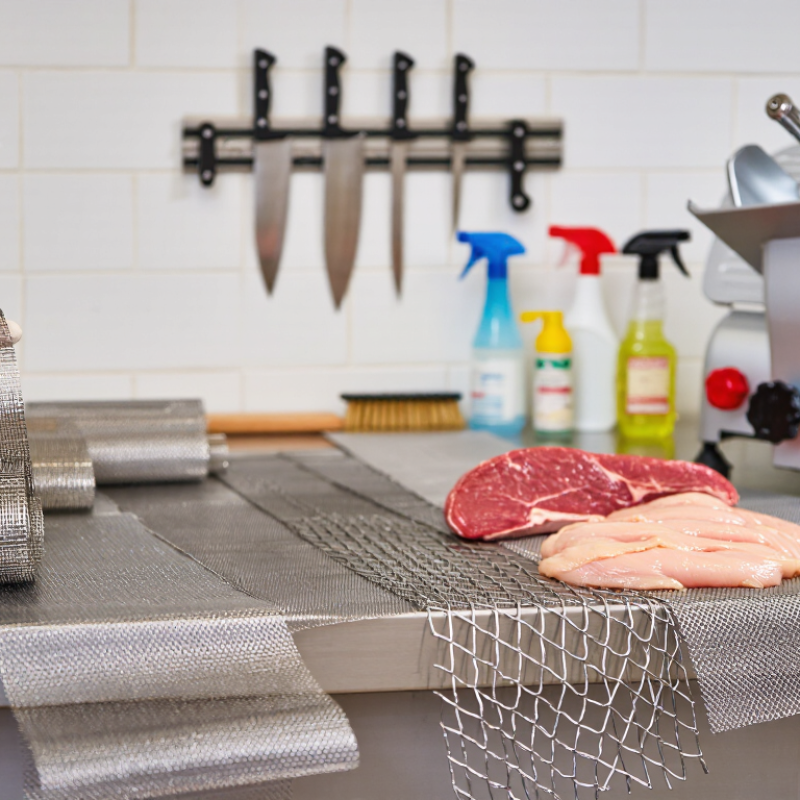
10 Tips for Choosing the Right Butchers Mesh?

Define Butchers Mesh and Its Common Applications

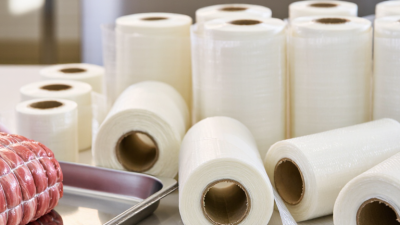
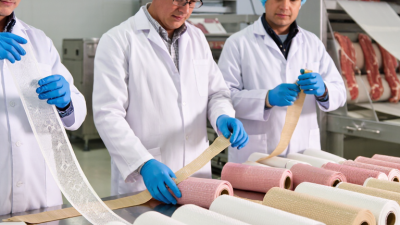
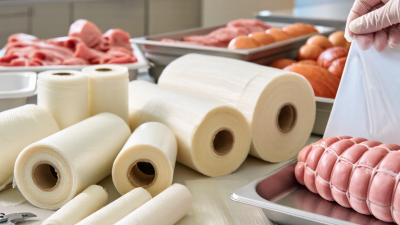
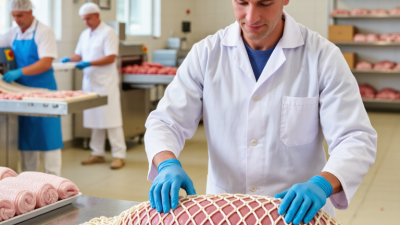
Butchers mesh is an elastic food-grade netting used to hold meat firmly during preparation, cooking, smoking, or curing. It helps maintain a clean shape and supports even slicing. Common applications include rolled roasts, poultry portions, sausages, ham, and other formed meat products. Mesh can also reduce surface separation when a product moves through ovens or smokers. It is not a substitute for proper food handling.

Tip 1:Match the mesh diameter to the product. A tight mesh may mark soft meat, while a loose mesh may fail to support a heavy roast. Consider the meat’s weight, shape, and moisture level. In practical processing, heat resistance matters greatly. Always check the supplier’s temperature guidance and food-contact documentation before use.

Tip 2:Choose the right elasticity and material. Stronger mesh suits dense or irregular cuts, while flexible mesh works better for tender products.

Tip 3:Test a small batch first. This simple step can reveal slipping, tearing, or unwanted impressions. A common mistake is choosing by appearance alone. A wider opening may look efficient but perform poorly under pressure. There is no perfect mesh for every application; processing speed, equipment, cooking conditions, and final presentation must all be considered. Reliable selection depends on measured trials, not guesswork.
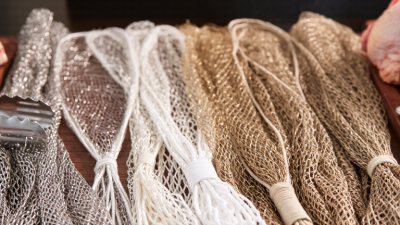

Assess Mesh Materials for Strength, Safety, and Durability

10 Tips for Choosing the Right Butchers Mesh

Choosing butchers mesh starts with the material. Stainless steel offers high tensile strength, corrosion resistance, and long service life. Food-grade polymer mesh can be lighter and easier to handle. Check its temperature range, elasticity, and resistance to oils. A mesh should not shed fibers, coatings, or loose particles during processing.

Inspect the weave, seams, edges, and openings closely. Consistent openings help the mesh hold meat evenly during forming or cooking. Strong seams prevent splitting under pressure. Look for smooth edges that will not cut gloves or damage the product. Pull a sample by hand, then examine it after washing. Small defects often appear later. That matters.

Durability also depends on cleaning and storage. Choose mesh that tolerates repeated washing, approved sanitizing routines, and controlled heat exposure. Ask for material specifications, test results, and traceability records. Practical checks should include tensile performance, dimensional stability, odor retention, and visual cleanliness. I once focused too heavily on breaking strength and overlooked handling comfort. That was a mistake. Workers use the mesh repeatedly, so grip, flexibility, and clear inspection are equally important. Select the strongest suitable material, not simply the thickest one. Survival alone is not enough.

10 Tips for Choosing the Right Butchers Mesh? - Assess Mesh Materials for Strength, Safety, and Durability
No. Selection Dimension Practical Benchmark or Data Point Why It Matters
1 Base Material Confirm whether the mesh is made from food-contact stainless steel, galvanized steel, or another metal. For reusable butcher gloves, stainless steel is the standard choice because it resists rust and can withstand repeated washing. The base metal affects corrosion resistance, hygiene, service life, and suitability for meat-processing environments.
2 Stainless Steel Grade Compare common stainless-steel grades used for chainmail gloves and protective aprons. Grade 304 offers good general corrosion resistance. Grade 316 provides improved resistance in chloride-rich or highly corrosive conditions. Selecting the appropriate grade helps reduce staining, pitting, and premature failure caused by moisture, salt, and cleaning chemicals.
3 Wire Diameter Check the diameter of the wire used to form each ring and compare it with the required protection level. Heavier wire generally improves resistance to deformation, while lighter wire can reduce weight and improve flexibility. Wire diameter influences mechanical strength, glove weight, dexterity, and long-term resistance to ring distortion.
4 Ring Construction Inspect whether the rings are welded, riveted, or mechanically closed, and check for visible gaps or sharp edges. Consistently closed rings should not separate under normal use. Welded or securely closed construction helps prevent snagging and ring loss. Poorly closed rings may open during cutting operations, reducing coverage and creating a safety or contamination risk.
5 Mesh Opening and Coverage Evaluate the ring spacing, wrist coverage, cuff length, and coverage around fingers or the torso. The mesh should provide continuous coverage over the intended risk area without exposing gaps at the wrist, cuff, or finger joints. Correct coverage is essential because a strong material cannot protect areas that remain exposed or poorly fitted.
6 Cut and Puncture Protection Look for test documentation that identifies the applicable cut-resistance and puncture-resistance methods. Ask for test results based on recognized standards such as EN 388 or ANSI/ISEA 105, where applicable to the product type. A material description alone does not prove protection. Standardized testing provides a more reliable basis for comparing performance.
7 Food-Contact Safety Verify that the material and surface finish are suitable for the intended food-processing application. The mesh should have a smooth, cleanable surface, no flaking coating, and supporting documentation for the intended food-contact market. Food-safe construction helps prevent metal contamination, residue retention, and hygiene problems during meat handling.
8 Cleaning and Sanitizing Resistance Check compatibility with hot water, detergents, approved sanitizers, and the facility's cleaning procedure. Stainless-steel mesh should be fully rinsed and dried after cleaning. Avoid prolonged exposure to aggressive chlorine solutions unless approved by the supplier. Correct cleaning practices reduce bacteria retention and help prevent corrosion caused by chemical residues.
9 Fit, Flexibility, and Weight Assess hand size, finger mobility, cuff security, apron adjustment, and total wearing weight. The mesh should remain close to the body or hand without restricting normal movement or creating loose material near blades and machinery. A secure and comfortable fit improves worker control, reduces snagging risk, and encourages consistent use.
10 Inspection and Replacement Criteria Establish a routine inspection schedule for broken rings, sharp edges, corrosion, loose straps, and damaged fasteners. Remove the item from service if rings are missing or open, corrosion is significant, edges become sharp, or adjustment hardware no longer secures the mesh. Even high-quality mesh loses protective value when it is damaged, improperly maintained, or no longer fits securely.
Note: Actual protection depends on the complete product design, fit, maintenance, working method, and verified test results. Always follow the manufacturer's care instructions and the safety requirements applicable to your workplace.

Match Mesh Size and Design to Your Processing Needs

Choosing the right butcher's mesh starts with the product, not the catalogue. Measure the roast, sausage, or rolled cut after filling. Then consider its diameter, weight, and surface shape. A tighter mesh can support small products and reduce movement during handling. Larger openings may suit broad, uneven cuts and improve surface exposure during cooking or smoking. Match the mesh size to the filling, not only to the casing or equipment.

Design matters just as much. Elastic mesh can grip a roast as it shrinks, while a rigid structure may hold a more stable cylinder. Check the crossing pattern, strand thickness, and edge finish. Rough edges can mark delicate meat or catch on processing guides. For automated lines, test mesh release, tension, and alignment at normal speed. Measure twice. A small bench trial often reveals more than a specification sheet. I once trusted the listed diameter and ignored shrinkage; the finished piece loosened after cooking.

Material choice should follow the process temperature, moisture, and contact time. Confirm food-contact suitability, batch traceability, and cleaning instructions with the supplier. Do not assume a mesh performs equally when wet, frozen, or heavily seasoned. Test it wet. Record pull strength, appearance, filling retention, and removal time. The best size on paper may waste labor in production. That is worth reconsidering. Leave enough tolerance for natural variation, because cuts rarely behave like perfect cylinders.

Check Hygiene, Cleaning, and Food-Contact Compliance

10 Tips for Choosing the Right Butchers Mesh

Tip 1 Choose mesh made from corrosion-resistant stainless steel. Ask for food-contact documentation and material traceability.
Tip 2 Inspect every link, edge, and fastening point. Rough surfaces can trap meat particles and moisture.
Tip 3 Check whether the mesh design has fewer hidden gaps. Complex shapes often require longer cleaning.
Tip 4 Request clear washing instructions before purchase. The supplier should specify detergent type, water temperature, and rinsing steps.
Tip 5 Confirm that the mesh tolerates your cleaning routine without rusting or deforming.
Tip 6 Look for smooth, sealed joints. They are easier to scrub and inspect.
Tip 7 Make sure the item dries quickly on a clean rack. Damp storage encourages unpleasant odors and microbial growth. Not ideal.
Tip 8 Separate clean mesh from used protective equipment. Never place it directly on a cutting table.
Tip 9 Include visual checks in every shift’s hygiene routine. Examine stains, broken links, and damaged closures under bright light.
Tip 10 Verify compliance with food-contact requirements in your operating region. Keep certificates, cleaning records, and inspection results together. A certificate alone does not prove proper hygiene. It only supports your evaluation. In practice, teams may overlook the inside of cuffs or apron straps. That small mistake deserves attention. A short trial with real cleaning conditions can reveal problems before regular production begins.

Compare Suppliers, Costs, and Long-Term Value

Tip 1: Compare suppliers beyond the quoted price. Ask for material certificates, batch traceability, production experience, and consistent mesh dimensions. A food-grade stainless steel mesh should resist corrosion, stretching, and repeated cleaning. Request a sample. It may reveal rough edges or uneven openings that photos hide.

Tip 2: Calculate the real cost. Include shipping, inspection, installation, cleaning time, replacement frequency, and possible production delays. A cheaper roll can become expensive if it breaks during stuffing or requires frequent adjustment. Compare the cost per usable metre, not only the invoice total. Confirm minimum order quantities and delivery schedules in writing.

Tip 3: Judge long-term value through testing. Measure tensile performance, flexibility, aperture accuracy, and resistance to heat and approved cleaning chemicals. Ask suppliers how they control quality between batches. References from meat processors can help, but inspect their evidence carefully. Some claims sound impressive yet lack test details.

A reliable supplier should explain tolerances clearly and respond directly to technical questions. Service matters when a shipment arrives late or specifications change. I would also test the mesh on one production line before making a large purchase. This slows the decision. It can prevent a costly mistake. My own first comparison would not be perfect, because maintenance costs are often underestimated. Recording failures, cleaning hours, and replacement dates creates stronger evidence for the next purchase.

We are using cookies on our website

Please confirm, if you accept our tracking cookies. You can also decline the tracking, so you can continue to visit our website without any data sent to third party services.