2026 Best Types of Butchers Meat Netting for Buyers?
Choosing the right butchers meat netting in 2026 requires more than comparing prices or mesh patterns. Buyers must match the netting with the product, cooking method, equipment, and expected presentation. A net that holds a rolled beef roast may not suit poultry, cured meats, or smoked products.
Material matters.
Common options include cotton, polyester, elastic netting, and blended constructions. Each type offers different strength, stretch, thermal resistance, and release performance. Buyers should examine the net’s diameter, mesh size, elasticity, and maximum recommended temperature. These details affect slicing, shape retention, and production efficiency.
Practical testing remains essential. A supplier’s sample should be fitted over an actual product, not only inspected on a catalog page. Check whether the net stretches evenly around irregular surfaces. Observe the finished roast after cooking, cooling, and removal. Small failures become expensive during busy production.
Food-contact documentation, batch traceability, and clear manufacturing information also deserve attention. Reliable suppliers should explain fiber composition, processing limits, packaging, and storage conditions. Certifications can support confidence, but they should be verified against the intended market and application. Labels alone are not enough.
This guide reviews the best types of butchers meat netting for buyers in 2026. It compares performance, handling, appearance, and purchasing considerations. The “best” choice is rarely universal. A premium net may be unnecessary for simple applications, while a cheaper option may create tearing, waste, or uneven presentation. Buyer priorities can also change after real production trials. That is worth remembering.
What Is Butcher’s Meat Netting and How Is It Used?
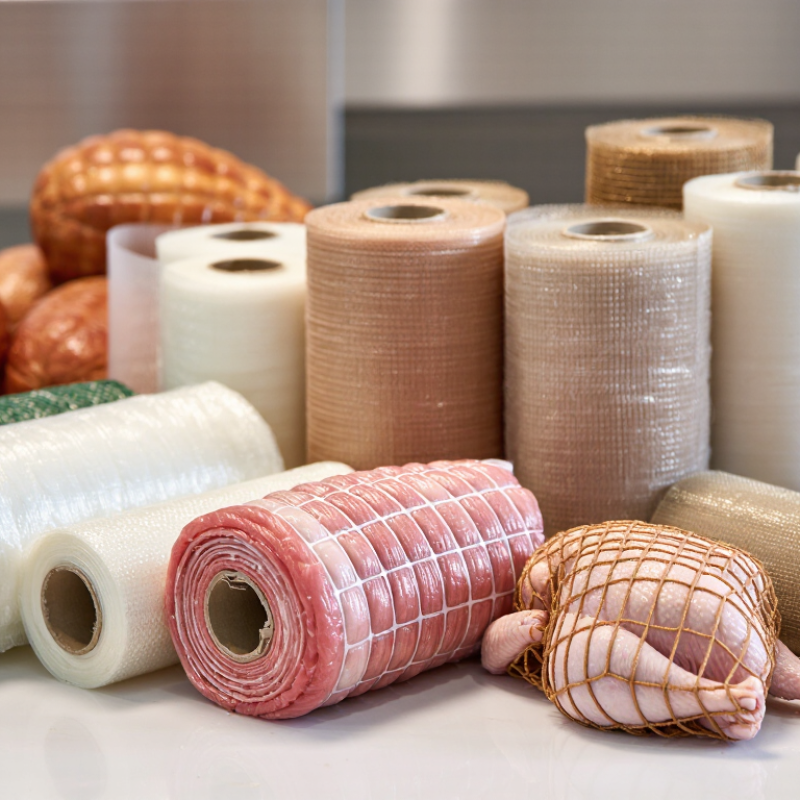
Butcher’s meat netting is a food-grade mesh sleeve placed around meat before cooking, curing, smoking, or chilling. It supports the cut and helps maintain a neat, marketable shape. The netting also keeps herbs, fillings, and natural juices closer to the surface.
Common types include elastic cotton netting, polyester netting, and mixed-fiber netting. Cotton suits roasts that need a traditional appearance and steady compression. Polyester often provides stronger shape retention during cooking. Elastic designs fit irregular cuts more easily, but excessive tension can leave deep marks.
Buyers should check the material, stretch range, mesh opening, roll length, and temperature rating. A tighter mesh may support small stuffed roasts, while wider openings can suit larger cuts. Always confirm whether the netting is approved for direct food contact and whether it must be removed before cooking.
In processing work, netting is usually applied by hand or with a filling tube. The sleeve should fit firmly without squeezing out moisture. That balance is easy to miss. A net that looks secure when cold may become too tight after heating. Practical trials with the actual cut are more reliable than choosing from specifications alone. Suppliers should also provide clear handling guidance and traceable material information.
Which Meat Netting Materials and Designs Are Available?
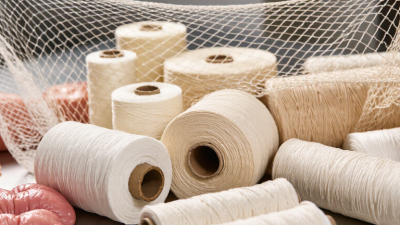
Choosing meat netting in 2026 starts with its material and design. Cotton netting offers a traditional appearance and can absorb smoke during cooking. Polyester netting provides consistent strength and usually handles demanding production conditions well. Elastic netting helps maintain pressure around roasts, rolls, and formed products. Some products combine fibers for better stretch, shape retention, and handling. The best choice depends on cooking temperature, product weight, and required presentation.
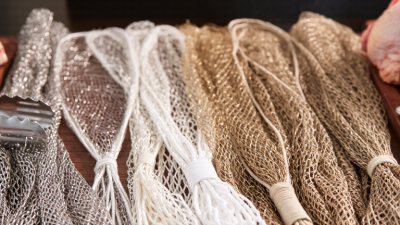
Design also affects performance. Diamond and square meshes create different surface patterns after cooking. Open mesh can improve smoke contact and reduce trapped moisture. Tighter mesh supports soft products that may lose their shape. Tubular netting is practical for continuous stuffing, while pre-cut pieces may simplify small-batch work. Check the netting diameter carefully. A loose fit can create wrinkles, but excessive tension may deform the product. This is easy to overlook.
Tips: Request food-contact documentation, thermal limits, and size specifications before purchasing. Test one production batch with the actual recipe, casing, and cooking cycle. Inspect the cooked surface for slipping, broken strands, or uneven marks. Cotton may look attractive, yet it can behave differently after soaking. Polyester may be stable, but it may not provide the same traditional texture. Suppliers should also provide batch traceability and clear removal instructions. A small trial is wiser than trusting a catalog photo.
How to Compare Netting by Meat Type and Cooking Method?
Choosing butcher’s meat netting in 2026 requires more than checking diameter or appearance. Compare the netting with the meat’s texture, fat level, and cooking method. I test a small sample before ordering large quantities. This simple step often reveals stretching, slipping, or uneven pressure.
For beef roasts, firm elastic netting helps maintain a round shape during roasting or smoking. A tighter mesh can support heavy cuts with layered fat. Pork usually needs flexible netting because the meat softens and releases moisture during slow cooking. For poultry, use lighter netting with smooth contact. It should hold the shape without marking delicate skin. Sausage-style products may need closer mesh spacing, especially when minced meat expands during heating.
Cooking temperature changes the decision. High-temperature roasting demands heat-resistant, food-contact-safe materials that do not leave odors or fragments. Smoking requires stable elasticity over several hours. Sous vide cooking needs netting that tolerates long exposure to heat and moisture. Steaming calls for clean, non-shedding fibers and reliable compression. Check the supplier’s technical data, food-contact documentation, and tested temperature range.
I once selected overly tight netting for a lean roast. The surface looked neat, but the meat developed deep pressure marks. The mistake was clear. Netting should support the cut, not dominate it. In practice, mesh size, stretch recovery, and removal effort matter as much as strength. No single pattern fits every recipe.
2026 Best Types of Butchers Meat Netting for Buyers?
How to Compare Netting by Meat Type and Cooking Method?
A practical comparison of food-contact netting options for shaping, tying, smoking, roasting and curing meat products
| Meat Type | Recommended Netting Type | Best Cooking or Processing Method | Typical Mesh Selection | Key Functional Requirements | Main Advantages | Important Limitations | Overall Fit |
|---|---|---|---|---|---|---|---|
| Beef roast Top round, eye of round, chuck roll and similar boneless cuts |
Heat-resistant cotton or polyester butcher's netting | Oven roastingSous videSmoking | Medium mesh that holds the roast firmly without cutting into the surface | High shape retention, even pressure and adequate heat resistance for the planned process | Creates uniform slices and improves presentation; helps keep irregular cuts compact | Must be removed before serving unless specifically labeled edible; polyester is not suitable for direct flame | ★★★★★ Excellent |
| Pork loin and pork shoulder | Elastic meat netting or cotton netting | RoastingSmokingSlow cooking | Medium to moderately open mesh for expansion and smoke or heat circulation | Elastic recovery, secure hold and sufficient strength for heavier, moist cuts | Accommodates moderate swelling during cooking and supports a consistent cylindrical shape | Very tight mesh can leave marks or compress the exterior; check temperature and material ratings | ★★★★★ Excellent |
| Ham and cured pork | Cotton netting or purpose-made curing net | CuringSmokingHot cooking | Medium or wide mesh selected according to product diameter and desired surface pattern | Low lint, good tensile strength, stable dimensions and compatibility with brine or curing conditions | Supports hanging and produces a recognizable net pattern on formed ham | Not every cotton net is designed for prolonged immersion, curing salts or high-temperature cooking | ★★★★★ Excellent |
| Poultry rolls Turkey breast, chicken roulade and boneless poultry |
Fine elastic netting or food-grade cotton netting | RoastingPoachingSous vide | Fine to medium mesh to prevent smaller portions from escaping | Gentle compression, reliable closure and compatibility with moisture-rich cooking | Maintains a compact roll and helps create even thickness for more uniform cooking | Fine poultry meat can tear if the net is overstretched; do not use non-food-contact craft mesh | ★★★★☆ Very good |
| Lamb leg and lamb roll | Elastic netting or heat-resistant cotton netting | RoastingRotisserieSmoking | Medium mesh with enough elasticity to follow tapered or uneven surfaces | Conforming stretch, abrasion resistance and stable support during turning | Helps retain stuffing and herbs while keeping the product centered during rotisserie cooking | Excessive tension may deform the cut or push filling out at the ends | ★★★★☆ Very good |
| Sausage-shaped meat products Formed meat logs and molded roasts |
Elastic netting, cotton netting or collagen netting | SmokingCookingDrying | Fine to medium mesh based on product diameter, filling texture and desired pattern | Uniform pressure, clean release and suitability for smoke penetration where applicable | Improves shape consistency and can provide an attractive surface pattern | Collagen netting is product-specific and may not be suitable for every cooking or drying process | ★★★★☆ Very good |
| Game meat Venison and other lean, boneless game cuts |
Firm cotton or elastic food-grade netting | RoastingSmokingCuring | Medium mesh with controlled tension to hold lean cuts without excessive compression | Strong grip, low slippage and adequate support for irregular, low-fat cuts | Helps combine smaller pieces into a uniform roast and reduces handling during cooking | Very lean meat may dry at exposed edges; netting cannot replace proper moisture and temperature control | ★★★★☆ Very good |
| Fish and seafood rolls | Fine food-grade elastic netting or suitable cotton netting | PoachingSteamingSous vide | Fine mesh with gentle tension to prevent delicate portions from separating | Soft contact, low cutting action and verified compatibility with moist heat | Maintains the shape of roulades and stuffed fillets during gentle cooking | Many standard butcher nets are too coarse or too tight for delicate fish; avoid abrasive fibers | ★★★☆☆ Specialized |
| Cold-smoked or air-dried products Dry-cured whole-muscle items |
Purpose-made curing netting | Air dryingCold smokingMaturing | Open or medium mesh that supports hanging while allowing airflow around the product | Low moisture retention, dimensional stability and resistance to the intended curing environment | Supports hanging, helps maintain a consistent form and allows surface circulation | Netting must not trap excessive moisture or shed fibers; process validation is essential for long maturation | ★★★★☆ Very good |
What Buyer Requirements Matter Most When Choosing Netting?
When choosing butcher’s meat netting, buyers should start with product conditions, not appearance. Elastic cotton, polyester, and food-grade plastic netting suit different cuts and processes. The required stretch must match the meat diameter. Too little tension causes loose slicing. Too much tension can mark the surface or distort the shape. Ask for tensile-strength results, mesh dimensions, shrinkage data, and batch traceability.
Food-contact safety remains critical. The OECD-FAO Agricultural Outlook 2024–2033 projects global meat consumption to increase by about 12% by 2033. Higher volume can magnify small packaging failures. Buyers should request migration statements, allergen-control procedures, sanitation guidance, and documentation for the intended heating process. Netting used in cooking, smoking, or roasting needs verified heat resistance. A supplier’s general certificate may not cover every temperature or food type.
Operational fit matters just as much. Check whether machines can load the netting without frequent breaks. Confirm roll length, knot consistency, color stability, and storage requirements. The UNEP Food Waste Index Report 2024 estimated that 1.05 billion tonnes of food were wasted in 2022. Netting cannot solve that problem alone, but secure packaging can reduce avoidable product damage during handling. I would also test a small production batch first. Laboratory results are useful, yet real stuffing pressure can expose weaknesses. That step costs time. It may prevent a costly recall, though no test removes every risk.
Which Butcher’s Meat Netting Types Are Best for Different Needs?
2026 Best Types of Butchers Meat Netting for Buyers?
Which Butcher’s Meat Netting Types Are Best for Different Needs?
The best butcher’s meat netting depends on the cut, cooking method, and required appearance. Elastic polyester netting suits formed roasts and poultry rolls. It grips uneven surfaces and keeps stuffing compact. Cotton netting offers a traditional texture and attractive surface marks. However, it may absorb juices and lose strength during extended cooking. Fibrous netting provides firmer support for larger hams and dense roast cuts. Choose food-contact materials with documented temperature limits and traceability.
The OECD-FAO Agricultural Outlook 2024–2033 projects global meat production to grow about 12% by 2033. That growth increases demand for consistent portion control and efficient processing. USDA FSIS guidance also shows that safe cooking depends on validated time and temperature controls, not netting alone. A tight mesh cannot correct an unsuitable cooking process. In production, buyers sometimes overvalue appearance. That choice can create tearing, uneven shrinkage, or difficult net removal.
Tips: Match mesh size to product diameter. Test the netting after chilling, stuffing, and cooking. Check whether it slips on oily surfaces. Ask suppliers for migration, heat-resistance, and lot-traceability documents. Small trials matter. One weakness remains easy to miss: a netting that performs well on lean beef may fail on fatty pork. Recheck it.
2026 Best Types of Butcher’s Meat Netting for Different Needs
Practical suitability ratings based on common material properties and traditional butcher applications.
Cotton netting is a strong choice for traditional roasting and smoking. Elastic polyester netting provides reliable shaping and stretch for irregular cuts, while cotton-polyester blends offer a balance of natural handling and durability. Collagen netting is commonly selected for uniform processed-meat products and controlled presentation.