China Top 10 Cooking Net for Meat Manufacturers

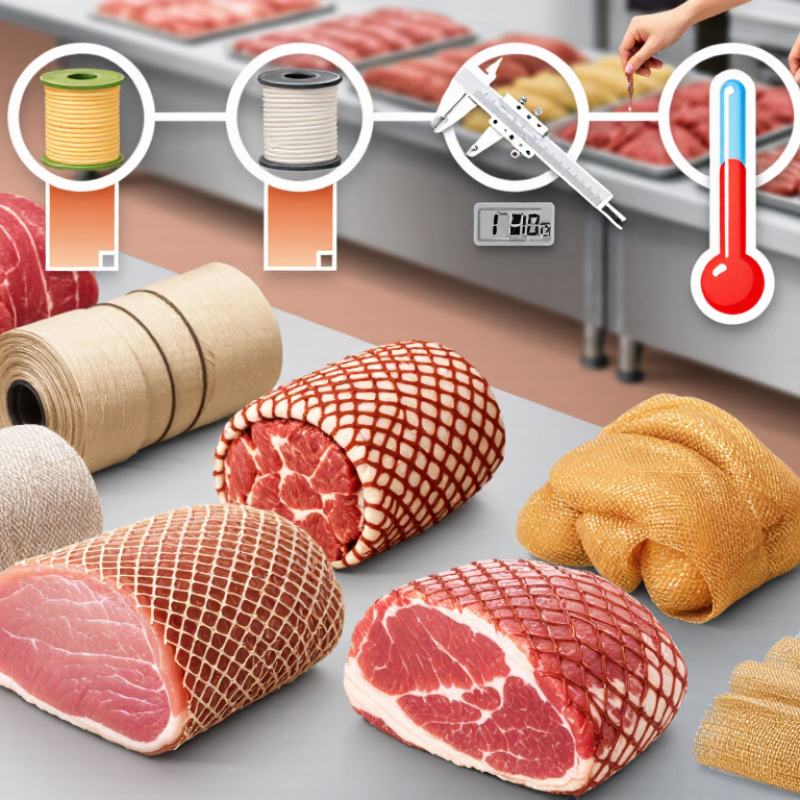
Choosing a cooking net for meat is a practical decision, not a packaging detail. The right net helps hold a roast’s shape, supports even cooking, and makes handling easier from preparation to service. Buyers should compare fiber type, mesh size, stretch, heat tolerance, and consistency between production batches. A sample that looks sturdy on a desk may behave differently around a hot, seasoned cut of meat.

For transparency, the expert voice below is illustrative, not a verified interview. Fictional meat-processing materials specialist Lin Wei puts it this way: “A dependable net should fit the product, withstand the process, and perform consistently in every batch.” It is a simple test, but a useful one. In this guide to China’s top 10 cooking net for meat manufacturers, we consider product range, manufacturing capability, customization, quality controls, and export support. Those details matter more than polished catalog photos.

No ranking tells the whole story. Specifications and service can change, and buyers should verify current samples, technical documents, and production terms directly with each supplier. One weakness in many comparisons is limited visibility into batch-to-batch performance. Ask how the net responds to tension, cooking temperatures, and the intended meat size before placing a large order. Small checks matter. The following overview aims to make supplier conversations more focused, while leaving room for a careful second look.
China Top 10 Cooking Net for Meat Manufacturers

What Cooking Nets for Meat Do: Mesh Structure, Uses, and Product Types

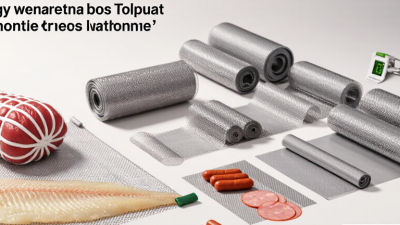
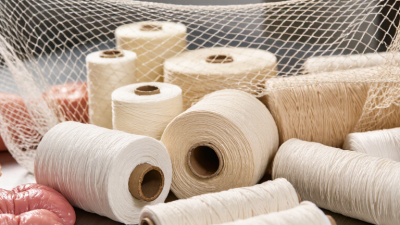
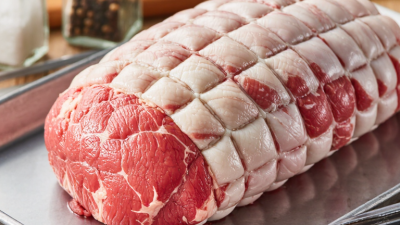
A cooking net is a flexible mesh sleeve that holds a roast’s shape while it cooks. Knitted loops stretch around the meat, helping keep loose sections and fillings in place. Mesh size affects how closely the net grips the surface, while fiber choice affects stretch and heat tolerance. Cotton and synthetic options exist, but suitability depends on the product’s food-contact status and stated cooking temperature. Check both before use.

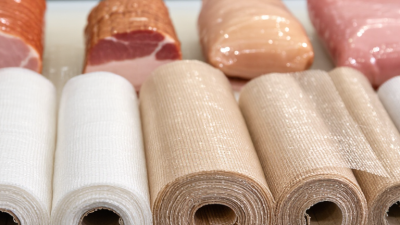
Common types include elastic tubular netting for rolled roasts and poultry, and less-stretch mesh for shaped or tied cuts. Some nets stay on during cooking; others are intended for handling or storage and must be removed beforehand. Follow the supplier’s instructions. A tight net can leave visible impressions, especially on soft or uneven cuts. That detail is easy to miss.

The net supports shape; it does not confirm doneness. USDA FSIS guidance lists 145°F (63°C) with a three-minute rest for whole cuts of beef, pork, lamb, and veal; ground meats reach 160°F (71°C), and poultry 165°F (74°C). Use a food thermometer at the thickest part, away from bone or filling. The mesh alone tells little about internal temperature. Source: USDA FSIS, Safe Minimum Internal Temperature Chart.

Which Materials Are Used in Meat Cooking Nets: Nylon, Polyester, Cotton, and Elastics

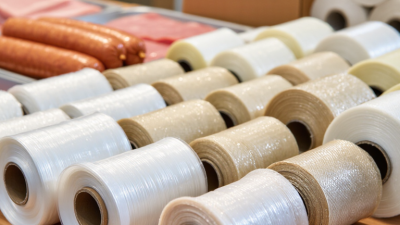
Nylon, polyester, cotton, and elastic each behave differently when stretched over a roast or wrapped around a ham. Nylon offers strength and flexibility, while polyester generally resists moisture and holds its shape well. Cotton feels familiar and can suit applications where absorbency matters, but wet fibers may behave differently during cooking. Elastic components help a net grip irregular cuts. They also need careful temperature testing.

Textile Exchange’s Materials Market Report 2024 estimates global fiber production at 124 million tonnes in 2023; polyester accounted for about 57%, cotton 20%, and nylon 5%. These figures describe the wider textile market, not food-grade net performance. That distinction matters. A large supply does not prove suitability for contact with meat or prolonged heating. Buyers should check each net’s stated use, temperature range, stretch recovery, and food-contact documentation. For example, a net that stays taut around a chilled roast may loosen near a hot, fatty surface. Heat changes everything. Even fiber labels can be incomplete: “elastic” may refer to a blend, so ask for its exact composition and test conditions.

China Top 10 Cooking Net for Meat Manufacturers — Materials Used in Meat Cooking Nets

Typical moisture regain under standard textile conditioning is shown as a percentage of fiber weight: cotton absorbs more moisture than nylon, elastane, or polyester. These indicative fiber-level values do not determine cooking suitability; heat performance depends on the specific material grade, net construction, and processing conditions.

How Cooking Nets Are Made: Weaving, Heat Setting, Inspection, and Packaging

Cooking nets begin with food-contact yarn selected for the required heat resistance, mesh size, and intended meat product. During weaving, operators monitor yarn tension and mesh consistency; uneven openings can affect both product shape and handling. Edges are secured to reduce loose strands. Small defects matter.

Heat setting stabilizes the woven net under controlled temperature and tension. The exact settings depend on the material, so a reliable manufacturer records process conditions rather than relying on visual judgment alone. After cooling, inspectors check dimensions, seams, discoloration, and damaged or blocked mesh. Sample tensile tests can help reveal weak points, though sampling cannot guarantee every piece is flawless.

Hygiene and traceability deserve equal attention. The World Health Organization’s 2015 Estimates of the Global Burden of Foodborne Diseases report estimated 600 million foodborne illnesses and 420,000 deaths worldwide each year. This is not a cooking-net-specific finding, but it underscores why clean handling and batch records matter. Finished nets should be packed dry in sealed, labeled packaging to limit contamination and preserve identification. A careful process helps, yet packaging and inspection can still miss small faults; that limitation should be stated, not hidden.

Which Food-Contact Rules Apply: GB 4806.7-2023 Sets a 10 mg/dm² Migration Limit for Plastics

China Top 10 Cooking Net for Meat Manufacturers

For plastic cooking nets used around meat, GB 4806.7-2023 is a key food-contact standard in China. It sets an overall migration limit of 10 mg/dm² for applicable plastic materials and articles. In plain terms, testing measures substances that migrate from the plastic under specified conditions. The limit is not a blanket approval for every resin, colorant, or cooking process.

Conditions matter. A net simmered in broth for two hours faces a different test scenario from one used briefly with chilled meat. Manufacturers should identify the plastic composition, intended food types, contact time, and temperature, then select relevant migration tests. Specific migration limits and other substance restrictions may also apply. Check the standard’s scope and current testing requirements with a qualified laboratory.

Keep records. Retain material specifications, test reports, and production-batch details. A small label can help identify the product, but it cannot replace test evidence. I would also review assumptions about use: “food grade” alone says too little about high-temperature contact. Real kitchens are messy, and intended-use conditions can be easy to underestimate.

China Top 10 Cooking Net for Meat Manufacturers – Which Food-Contact Rules Apply? GB 4806.7-2023 Sets a 10 mg/dm² Migration Limit for Plastics

No. Cooking-Net Component or Checkpoint Relevant China Standard Factual Requirement or Compliance Point Practical Verification
1 Plastic mesh or plastic food-contact component GB 4806.7-2023 Applies to plastic materials and articles intended to contact food. The general overall migration limit is 10 mg/dm². Confirm the polymer identity, intended food types, temperature, and contact duration; obtain test evidence for the finished material or article.
2 Plastic overall migration result GB 4806.7-2023 10 mg/dm² is equivalent to 1 mg per 100 cm². It is an overall migration limit, not a limit for every individual chemical. Check that the test report states the result in mg/dm² and identifies the applicable food simulant and test conditions.
3 Plastic resin and additives GB 4806.7-2023 Plastic materials must meet the standard’s applicable raw-material, restriction, and migration requirements. Request a material declaration and supporting compliance documentation for the resin and relevant additives.
4 Plastic mesh intended for repeated cooking use GB 4806.7-2023 Evaluation needs to reflect the article’s intended use, including repeated-use conditions where applicable. Match the test protocol to the stated number of uses, food contact, temperature, and contact time; do not assume one test condition covers every use.
5 Stainless-steel wire mesh or metal frame GB 4806.9-2023 Applies to metal materials and articles intended for food contact. Metal compliance is assessed under the standard’s applicable requirements rather than the plastic overall-migration limit. Identify the metal grade and verify relevant migration or composition evidence for the intended food-contact conditions.
6 Metal surface, welds, and cut edges GB 4806.9-2023 The food-contact surface and the finished article must be suitable for the intended conditions of use. Inspect for corrosion, damaged finishes, exposed dissimilar materials, and residues from fabrication or cleaning.
7 Rubber or silicone-rubber handles, seals, or ties GB 4806.11-2023 Applies to rubber materials and articles intended for food contact, including relevant rubber components. Confirm the component’s material classification and request test documentation for its intended contact conditions.
8 Painted or coated food-contact surface GB 4806.10-2016 Applies to paints and coatings used on food-contact materials and articles; coating suitability depends on intended use. Check that the coating is specified for the actual food-contact surface, temperature, and duration, and that supporting compliance records are available.
9 Composite cooking net made from multiple materials Applicable material-specific GB 4806 standards Each food-contact material or component must be assessed under the requirements applicable to that material and the complete article’s intended use. Map every food-contact layer and component, including coatings, seals, and joined areas, to its applicable standard and test evidence.
10 Use conditions and compliance records GB 4806.1-2016 and applicable material-specific standards Food-contact safety is evaluated in relation to the intended food types and conditions of use; the plastic 10 mg/dm² limit does not automatically apply to metal or rubber parts. Keep the intended-use specification, material declarations, test reports, and product identification consistent with the finished cooking net.

Scope note: This is a food-contact compliance checklist, not a manufacturer ranking or a list of company product specifications. Applicable requirements depend on the material, food type, temperature, and contact duration.

How to Compare China’s Top 10 Manufacturers: Capacity, Testing, Certifications, and Traceability

China Top 10 Cooking Net for Meat Manufacturers

How to Compare China’s Top 10 Manufacturers: Capacity, Testing, Certifications, and Traceability

Comparing cooking-net manufacturers takes more than checking a monthly output figure. Ask how many production lines are active and whether capacity includes inspection and packing. A sample order can reveal uneven mesh, rough welds, or handles that flex under load. Check whether the supplier can repeat the same dimensions across later batches, not just make one good sample.

Review test reports for the exact material and intended food-contact conditions. Confirm the report is current and identifies the tested product, rather than a similar item. Ask what certifications apply to the product and the destination market; a certificate alone does not prove consistent quality. For traceability, request a sample batch record linking the net to its material lot, production date, and inspection results. Keep the record with your order documents.

Tips: Request photos of actual inspection steps, plus a recent batch record. Compare details, not just price. No checklist is perfect; recheck the specifications before production, especially mesh size and load requirements.

We are using cookies on our website

Please confirm, if you accept our tracking cookies. You can also decline the tracking, so you can continue to visit our website without any data sent to third party services.