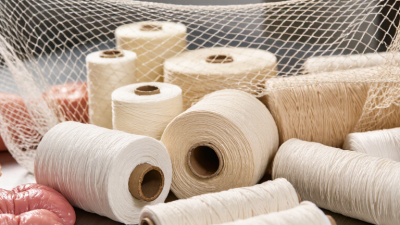
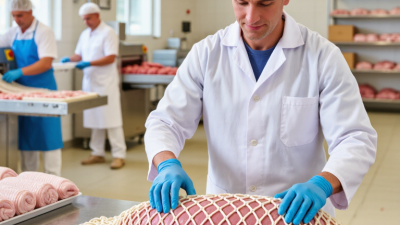
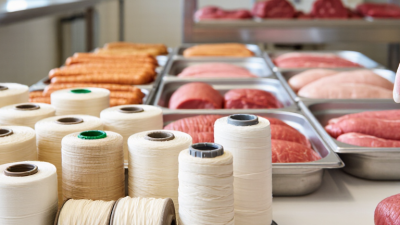
China Top Butchers Meat Netting Suppliers for Global Buyers
China has become a major sourcing destination for butchers meat netting used in processed meats, roasts, hams, and specialty products. Global buyers need more than attractive pricing. They need stable mesh structure, clean materials, accurate sizing, and dependable delivery.
This guide introduces China’s leading meat netting suppliers from a practical buyer’s perspective. It examines product materials, elasticity, cooking performance, customization options, packaging, and export experience. Food-grade compliance matters. Suppliers should provide clear specifications, batch information, and relevant test records. Buyers should also confirm whether the netting suits smoking, steaming, roasting, or boiling conditions.
Details matter.
A reliable supplier can explain mesh diameter, stretch range, roll length, and temperature tolerance without vague promises. Factory experience also shows in sample consistency. One roll may look perfect, yet production results can differ. For this reason, professional buyers often request samples, production photos, inspection reports, and a small trial order before scaling up.
The best partnerships depend on communication. English documentation should be understandable, and technical questions should receive specific answers. Suppliers with international experience may support private labeling, custom colors, retail packaging, and consolidated shipments. However, every claim deserves verification through records and testing.
This overview does not suggest that one supplier fits every market. Product standards, customer preferences, and processing equipment vary. A practical comparison is still necessary. With careful evaluation, global buyers can identify Chinese manufacturers that offer safe, consistent, and commercially suitable butchers meat netting for long-term supply.
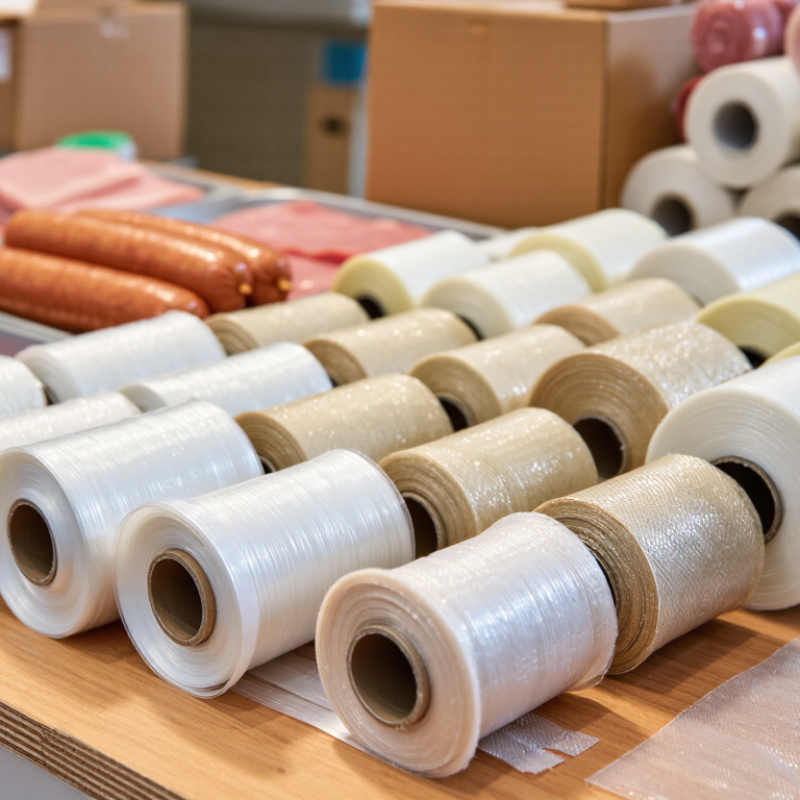
What Meat Netting Is: Mesh, Elasticity, and Load Requirements
China Top Butchers Meat Netting Suppliers for Global Buyers
Meat netting is not decorative mesh; it is a forming and restraint system for meat products. Mesh opening affects surface pattern, smoke contact, and release after cooking. Elasticity holds irregular cuts without crushing them. Too little recovery creates loose ends. Too much tension can mark the meat or distort its shape. The correct choice depends on product diameter, filling pressure, cooking shrinkage, and handling conditions.
Global demand makes these details more important. The FAO Food Outlook 2024 estimated world meat production at roughly 374 million tonnes. The OECD-FAO Agricultural Outlook 2024–2033 also projects meat production to grow by about 12% by 2033, compared with the 2021–2023 average. For buyers, higher volume should not mean weaker specifications. A net for a 1.5-kilogram roast may fail on a larger, denser product.
Load requirements need measured validation, not guesswork. In production trials, suppliers should record wet tensile strength, elastic recovery, knot or seam performance, and deformation after cooking. The net must support the filled product during stuffing, hanging, transport, and thermal processing. A practical test uses the heaviest planned unit, not the average one. That is where many specifications become optimistic. I would also request food-contact documentation, lot traceability, and test conditions in writing. Small differences in mesh geometry can change performance, and supplier data may not fully reflect a buyer’s equipment.
Meat netting must accommodate the product diameter through mesh openings and elastic stretch while safely supporting the roast during handling. The chart shows the static gravitational load produced by different roast masses, calculated using the standard relationship force = mass × 9.81 m/s². In practice, the required working load should also include handling forces and an appropriate safety factor.
Key Netting Standards: Food Contact, Mesh Size, and Thermal Shrinkage
China-based meat netting suppliers serve global buyers with varied processing needs, from cooked hams to rolled poultry products. Experienced buyers should inspect food-contact documentation before discussing price. The netting must suit the intended meat, seasoning, temperature, and processing time. Ask for material declarations, migration test reports, batch records, and traceability details. Clear records matter when a shipment crosses borders.
Mesh size affects product shape, surface marks, and net removal. A tight mesh can improve support, but it may leave deeper impressions after cooking. Larger openings can reduce marking, yet they may allow loose products to spread. Suppliers should provide measured mesh dimensions, cord diameter, and tolerance ranges. Test samples on the actual filling machine. Small differences become obvious under tension.
Thermal shrinkage needs practical testing. Record the netting length before cooking, then measure it after heating and cooling. Shrinkage that is too low may create a loose surface. Excessive shrinkage can compress the product and distort its shape. Ask for shrinkage data at the buyer’s real temperature and holding time. One mistake is trusting a general data sheet. It may not match factory conditions. That detail deserves review. Reliable suppliers usually support trial orders, inspection photos, and controlled production samples. Buyers should also question inconsistent results, even when the first sample looks acceptable.
How to Assess China Suppliers: ISO 9001, MOQ, Lead Time, and Traceability
For global buyers, assessing a Chinese meat netting supplier starts with evidence, not polished photographs.
The ISO Survey 2023 recorded hundreds of thousands of ISO 9001 certificates in China, showing broad adoption of quality systems. However, certification does not guarantee consistent netting performance. Ask for the certificate number, issuing body, scope, and latest audit status. Then request batch records, tensile test results, mesh measurements, and food-contact documentation where applicable. A factory tour, even by video, can reveal more than a brochure. Watch the extrusion line, storage conditions, and label control. Small details matter.
MOQ and lead time need practical testing.
Ask for pricing at 500, 5,000, and 20,000 kilograms, because tooling, color, packaging, and export cartons can change the calculation. Request a written production schedule with raw-material arrival, sampling, inspection, and dispatch dates. The World Bank’s 2023 Logistics Performance Index placed China 19th globally, but national logistics data cannot predict one factory’s reliability. Port congestion and holiday shutdowns still affect delivery.
Build a buffer. It may feel wasteful.
Traceability should reach the finished roll.
Each carton should link to a production date, machine, operator, material lot, and inspection result. GS1’s traceability guidance emphasizes identifying products and tracking key events across the supply chain. Test this system with one mock recall. If the supplier needs several days to locate a lot, the process is weak. I would also compare two sample batches, because one excellent sample can hide ordinary production.
Global Buyer Metrics: Yield, Cost per Kilogram, and FAO’s 374 Mt Meat Market
China Top Butchers Meat Netting Suppliers for Global Buyers
FAO’s 374 million-tonne meat market shows why small processing gains matter at scale. For global buyers, meat netting should be judged by yield, not appearance alone. A practical trial measures usable kilograms after cooking, trimming, and packaging. Record the raw weight, netting weight, finished weight, and rejected pieces.
Cost per kilogram needs a wider calculation. Include netting price, labor minutes, machine settings, freight, and production loss. A low unit price can become expensive when the net slips or causes uneven portions. In one trial, a tighter mesh improved shape but slowed packing. The result looked better, yet the labor cost rose. That detail was easy to miss.
Experienced suppliers can provide mesh specifications, heat resistance data, food-contact documentation, and batch records. Buyers should request samples and run tests with their own cuts, temperatures, and equipment. A 2% yield improvement may justify a higher netting cost, but only when measured against actual output. The calculation is simple: total processing cost divided by saleable kilograms. Keep the test repeatable.
Not every result transfers well. Different fat levels, diameters, and cooking cycles change performance. Our early estimate was too optimistic. That is worth admitting. Reliable sourcing depends on transparent figures, controlled trials, and clear inspection terms, especially across long-distance supply chains.
China Top Butchers Meat Netting Suppliers for Global Buyers - Global Buyer Metrics: Yield, Cost per Kilogram, and FAO’s 374 Mt Meat Market
Buyer-oriented metrics for evaluating meat netting specifications, production efficiency, landed cost, and food-contact requirements.
Global Meat Netting Procurement and Performance Metrics
| Metric |
Reference Value |
Unit / Calculation Basis |
Relevance for Global Buyers |
Data Status |
|
Global Market Context
|
| Global meat production |
Approximately 374 million tonnes |
FAO-reported global market benchmark |
Indicates the scale of the addressable meat-processing and packaging market. |
Published benchmark |
| Main meat categories using netting |
Beef, pork, poultry, lamb and processed roasts |
Product application category |
Netting supports shape retention, uniform slicing and controlled presentation during cooking or smoking. |
Industry application |
| Common operating temperature range |
Approximately −18°C to +120°C |
Freezing, chilled storage and thermal-processing conditions |
The actual range must match the polymer, elastic structure and validated cooking process. |
Specification range |
|
Yield and Cost-per-Kilogram Metrics
|
| Finished-product yield |
92%–98% |
Finished cooked weight ÷ raw stuffed weight × 100 |
Compare netting systems using the same meat formulation, stuffing pressure, cook cycle and cooling method. |
Indicative benchmark |
| Cooking and purge loss |
2%–8% of raw stuffed weight |
100% − finished-product yield |
Lower loss can improve saleable kilograms, but results depend mainly on recipe and process control. |
Indicative benchmark |
| Netting consumption |
Typically 0.3–1.5 kg of netting per 100 kg of meat |
Netting weight ÷ meat weight × 100 |
Use actual roll weight and finished product length rather than nominal mesh size alone. |
Application benchmark |
| Netting cost allocation |
Netting price per kg × netting consumption rate |
Cost contribution per kg of meat |
This converts a roll quotation into a comparable cost-per-kilogram metric across suppliers. |
Buyer calculation |
| Total landed cost per kg |
Product price + freight + insurance + duty + inspection + local delivery |
Currency per kg of delivered netting |
Incoterms, shipment volume, customs classification and destination charges can materially change the final cost. |
Buyer calculation |
|
Technical and Compliance Checkpoints
|
| Typical mesh or tube diameter |
Approximately 80–220 mm |
Nominal product diameter before or after stuffing, as specified |
Diameter must be tested with the buyer’s meat cut, stuffing equipment and target portion size. |
Specification range |
| Food-contact documentation |
Declaration of compliance, material composition and migration-test evidence |
Required documentation depends on destination market |
Request documentation applicable to the final food-contact use, temperature and country of import. |
Regulatory checkpoint |
| Traceability information |
Lot number, production date, raw-material batch and inspection record |
Supplier quality-management record |
Supports recall readiness, incoming inspection and consistency between repeat orders. |
Procurement requirement |
| Acceptance test for samples |
Diameter retention, elasticity, break strength, cooking performance and visual integrity |
Test under the buyer’s production conditions |
A production trial is more reliable than comparing catalogue specifications alone. |
Recommended practice |
Data and calculation notes
- The 374 million tonne figure is presented as an FAO global meat-production benchmark; the exact value and reference year should be confirmed against the latest FAOSTAT or FAO market publication when used in a formal report.
- Yield, netting-consumption and temperature figures are practical procurement benchmarks, not company-specific performance claims. Actual results vary by meat species, formulation, casing design, equipment and process conditions.
- For comparable quotations, request the same basis from every supplier: net weight, roll length, mesh diameter, material composition, packaging configuration, Incoterms, currency and destination.
Source basis: FAO global meat-production statistics and standard food-processing procurement calculations; regulatory documentation should be checked against the importing market’s current requirements.